
- Macchine
- Competenza
- Risorse
- Certificati
- Di
- Contatto
- Macchine
- Competenza
- Risorse
- Certificati
- Di
- Contatto
Imballaggio blister is a common sight in pharmacies and stores, especially for pills and small parts. In termini semplici, UN pacchetto blister is a pre-formed plastic bubble (la “vescica”) that’s sealed onto a backing like cardboard, sventare, or plastic. The plastic bubble holds one or more items (often pills), and the backing provides a seal. This design keeps each dose or item locked in its own little compartment. Per esempio, a medication tablet sits in its own plastic dome that you press to pop it out when you need it. This straightforward design has big advantages for pharmaceuticals and other products.
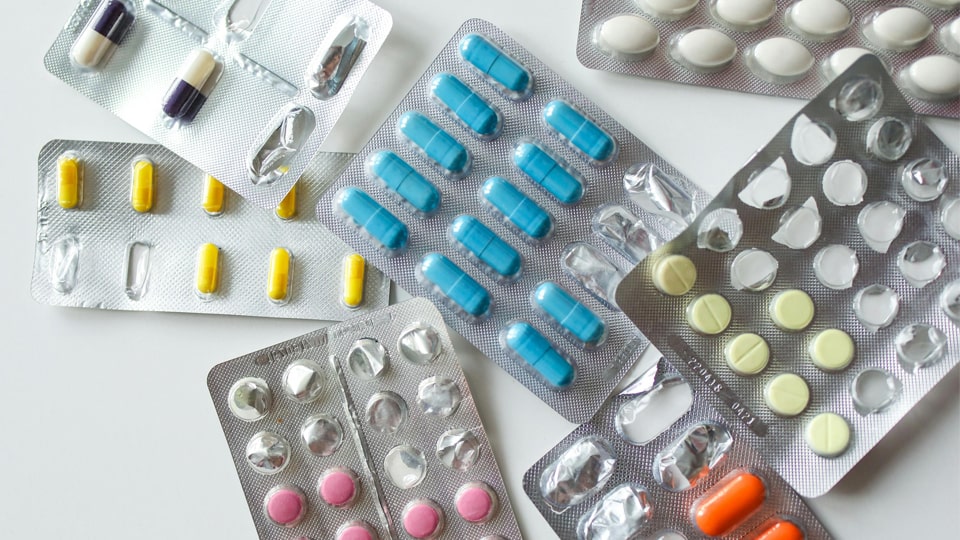
Immagine: Various pills in sealed blister packs (multiple pills packaged individually). Blister packs typically have a clear plastic front and a foil or card back, keeping items sealed until use.
Pharmaceutical companies and pharmacists love blister packaging for many reasons. Primo, it protects drugs from the environment. The sealed plastic-plus-foil design acts like a tiny airtight box for each pill. It blocks out moisture, ossigeno, e luce, all of which can degrade medicine. Per esempio, Jinlupacking notes that blister packs wrapped in aluminum foil isolate drugs from air, umidità, e luce, greatly extending shelf life and keeping pills effective and safe. Colorcon (a pharma supplier) similarly explains that blister packs safeguard medications against moisture and contamination until use. Insomma, blister packaging locks in freshness for one tablet at a time, which is why many medicines (and even vitamins) come this way.
Blister packs also help with dose accuracy and patient compliance. Each pocket usually holds a single dose (one pill or capsule), so it’s easy to see if you’ve taken your dose today or not. If you skip a day, you can immediately tell because the compartment will still be full. This is a big deal for chronic medicines or elderly patients. Infatti, packaging experts note that blister packs make dosing “simple and intuitive” by fixing the dose in each blister. Patients don’t have to count pills or guess doses – each bubble is the exact amount to take. This clear separation helps prevent double-dosing or missed doses. And when blister packs are organized by day or time, they become a handy schedule aid (called calendar or pill planners), further improving compliance.
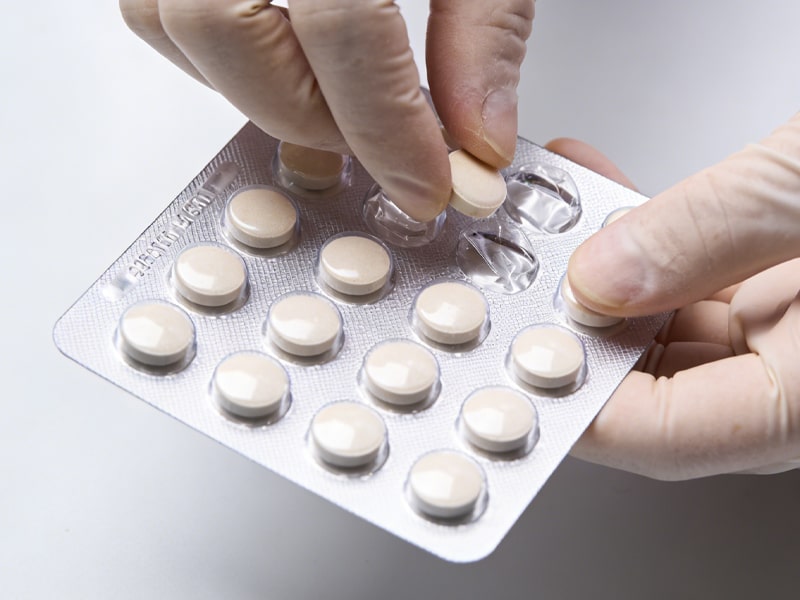
Immagine: A technician’s hand popping a tablet from a clear plastic blister pack. Blister packaging keeps each pill sealed until use, offering easy access and dosing accuracy.
Another reason blister packs are so widely used in pharma is regulatory compliance. Many health agencies recognize blisters as meeting strict safety and labeling standards. Per esempio, since each dose is labeled and sealed, it’s easy to meet rules on child safety seals and expiry date display. Manufacturers also point out that it’s straightforward to add tamper-evident bands or seals because the blister itself is already sealed. Blister packs eliminate the need for extra seals that bottles require.
Nelle farmacie, “pharmacy blister packs” are often used for dispensing. Pharmacists can punch out individual pills or dispense a whole strip. This saves time and reduces errors. Some pharmacies even offer custom blister packaging services for multi-dose regimens, known as unit-dose blister trays. Per esempio, a weekly pill organizer is basically a plastic sheet of blisters labeled by day.
There are also variations like blister card packaging and blister box packaging. A blister card is just a blister pack bonded to a cardboard header or backing – think of a store display of batteries or a toothbrush. The card provides space for branding and instructions. Larger shipments of medicines might use blister box packaging – that means a carton box that contains multiple blister sheets inside. In export or wholesale, blisters often go into boxes with other packaging layers, making them easier to handle in bulk.
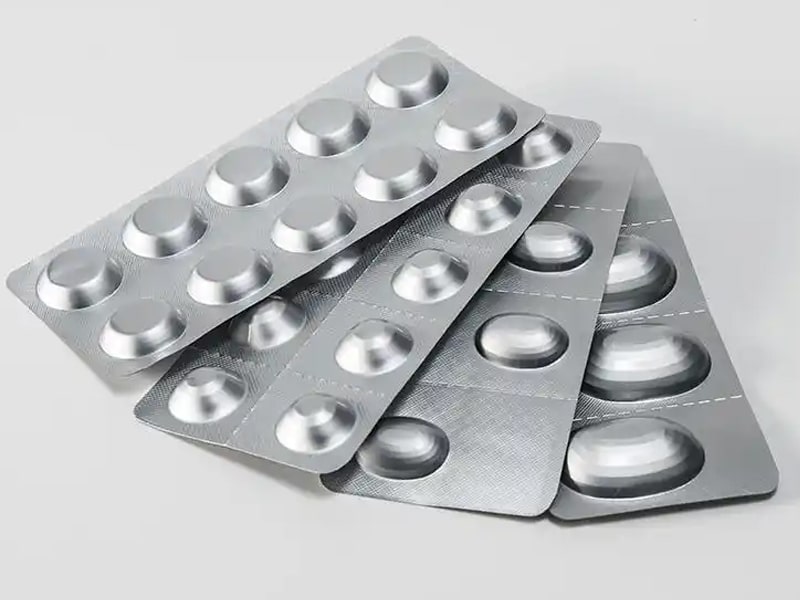
For the most sensitive products, Alu-Alu blister packaging is used. This means aluminum foil on both the front (forming side) and the back. Such double-foil packs are completely opaque and nearly impervious to moisture and oxygen. In pratica, Alu-Alu blisters are reserved for very high-value or hygroscopic drugs (per esempio. some antibiotics, biotech products, anti-cancer drugs). They guarantee the longest possible shelf life, even in hot, humid export markets. Jinlupacking’s high-speed machines can handle both Alu-PVC and Alu-Alu blister materials, allowing a plant to choose based on product needs.
COSÌ, why use blister packaging? In poche parole, it delivers safety, convenience and efficiency. If you’re making pills, tablets or small medical devices, blister packs are often the best choice. They protect your product and the patient. They make dosing straightforward, reduce waste, and enhance the brand.
Ovviamente, every product is different. Blisters shine when you need unit doses and tight protection. If you have a stable, low-volume item, a simple bottle might suffice. But for most pharma companies supplying pharmacies or hospitals, blister packaging is almost always the go-to. Infatti, industry experts note that blisters have become “a sophisticated tool” in modern drug delivery.
When selecting blister specs, consider things like material (PVC vs. COC vs. Alu), dimensione della cavità, and speed. Per esempio, small tablets use smaller cavities to save space, while drugs taken daily might come in multi-unit blisters for a weekly supply. Opening force is also key – some packs are easy-peel, others child-resistant. The good news is that packaging engineers can design blisters specifically for your product, thanks to thermoforming technology.
[jl_youtube src=”https://www.youtube.com/embed/k2K77Q6fHVo”]
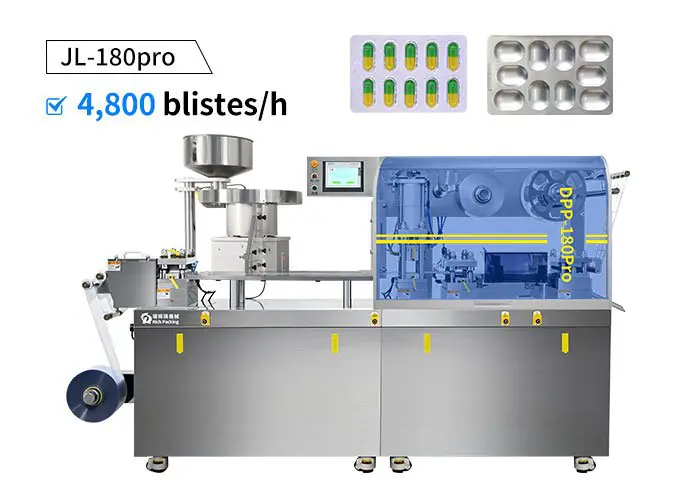
Blister packaging has earned its place in the pharmaceutical world. It protects each pill from damage and contamination, organizes doses in a patient-friendly way, and promotes brand and regulatory compliance – all while keeping costs reasonable. No wonder blister packs are everywhere from the local pharmacy to global drug exporters.
If you’re in the pharma or healthcare industry, using blister packaging (e l'attrezzatura giusta) can really streamline your production. Blister pack machines (like the automatic Alu-PVC or Alu-Alu machines made by Jinlupacking) can crank out tens of thousands of units daily, ensuring high output and reliability. With so many benefits, blister packaging isn’t just a trend – it’s become a standard for safe, effective medication delivery worldwide.
Blister packaging is a type of packaging where each tablet, capsule or unit dose is sealed in its own plastic cavity and backed with foil or film. This makes each dose individually protected until use, helping preserve the medicine’s integrity and safety.
Blister packaging is used because it protects drugs from moisture, ossigeno, luce e contaminazione, ensures accurate dosing per unit, and provides tamper-evident safety features that are ideal for pharmacy blister packs or blister pack medication.
Since each pill or capsule is individually sealed, patients can easily see which doses have been taken or missed. Calendar-style blister packs make daily dosing even clearer, which can improve medication adherence.
Common materials include PVC (for visibility), foglio di alluminio (for high barrier protection), PET or PVDC films. Alu-alu blister packaging, where both front and back are foil, offers superior protection for sensitive pharma products.
Blister packs have pre-formed cavities for each dose, while pill strip packs are sealed pouches without molded pockets. Blisters are generally more protective and tamper-evident, which is why they are widely used in pharmacy settings.
SÌ. Because each dose is independently sealed, any attempt to open or tamper with the packaging is immediately visible, which enhances product safety and compliance.
SÌ. While blister packaging is most common in pharmaceuticals, it is also used for vitamins, medical devices, beni di consumo, hardware parts, and small electronics because of its protective and display benefits.
Thermoformed blister packs use heated plastic and are ideal for visibility and higher line speeds. Cold-formed (often aluminum) packs offer stronger barrier and longer shelf life, especially for sensitive medications.
Blister packaging protects product quality, simplifies dosing accuracy, reduces contamination risk, meets tamper-evidence requirements, and supports brand labeling—all while being cost-efficient and scalable with modern blister machines.
Blister packaging recyclability depends on material. PET-based blisters are more recyclable than PVC. Some suppliers also offer eco-friendly or lower-film-use options to help reduce environmental impact.
Riferimenti:
1.Linee guida sul confezionamento dei prodotti farmaceutici - CHI (Organizzazione mondiale della sanità)
2.Confezione in blister & Conformità: Navigating FDA, EU GMP, and CDSCO Guidelines – PharmaNow
3.Imballaggi e inserti per farmacie – NCBI / NIH
4.Pacchetto blister (Packaging Overview) –Wikipedia