
- Macchine
- Competenza
- Risorse
- Certificati
- Di
- Contatto
- Macchine
- Competenza
- Risorse
- Certificati
- Di
- Contatto
Granulation is a key step in making pills, where fine powders are turned into larger particles (granuli) that flow and compress better. In termini semplici, wet granulation uses a liquid binder to clump powders, while dry granulation simply presses powders under high pressure. Both methods have their own pros and cons, and the choice depends on the powder properties and production needs. In questa guida, we’ll explain each method, compare them, and show how to pick the best approach for your produzione di compresse.
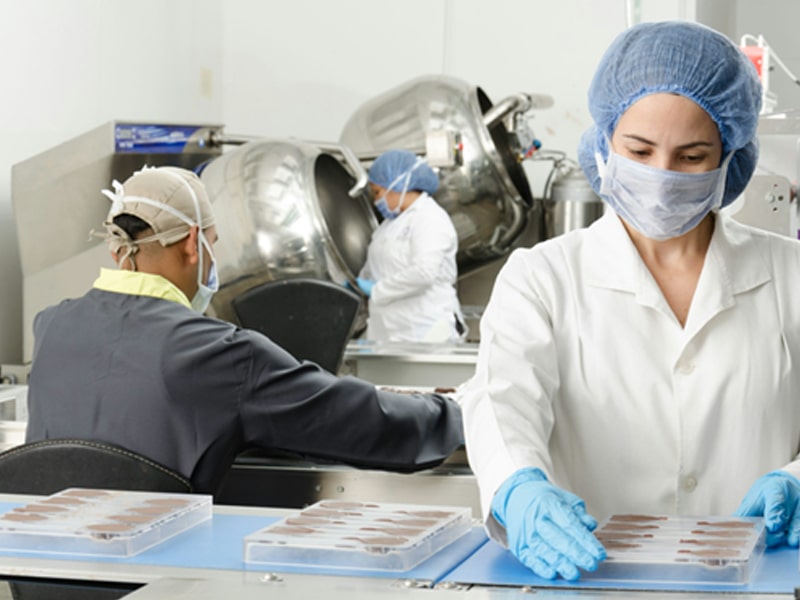
Nella produzione farmaceutica, powders are carefully mixed and processed in controlled environments. Granulation happens before tablet pressing to ensure consistent tablet weight and performance. Whether using wet or dry granulation, the goal is to produce free-flowing granules with the right size and binding. The image above illustrates operators in a modern facility where such granulation steps take place.
Wet granulation is the classic granulation method. It involves adding a liquid binder (often water or an alcoholic solution) to a powder blend to form a moist mass, which is then broken into granules and dried. UN wet granulator machine (like a high-shear mixer) automates this process. In pratica, wet granulation follows these main stages:
Each step ensures the final granules are uniform and robust. Wet granulation is chosen when powders have poor compressibility, and it has long been the most common method for oral solid drugs. By precisely controlling each stage, manufacturers can produce tablets that have a consistent drug dose and dissolution profile.
Wet granulation offers several key benefits:
Tuttavia, wet granulation does add steps (miscelazione, spruzzatura, essiccazione) that require more equipment and time. We’ll cover that in the comparison section below.
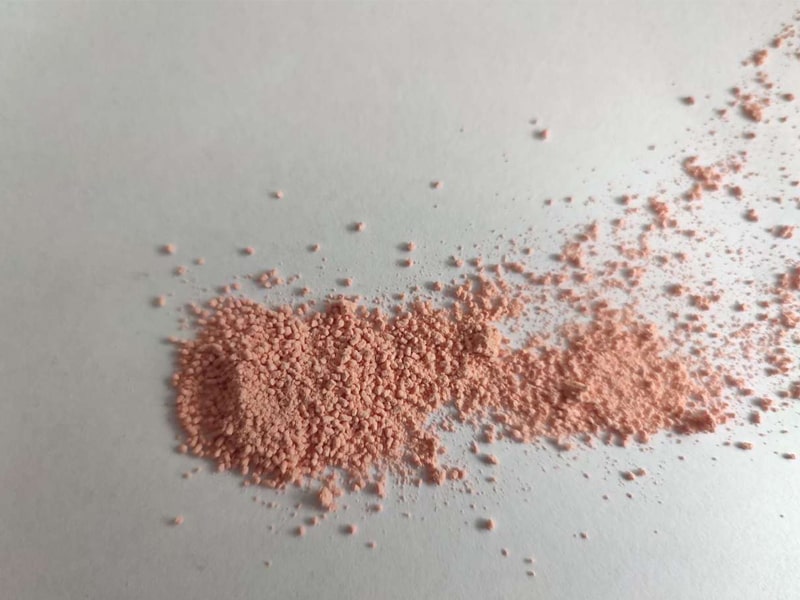
Dry granulation skips any liquid. Invece, it compacts the powder blend directly using pressure. Common techniques are roller compaction or slugging:
Dry granulation is preferred when the material is sensitive to heat or moisture. No liquid is used, so drugs that degrade in water or lose activity when dried can be processed safely. I passaggi fondamentali sono:
Unlike wet granulation, no drying step is needed, which simplifies production. This yields shorter timelines and reduced energy use. Anche, since a wet binder is never introduced, there’s no risk of chemical reactions with moisture or solvents.
Dry granulation offers these advantages:
Dry granulation isn’t ideal when a strong binder is required or when you need very fine, uniform granules. It also may produce somewhat fluffier granules compared to wet granulation in some cases.
Let’s compare the two methods side by side:
| Aspetto | Granulazione ad umido | Granulazione a secco |
| Liquid Usage | Uses a liquid binder (water or solvent) added to the powder. | No liquid; relies on mechanical compaction. |
| Attrezzatura | Requires high-shear mixer, spray system, plus dryers (per esempio. fluid-bed). | Uses roller compactor (or tablet press) + mill & sieve. |
| Production Steps | Powder → Mix with binder → Wet granules → Dry → Mill/sieve. | Powder → Compact (ribbon/slugs) → Mill/sieve (skip drying). |
| Suitable For | Powders with poor flow/compressibility or requiring uniform granules. | Heat- or moisture-sensitive powders that can’t be wetted. |
| Energy & Tempo | Longer; includes drying (higher energy use). | Shorter; skips drying (lower energy). |
| Product Quality | Very uniform granules, improved binding; consistent tablet content. | Dense granules with good flow; controls hardness/density. |
| Complexity & Costo | Più complesso; higher equipment cost and maintenance. | Simpler; lower equipment/energy cost. |
In sintesi, wet granulation generally gives more uniform, stronger granules (at the cost of extra steps and drying). Dry granulation is lean and economical for tolerant formulations, but may not achieve quite the same granule consistency as a well-optimized wet process. The best choice depends on your product.
Choosing wet vs dry granulation depends on several factors:
The right granulation method depends heavily on the specific characteristics of the product being manufactured – things like moisture sensitivity, particle size requirements, and final tablet performance goals. It’s wise to evaluate a small batch with each method or consult process experts.
Imagine adding a liquid binder to your powder mix. In wet granulation (as shown above), the binder spray fully wets the powder under the mixer’s action, causing particles to clump together. After wetting, the mixture flows into a granulator, creating uniform wet granules. These granules are then dried into final form. This process yields uniformly sized granules with improved flow and binding, ready for pressing.
Both granulation methods use specialized machines:

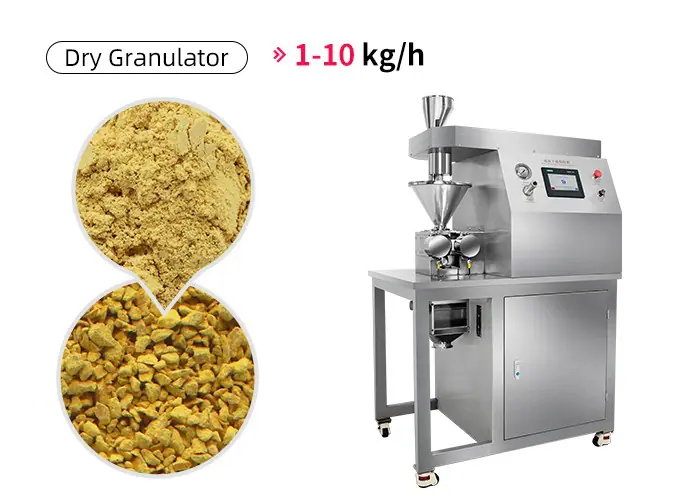
Choosing the right equipment is key. A well-tuned wet granulator can produce high-quality granules, but it requires a drying oven or fluid bed dryer downstream. A roller compactor setup is leaner but needs robust mills to size the ribbons. Both machines help produce flowable granules that eventually go to tablet presses.
Per esempio, Imballaggio Jinlu helps customers by recommending the appropriate granulator. Our wet granulator machine is ideal if you need to process up to ~900 L of wet mass at a time, while our dry granulator machine suits products that must stay dry. Both are designed for pharma standards (acciaio inossidabile, CIP cleaning, PLC control).
Wet granulation and dry granulation both turn powders into granules, but by different routes. Wet granulation uses a liquid binder (and a drying step) to produce very uniform granules. Dry granulation uses pressure to compact powder into granules, skipping any liquids.
Generalmente:
Your particular product formulation will dictate the best choice. Consulting experienced process engineers and testing small batches can help. Both methods aim to produce tablets that meet quality and regulatory standards.
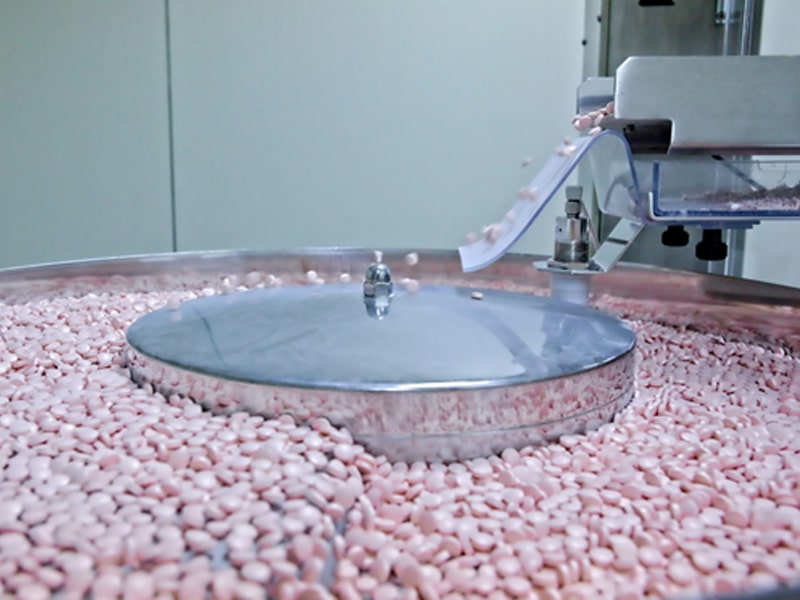
At the end of granulation, both methods feed tablets presses to make pills. The image above shows tablets being handled after granulation and compression. Regardless of wet or dry granulation, l'obiettivo è lo stesso: coerente, high-quality tablets ready for coating and packaging.
Wet granulation is a powder agglomeration process where a liquid binder is added to the powder mix to form moist granules. These are then dried and sieved to produce uniform granules suitable for tablet compression.
Dry granulation compacts powder directly using mechanical pressure (PER ESEMPIO., roller compaction) without adding liquid, producing granules after milling and sieving. It’s ideal for moisture-sensitive materials.
The primary difference is liquid use — wet granulation adds a binder solution and requires a drying step, while dry granulation uses no liquid and avoids drying.
Use wet granulation when powders have poor flow or compressibility, or when you need highly uniform granules for consistent tablet quality.
Dry granulation is preferred for moisture or heat-sensitive formulations, cost-effective production, and when you want to reduce processing time and energy usage.
SÌ. Wet granulation typically needs a wet granulator machine, miscelatori, and dryers (PER ESEMPIO., fluid bed), whereas dry granulation mainly requires a roller compactor and mill/sieve.
They generally have improved flowability, uniform size distribution, and better binding properties, which help ensure consistent tablet quality.
Dry granulation avoids liquids and drying steps, making it suitable for sensitive materials. It also lowers energy consumption, shortens processing time, and uses simpler equipment.
Sometimes both methods can be evaluated, but the choice depends on the product’s sensitivity, Proprietà del flusso, binder requirements, and production priorities.
Wet granulation uses a wet granulator machine, often a high-shear mixer with binder spray. Dry granulation uses a dry granulator machine such as a roller compactor.
Riferimenti:
1.Granulation Processes in Pharmaceutical Manufacturing – Natura Springer
2.Difference Between Wet Granulation & Dry Granulation – Pharmainform.com
3.Wet Vs Dry Granulation: Process Comparison – Pharmanow.live
4.Comprehensive review on modern techniques of granulation in pharmaceutical solid dosage forms – ScienceDirect
5.Impact of Different Dry and Wet Granulation Techniques on Granule and Tablet Properties: A Comparative Study – Journal of Pharmaceutical Sciences