
- Macchine
- Competenza
- Risorse
- Certificati
- Di
- Contatto
- Macchine
- Competenza
- Risorse
- Certificati
- Di
- Contatto
Blister packaging scale-up isn’t just turning up the speed on your machine. It means making sure every part of the process works together when you jump from trial batches to full-rate production. In pratica, companies often see new problems arise: seals that used to hold suddenly fail, blister cavities stretch or wrinkle, or foil lids start peeling off. These issues usually trace back to changes in the process – wider machine beds, higher throughput, even minor material variations – that weren’t accounted for at smaller scale. Our checklist cuts through the noise. We’ll show you how to systematically confirm your Materiali, utensileria, process parameters and equipment are ready for commercial production so you maintain consistent quality as you grow output.
Entro la fine di questa guida, you’ll have a clear roadmap – from defining your production goals to final validation – so you can increase your blister line output without compromising unit-dose integrity or throughput. Infatti, the FDA emphasizes that process validation must gather evidence “from the process design stage through commercial production” to ensure a process can “consistently deliver quality product”. In altre parole, scale-up is part of validation, not an afterthought.
Start by setting clear goals. How many blister packs per minute (PPM) do you need? Do you require multi-lane operation? What is the blister format (pocket size, number of cavities, strip length)? Document the product’s dimensions, fill weight and tolerances – for example, tablet diameter/height or capsule length – so tooling can be designed correctly. Also specify your quality targets: allowed defect rate, durata di conservazione richiesta, forza della tenuta, and barrier properties needed to meet stability specs.
Think of this as the foundation: What are you scaling up from, and to what? Per esempio, going from a pilot run of 50 PPM single-lane to a commercial line of 200 PPM four-lane means your throughput goal is 800 packs/minute total. Knowing this up front guides every other decision. It’s also a good idea to benchmark your small-scale performance (per esempio. average dwell time, seal peel force, tasso di scarto) as a baseline. That way you can detect any drift during scale-up.
This step ensures everyone (ingegneria, QA, produzione) agrees on what “success” looks like. Only after the target is clear should you move on to verifying that materials and equipment can actually achieve it.
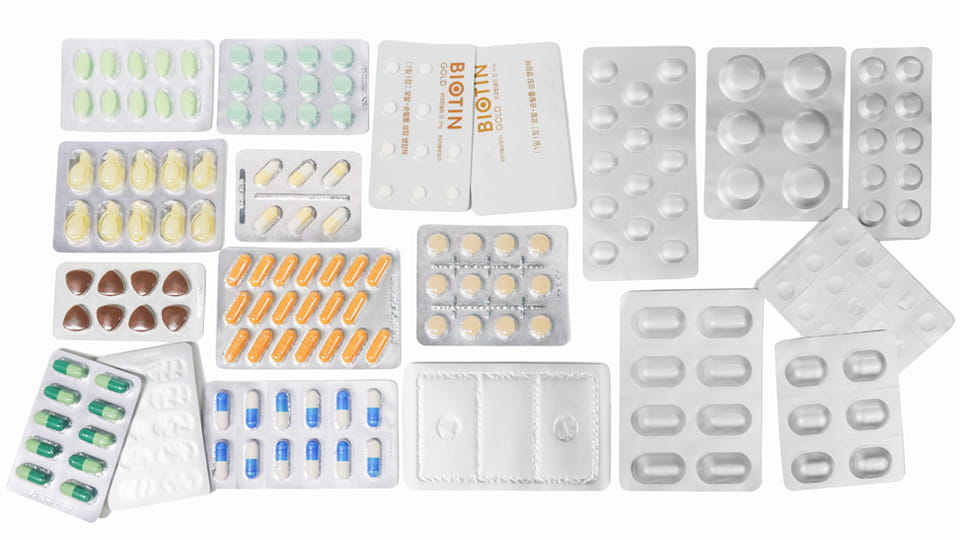
Not all films and foils perform the same at high volume. During scale-up, you must double-check that your chosen plastic web and lidding foil work well at the intended production rate and conditions.
For both web and foil, insist on material lot consistency. A material batch that formed fine on small runs can behave differently in long runs if thickness or coating weight vary. Ask suppliers for data sheets showing thickness tolerances, MVTR/OTR (oxygen transmission), and recommended heat-seal conditions. As one example, a PVC/PVDC film spec might list WVTR of 0.3–0.6 g/m²/24h (much lower than plain PVC) and sealing range 160–180 °C.
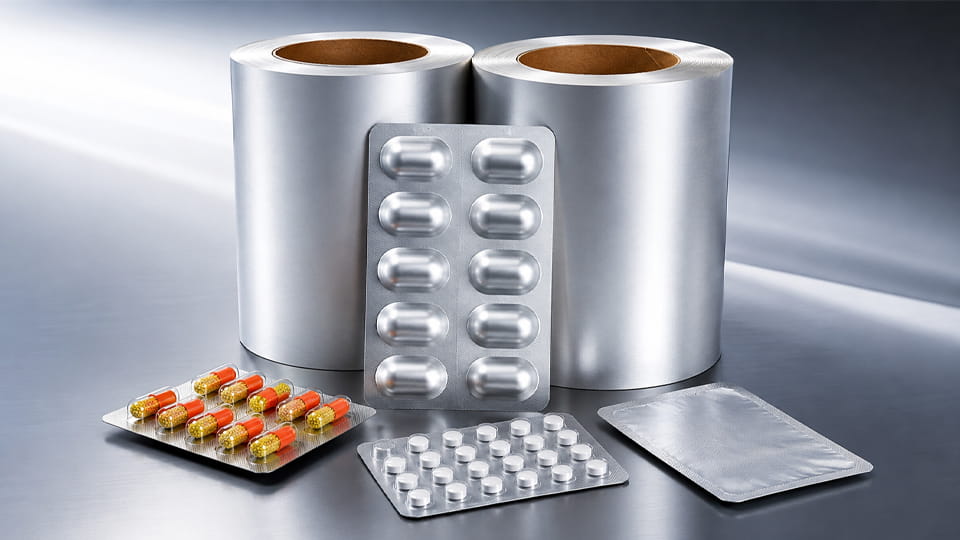
Finalmente, test the materials on a trial machine if possible. Even if they worked on pilot, verificare with actual machine hardware that the film forms correctly (no thinning or tearing) and the foil seals fully at your target parameters. Document the forming temperature and seal parameters that give defect-free pockets. Ricordare: material choice locks in some limits (per esempio. foil thickness vs. peelability), so pick wisely before scaling up.
Prossimo, ensure your tooling (molds and punches) suits the product and machine. A common scale-up mistake is to assume a lab-sized mold works the same on a faster line – but small misalignments or depth errors can become defects at speed.
In caso di dubbio, build a prototype mold (per esempio. via CNC aluminum) and trial-run it. Any uneven walls or pop-up are signs the mold needs tweaking. Ricordare: even a well-designed tooling for a single lane might transfer stresses to the machine when multiplied. If you increase lanes (per esempio. 2→4 lanes), the frame and drive must handle the extra forming load.
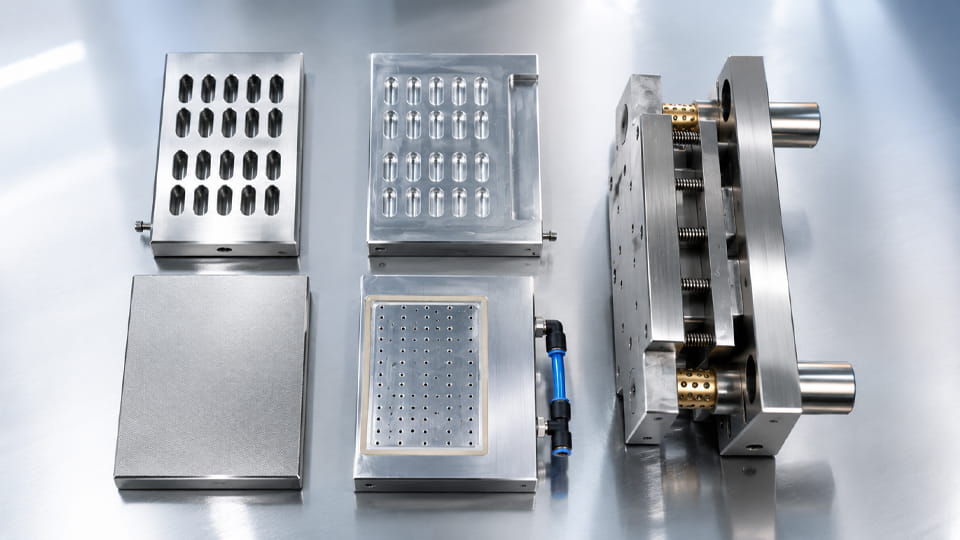
In sintesi, treat tooling validation as an engineering project. You’re essentially confirming that “laboratory-scaled” cavities will scala – maintaining uniform film thickness and seal area – when run continuously on the production machine. This avoids surprises like thin spots or seal bridges when you hit high speed.
Scale-up success depends on nailing the right processing parameters. Think of this as defining a process window – a combination of temperature, pressione, time and speed settings that reliably produce good packs even with normal variation.
It’s wise to use a Design of Experiments (DOE) or systematic trials here. Per esempio, test at mid-range speed and see if the seal passes a strength test. Se non, tweak temperature or time. Then try a slightly higher speed and adjust again. Record these runs. The goal is to define a range of acceptable values – a “sweet spot” where small fluctuations (±2 °C, ±50 ms, ecc.) still yield good seals.
In pratica, a table of parameters can help. Per esempio:
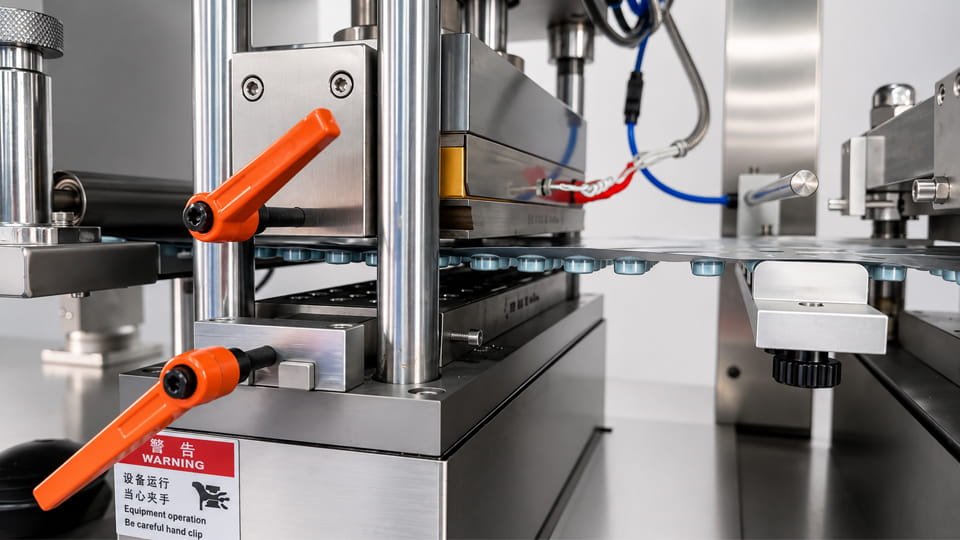
By tuning these on a smaller scale (or in pilot runs), you establish the conditions needed at full scale. FDA-style thinking applies: you’re gathering “objective information and data from laboratory-, pilot-, and/or commercial-scale studies” to ensure the process consistently meets quality attributes. Once you have a stable recipe (per esempio. 170 °C, 1.5 s, 5 bar, at 150 PPM), you can move to full-capacity trials.
It may seem obvious, Ma verify your equipment is up to the task. A blister pack machine’s nameplate might say “200 PPM”, but actual output depends on many factors.

Insomma, match every part of the line to the blister output. This is a good place to consult the equipment manufacturer. Per esempio, JinluPacking's macchine da imballaggio con blister come in various models (separare- to multi-lane) and can often be customized for your speed and format needs. If your needs are near the top end of a machine’s spec, discuss options like extra feed feeders, additional inspection stations, or even upgrading to a larger machine.
With goals set and systems ready, correre incremental production trials. Don’t jump straight from 0% A 100% velocità. Invece, increase speed in steps, monitoring output at each stage.
Risoluzione dei problemi is key during trials. Problemi comuni and quick fixes include:
Dove possibile, apply Design of Experiments (DOE) techniques: vary two parameters at a time to find optimal combinations. Even a 2×2 matrix (per esempio. two levels of temperature and two of dwell time) can quickly show the safe operating zone. The FDA guidance highlights that you should understand and “control variation commensurate with the risk it represents”. This means if a parameter (like heat) is critical to seal integrity, you must validate its control tightly.
At the end of trials, you should be running comfortably at your target output with defect rates within spec. Se non, revisit earlier steps (maybe tooling needs change, or a different material).
Before commercial release, treat the linea del blister as you would any critical manufacturing process. Follow a qualification and validation program:
Key CQAs for blister packaging usually include:
During PQ, all parameters must stay within your defined process window. The FDA guidance reminds us that a validated process should have “consistent performance… so that it will consistently produce [prodotti] meeting those attributes”.
Non dimenticare cambiare controllo: if any element changed during scale-up (new tooling, new material lot, different machine), evaluate whether you need re-validation. Nel settore farmaceutico, even a new material supplier or a different machine lot number often triggers at least partial requalification.
Once PQ is complete with acceptable results, you can move to Continued Process Verification (CPV), the monitoring stage during routine production (Palcoscenico 3 of FDA validation). But that’s beyond scale-up scope. Per ora, your goal is to ensure the line is fully qualified and capable of consistently good output.
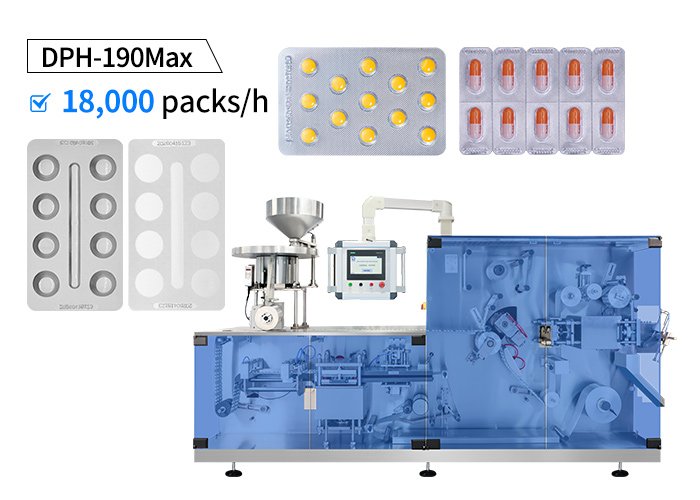
Use this quick review checklist before full production:
If all these boxes are checked, you can be confident your linea del blister is ready for commercial runs without nasty surprises.
Scaling up blister packaging is a multi-step journey, not a single switch. By following this checklist – from confirming material compatibility and tooling design, through optimizing heat-seal parameters, to full validation – you’re scaling up the process as well as the production speed. That means when you dial up to commercial rates, you’re getting coerente, high-quality blister packs and not a stream of rejects.
Ricordare: the goal is smooth production, not just maximum machinespeed. In altre parole, don’t rely on the machine’s nameplate speed alone – make sure every subsystem can actually support it. As one of our engineers likes to say, “We’re not just increasing output, we’re maintaining output quality.”
Ready to scale up? Start planning early, involve your packaging equipment supplier in the discussion, and use this guide to stay on track. Contact Jinlu Packaging’s technical team or visit our website for advice on matching the right blister machine and accessories to your product needs.
Blister packaging scale-up means transitioning from lab or pilot runs to full commercial production on blister packaging lines. It involves not just running the machine faster, but ensuring materials, utensileria, heat-seal settings, and equipment capabilities all work reliably at higher output.
Because factors that seemed minor at small scale can cause big problems at high speed. Riscaldamento irregolare, slight film thickness variation, or misaligned tooling might be tolerable in a trial, but at 10× output they lead to seal failures or rejects. Scale-up requires controlling all those variables together.
The forming web is often PVC or PVC/PVDC laminate (for more moisture barrier), or high-barrier laminates like PCTFE/PVC. Lidding materials include aluminium foil (with heat-seal lacquer), aluminium/PET foils, or fully laminated Alu-Alu (foglio formato a freddo). Ognuno ha dei compromessi: PVC is cheap but has moderate barrier, PVDC-coated PVC adds moisture protection, and cold-formed foil offers the highest barrier.
Match the material’s barrier properties and formability to your product’s needs. For a moisture-sensitive drug, a high-barrier PVC/PVDC or PCTFE film (low WVTR) with a quality sealant foil is best. Also consider processing: if your process can’t handle too thick a foil, a thinner foil or different laminate might be needed. Always test candidate materials in pilot trials.
Mainly the sealing temperature, tempo di dimora (contact time under heat), pressione di tenuta, and the machine speed. In practice these interact: a faster speed means less dwell time, so you might need higher temperature or pressure. Uneven heat distribution or incorrect dwell can cause weak seals or partial delamination. All must be optimized together.
It depends on the materials. Per esempio, a PVC/PVDC film typically seals around 150–170 °C, whereas certain aluminium lidding foils may need 170–200 °C. The goal is a strong seal without damaging the film. Always run trials: measure seal strength or test leakage at candidate temperatures to find the “sweet spot.”
Because the shape and dimensions of the blister cavities determine how the film stretches and seals. A bad cavity design can cause film thinning or misfeeds at high speed. During scale-up, even a small misalignment or incorrect draw ratio can cause tears. Ensuring the mold fits the product (with proper clearance and draft angles) and is aligned on the machine is key to consistent forming and sealing.
Use the standard IQ/OQ/PQ approach. Primo, QI: confirm the machine is installed correctly (all components in place, calibrato). Prossimo, OQ: run the machine through its operational range, checking parameters (temps, pressioni, velocità). Finalmente, PQ: perform production runs at target conditions, collect samples and test all critical quality attributes (forza della tenuta, integrità, ecc.). This ensures your process consistently meets specifications before release.
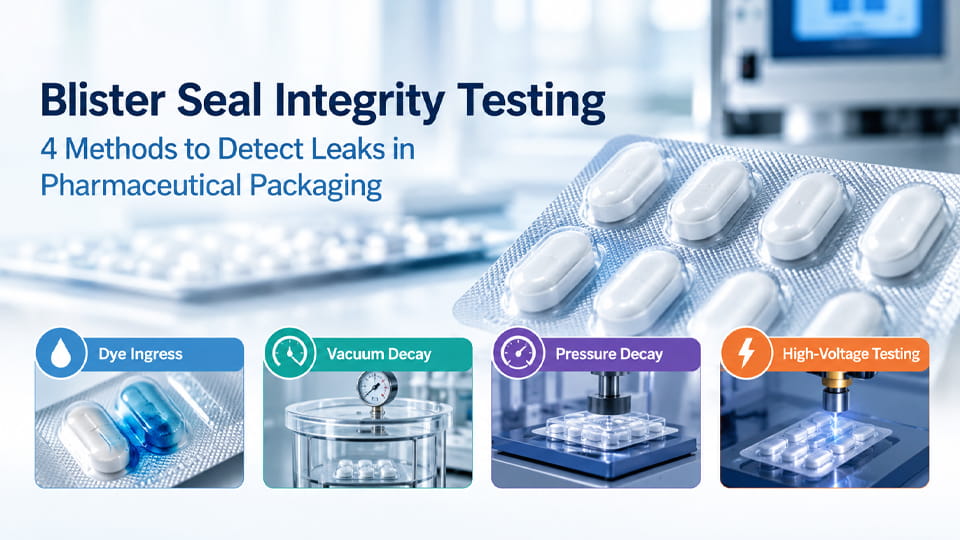
Common tests include vacuum or pressure decay methods, and dye or bubble tests. Per esempio, you might seal a pack, create vacuum, and see if it holds (no pressure rise). Or submerge packs in colored dye or pressurize them with air to spot leaks. Seal strength (peel force) testers are also used. The exact method depends on your setup, but the goal is to detect any pinholes or delamination.
Upgrade or choose a new machine if your current equipment can’t meet the defined scale-up targets. Signs you need a larger machine include: inability to reach desired packs/minute, frequent jams at speed, or lack of features (corsia multipla, ispezione in linea, sistemi di alimentazione). Idealmente, assess equipment capability early – if a single-lane lab machine can’t hit needed throughput, you may need a 4- or 6-lane commercial blister machine. Manufacturers can advise which model meets your speed and format requirements.
Riferimenti:
1.Convalida del processo: Principi generali e pratiche —— FDA
2.Allegato GMP dell'UE 15: Qualificazione e convalida —— Commissione europea
3.Contenitori: test delle prestazioni —— USP General Chapter 〈671〉
4.Influenze dello spessore della lacca termosaldata sulla qualità delle confezioni blister —— ScienceDirect
5.Standard Test Method for Leak Detection in Blister Packaging by Vacuum Deflection Method by Laser Measurement —— ASTM F3169-16(2024)
6.Ottimizzazione della progettazione del confezionamento in blister per prodotti farmaceutici in forma solida —— ScienceDirect
7.Comparison of quantitative analysis techniques for the determination of heat seal lacquer layers on aluminum blister foils —— PubMed