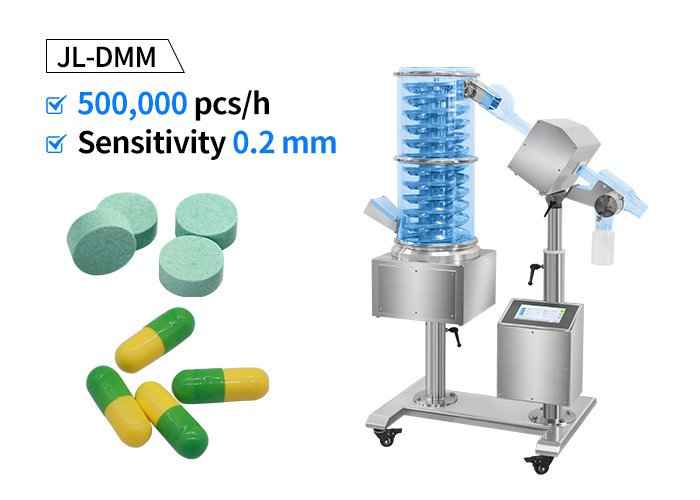
Dépoussiéreur de tablettes avec détecteur de métaux principalement utilisé dans l'étape intermédiaire de compression de tablette, entre les presse à comprimés et emballages pharmaceutiques.
Le système de dépoussiérage sépare les comprimés non qualifiés, tandis qu'un système de détection de métaux identifie et élimine les comprimés contenant des impuretés métalliques.


Anti-interférence entièrement fermé, assurant une précision de détection des métaux de 0,2 mm.
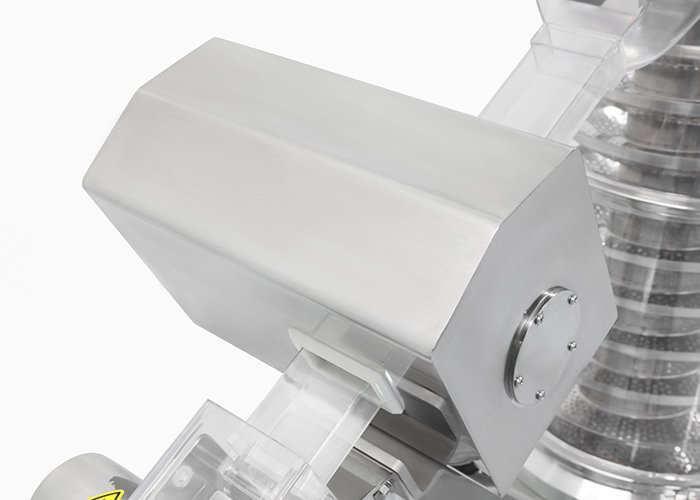
Identifiez et éliminez avec précision les impuretés métalliques excessives dans les produits pharmaceutiques.
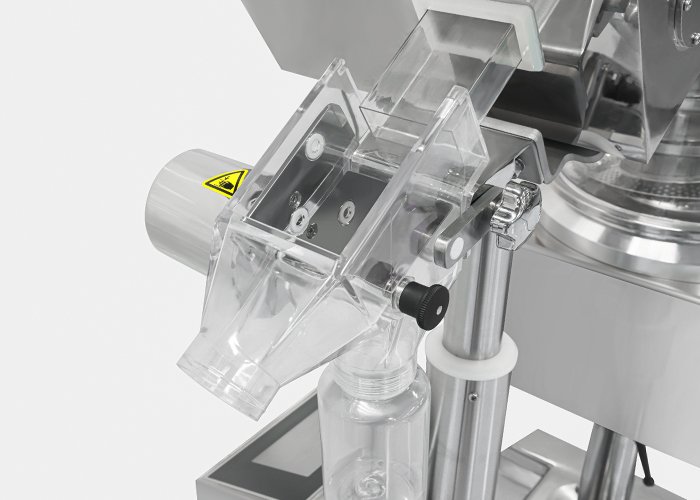
Les comprimés sont lisses et sans bavures, et le couvercle transparent est facile à observer.
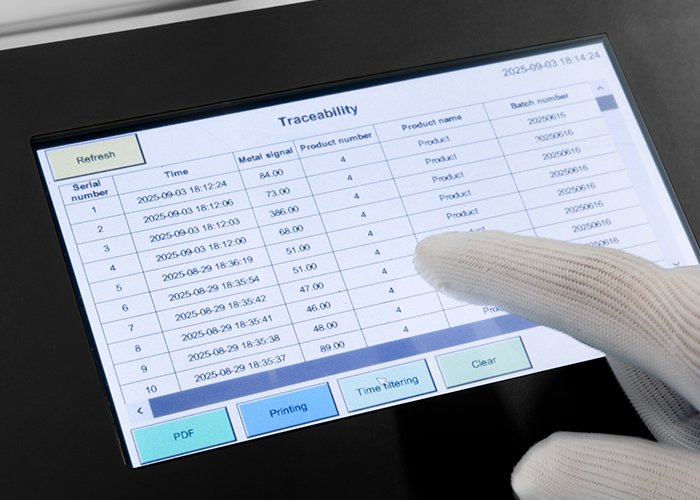
L'IHM affiche toutes les données de la machine, rendant l'opération plus simple et plus pratique.
| Modèle | JL-DMD |
| Capacité | 500,000 pièces/h |
| Sensibilité | Fe 0,2 mm, sans Fe 0,3 mm, SUS 0,4 mm |
| Convient pour | Comprimé, Capsule, Gélules |
Situé à Canton, JL est un fournisseur de machines de conditionnement pharmaceutique intégrant l'ingénierie, fabrication et vente.
Notre équipe se concentre sur le développement du traitement pharmaceutique & des machines d'emballage qui allient fonctionnalité, qualité, et la rentabilité, en plus de fournir à nos clients un service à guichet unique sans tracas.
Nos avantages
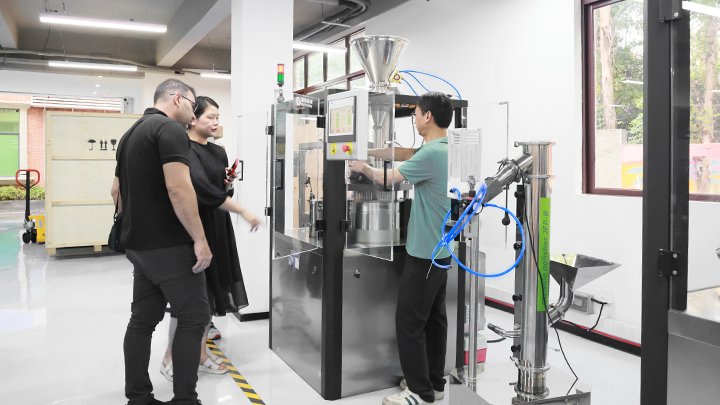
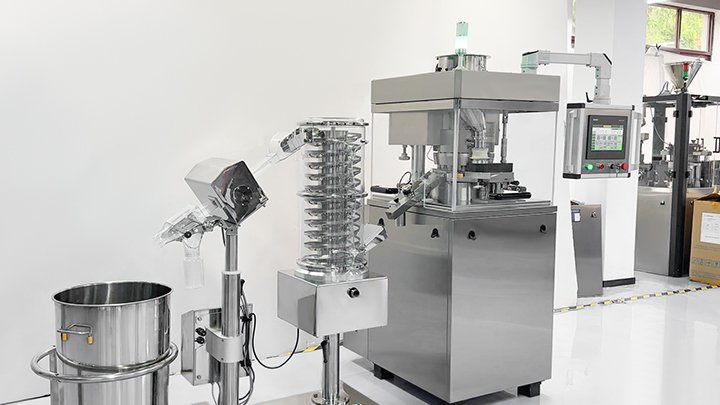
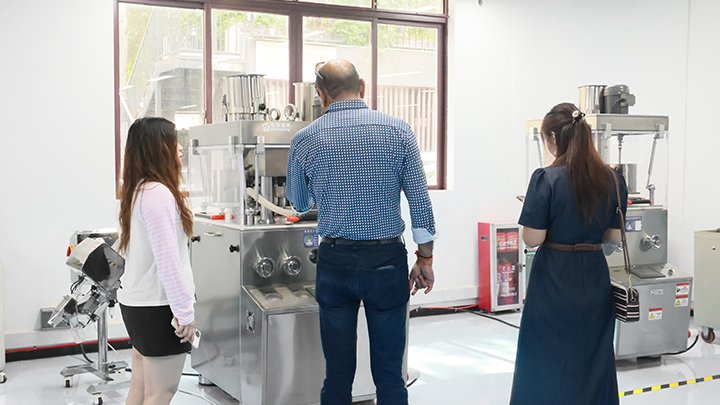
Notre équipe de service client et notre propre équipe d'ingénierie sont toujours disponibles pour résoudre vos besoins urgents..
Le dépoussiéreur de tablette avec détecteur de métaux est produit en stricte conformité avec les normes de fabrication de l'atelier 6S., et la machine est conforme aux normes CE et cGMP.
Jinlupacking fournit des manuels et des vidéos complets pour une utilisation quotidienne, entretien et nettoyage.
Une automatique dépoussiéreur de comprimés avec détecteur de métaux est un dispositif de contrôle de qualité critique après le processus de pressage des comprimés. Il est principalement utilisé au stade intermédiaire de la production de machines de compression de comprimés., situé entre la presse à comprimés et la machine de conditionnement pharmaceutique. Sa valeur fondamentale réside dans sa conception intégrée, permettant un double contrôle qualité: un système de criblage sépare les comprimés non qualifiés (comme cassé, de forme irrégulière, ou des comprimés de poids incorrect), tandis qu'un système de détection de métaux identifie et élimine les comprimés contenant des impuretés métalliques. Cette conception intégrée réduit non seulement l'empreinte de l'équipement tout au long du processus de production, mais, plus important encore, évite le risque de contamination secondaire lors du transport des comprimés sur plusieurs machines.
En production réelle, ce détecteur de métaux et la machine à dépoussiérer les comprimés gère les comprimés d'un diamètre allant de 3 mm à 25 mm, répondre aux exigences d'inspection des comprimés de différentes formes, y compris les formes rondes et irrégulières. Les applications typiques incluent l'inspection finale de la qualité des formes posologiques orales solides, suivi de la qualité de bout en bout des médicaments à haut risque (tels que les comprimés à libération prolongée et à libération contrôlée), et tests spécialisés de formes posologiques spéciales sensibles aux impuretés métalliques (tels que des comprimés contenant des ingrédients magnétiquement sensibles). Selon Thermo Scientific’données d'application, ce type d'équipement peut réduire de plus le risque de contamination métallique dans les produits pharmaceutiques 99.9%, réduisant considérablement le risque de rappel de médicaments.
Du point de vue de l’efficacité de la production, les modèles actuels ont une capacité de traitement maximale allant jusqu'à 1 millions de comprimés par heure (à base de comprimés de 8 mm de diamètre), tandis que le module de détection de métaux peut traiter jusqu'à 500,000 comprimés par heure, s'adaptant parfaitement au rythme de production des presses à comprimés rotatives à grande vitesse et évitant qu'il ne devienne un goulot d'étranglement en termes d'efficacité sur la ligne de production.
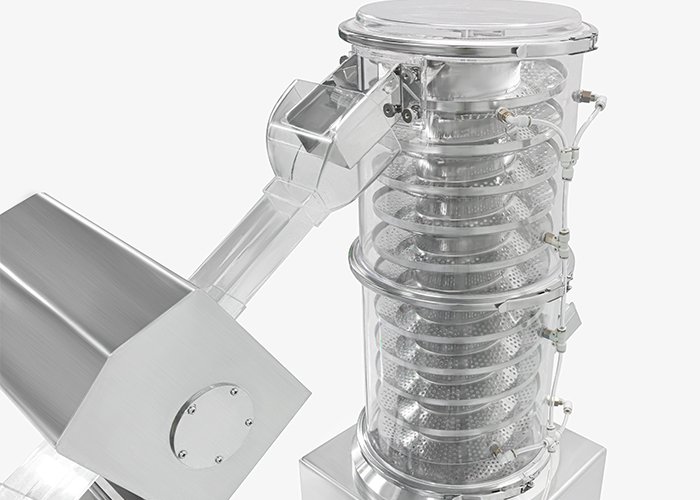
Une machine de dépoussiérage de comprimés avec détection de métaux se compose de deux modules de base: un système de dépistage et un système de détection de métaux, qui fonctionnent ensemble grâce à une conception mécanique sophistiquée et un contrôle électronique. Emballage Jinlu’La machine de dépoussiérage des comprimés à détection de métaux utilise une conception à rotation supérieure qui permet aux comprimés de tourner naturellement pendant le processus de levage, améliorer l'efficacité du dépistage et éliminer la poussière de la surface du comprimé.
Le système de détection de métaux fonctionne sur la base du principe de fonctionnement de l'induction électromagnétique. Lorsque des comprimés contenant des impuretés métalliques traversent le champ magnétique, ils perturbent l'équilibre du champ magnétique, générer une différence de tension induite entre les bobines de réception des deux côtés. Lorsque le système détecte une différence de tension dépassant la valeur définie, ça déclenche le rejet. Actuellement, il existe deux méthodes de rejet traditionnelles: soufflage d'air et tige de poussée. La méthode de soufflage d'air utilise un flux d'air à haute pression pour souffler instantanément les comprimés impurs loin du canal de transport principal et convient aux comprimés légers ou petits.. La méthode à tige poussoir ou à tige rabattable utilise un levier mécanique pour pousser les comprimés rejetés dans un canal à déchets ou les déposer dans un dispositif de collecte des déchets et convient aux comprimés plus lourds ou de forme irrégulière.v
Les paramètres de performance clés d'un détecteur de métaux automatique et d'une machine de dépoussiérage de comprimés à grande vitesse incluent la capacité de polissage et l'efficacité du processus de criblage., ainsi que la sensibilité de détection des impuretés du système de détection de métaux. Le système de criblage convient aux comprimés allant de 3 mm à 25 mm. Utilisation d'un tamis en inox 316L, il peut maintenir un taux de casse de comprimés inférieur 0.1% à un rythme de traitement de 500,000 comprimés par heure.
Les paramètres de performance d'un système de détection de métaux sont plus complexes, nécessitant des sensibilités de détection différenciées en fonction des différents types de métaux. Selon les normes de l'industrie, les modèles de haute qualité devraient être capables de détecter les particules de fer supérieures à 0,3 mm, métaux non ferreux (comme le cuivre et l'aluminium) plus grand que 0,4 mm, et particules d'acier inoxydable de plus de 0,5 mm. Emballage Jinlu’Les détecteurs de métaux ont amélioré leur limite de détection des particules de fer à 0,2 mm en optimisant la disposition des bobines et les algorithmes de traitement du signal.. Cette précision est suffisante pour capturer les minuscules débris métalliques générés pendant la production, tels que les copeaux de fer provenant de l'usure de la presse à comprimés.
La stabilité dynamique est une autre mesure clé pour les équipements d'inspection et de criblage des métaux à grande vitesse, faisant référence à sa capacité à maintenir la précision de détection tout en fonctionnant à pleine capacité. Cette métrique est généralement mesurée par l'amplitude de fluctuation du signal, qui devrait être compris entre ± 2 % pour un équipement de haute qualité.
Les paramètres d’adaptabilité de la production sont tout aussi importants, y compris l'équipement’plage de réglage de la vitesse de traitement, adaptabilité de l'épaisseur des comprimés, et tolérance environnementale. Les machines modernes offrent généralement des vitesses de traitement réglables allant de 300,000 à 1,000,000 comprimés par heure pour répondre aux différents besoins de production par lots. Les exigences environnementales incluent une plage de température de -10°C à 40°C et une plage d'humidité de 30% à 85%, ce qui est particulièrement important dans les régions tropicales ou dans les environnements de production à forte humidité.
Dans la conception d'équipements pharmaceutiques, la conformité est aussi importante que la performance. Les machines de tri de comprimés et de détection de métaux avec détection de métaux doivent répondre à plusieurs normes internationales, y compris la FDA (NOUS. Administration des aliments et des médicaments) certification matérielle, Ema (Agence européenne des médicaments) réglementation de qualité, et GMPc (Bonnes pratiques de fabrication actuelles) exigences. Ces normes régissent non seulement la sélection des matériaux d'équipement, mais fixent également des exigences spécifiques pour la conception structurelle., enregistrement de données, et validation du nettoyage.
Les composants qui entrent en contact direct avec les produits nutraceutiques et pharmaceutiques doivent être des matériaux de qualité pharmaceutique.. 316L'acier inoxydable est préféré pour son excellente résistance à la corrosion et ses faibles propriétés de lixiviation.. Il résiste aux agents de nettoyage et de désinfection courants (comme l'éthanol et l'acide peracétique) sans corrosion ni lixiviation. L'équipement’La conception structurelle incarne pleinement le principe cGMP de « nettoyabilité. » Emballage Jinlu’Le dépoussiéreur de tablette avec détection de métaux présente une conception à dégagement rapide, permettant de retirer rapidement le corps du tamis et le couvercle extérieur. Toutes les surfaces en contact avec le médicament sont claires, assurer un nettoyage minutieux. Cette conception du dépoussiéreur de comprimés à capsules de Jinlu Packaging avec inspection des métaux empêche non seulement efficacement la contamination croisée, mais réduit également considérablement le temps de validation du nettoyage.. En outre, l'isolation complète de la chambre de travail et de la chambre d'entraînement empêche les impuretés mécaniques telles que les lubrifiants de pénétrer dans les zones de contact avec les médicaments, éliminer structurellement les risques de contamination.
La traçabilité des données est une exigence de conformité essentielle pour les équipements pharmaceutiques modernes. FDA 21 Partie CFR 11 les réglementations imposent des normes strictes en matière de gestion électronique des données, y compris l'intégrité des données, confidentialité, et traçabilité. Modèles haut de gamme, comme le DMD, enregistrer automatiquement toutes les données d'inspection, y compris la taille, emplacement, et temps de rejet des impuretés métalliques. Ces données sont cryptées et stockées avec des pistes d'audit, répondre pleinement aux exigences réglementaires en matière de gestion des données.