
Qu'est-ce qu'un comprimé à désintégration orale? An orally disintegrating tablet (ODT) is a solid oral dosage form that dissolves in the mouth within seconds, without the need for water. En pratique, you place an ODT on your tongue and it quickly breaks apart and disperses. This “mouth-dissolving” behavior sets ODTs apart from normal tablets that must be swallowed with water. Regulatory agencies define ODTs by their rapid disintegration: Par exemple, the FDA describes an ODT as “a solid dosage form… which disintegrates rapidly, usually within a matter of seconds, when placed upon the tongue”. (The European Pharmacopoeia likewise requires an ODT to disperse in the mouth in under 3 minutes.) ODTs go by many names – mouth-dissolving tablets, fast-melt tablets, orodispersible tablets, and so on – but all share the feature of immediate dissolution in saliva.
Autrement dit, imagine a pill that “melts” on your tongue. ODTs use special excipients (like mannitol and super-disintegrants) to create a highly porous, fast-breaking tablet. They disintegrate so quickly that the drug is swallowed along with saliva, allowing for rapid drug delivery (and often slightly higher bioavailability). Par exemple, studies found that anti-nausea (ondansetron) and allergy (loratadine) ODTs were easily taken by children and improved onset. Over the past decades, ODTs have become a popular alternative to regular comprimés et gélules for patients who have trouble swallowing. En fait, market surveys show most patients and prescribers favor ODTs: well over half of people preferred an ODT to a conventional pill, citing ease of use. En bref, an ODT combines the convenience of a tablet with the speed of a liquid.
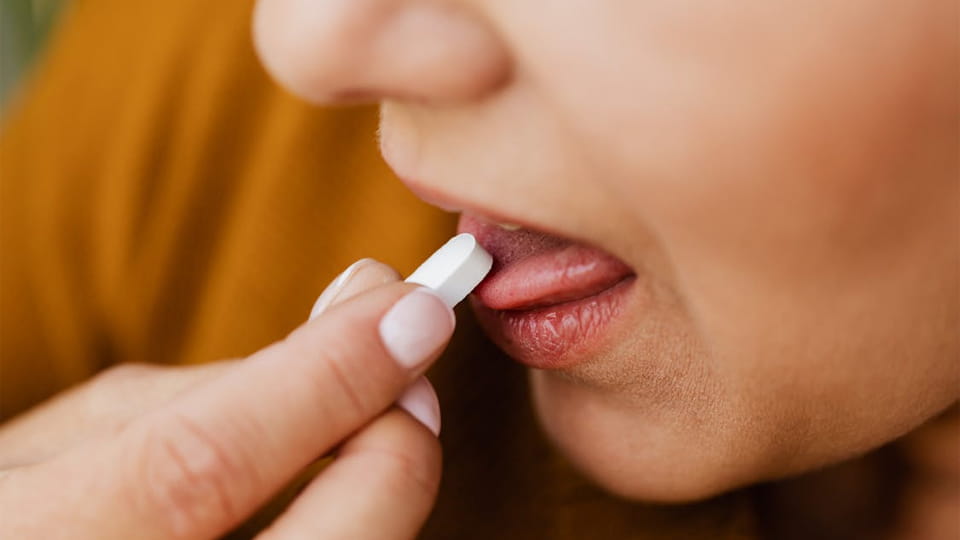
Orally disintegrating tablets were developed to solve real-world challenges. They are especially useful for pediatric, geriatric, and dysphagic patients. By dissolving instantly on the tongue, ODTs eliminate the need for water – a big win for on-the-go dosing. Par exemple, travelers and busy professionals appreciate not needing a glass of water to take medicine. This “water-free dosing” also boosts hygiene (no contact with unwashed glasses) and can significantly improve patient compliance. Dans une étude, nearly a third of adults reported difficulty swallowing pills, and many simply skipped doses because of it. ODTs avoid that issue.
Some specific advantages include:
This combination of benefits – quick action, portabilité, and patient preference – explains why dozens of ODT products are now on the market (par exemple. Claritin® RediTabs, Zofran® ODT). En fait, 70–80% of consumers in surveys said they would choose an ODT over a regular tablet or liquid. En résumé, ODTs make life easier for patients and can even extend a drug’s market by reaching populations who dislike pills.
ODT tablets require specialized formulation and production. Their core feature – rapid disintegration – dictates the choice of excipients and processing. Manufacturers typically use porous fillers (like mannitol or sorbitol) and super-disintegrants (such as crospovidone or croscarmellose) to ensure the tablet collapses on contact with saliva. Many ODTs also include sweeteners and flavorings to mask taste, since the tablet sits in the mouth. Le résultat est une lumière, quick-dissolving matrix.
There are several common manufacturing techniques:
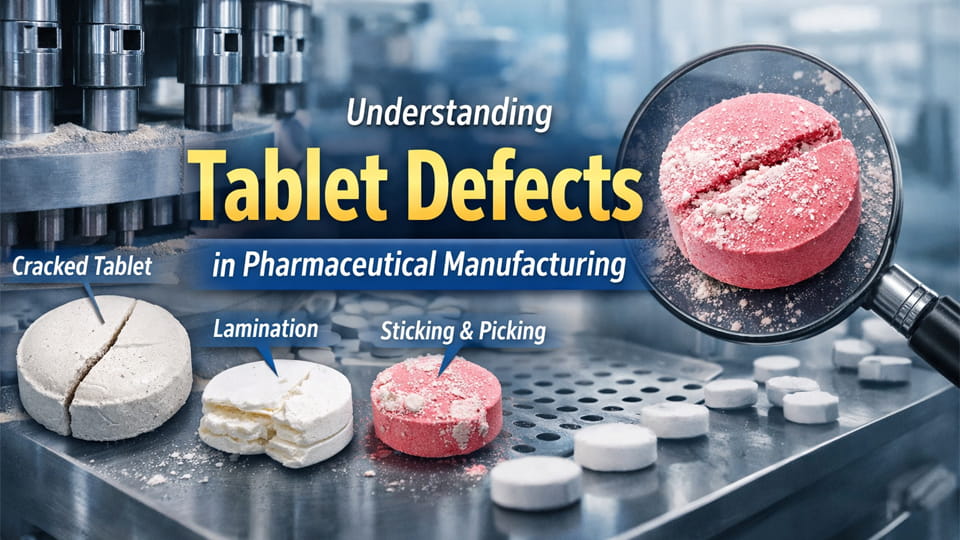
Key formulation points: ODTs are usually low-compression tablets (to remain porous), which makes them relatively soft. They are often somewhat fragile (“friable”) by design. En fait, ODTs typically contain no rigid binders like high levels of cellulose, because those slow dissolution. This softness means friability tests usually fail for ODTs unless handled carefully. It also means taste-masking is critical: without a coating, an ODT’s API contact time in the mouth is longer, so flavors or coatings (like sugar or film coat) are used to keep them palatable. Enfin, most ODTs carry a fairly low dose (souvent <50 mg) because higher drug loads can slow dissolution or make tablets too large to dissolve comfortably.
En bref, manufacturing ODTs requires balancing rapid breakdown with enough tablet strength to survive handling. Many modern formulations use novel excipients (par exemple. Ludiflash, Pharmaburst) that give ODTs that balance of fast disintegration and sufficient integrity. Presses à comprimés rotatives à grande vitesse (with multi-tip tooling) are often used to mass-produce compressed ODTs, while sterile lyophilizers are used for freeze-dried ODTs. Quality control typically includes rigorous disintegration testing: FDA guidance requires ODTs to disintegrate in about 30 seconds or less.
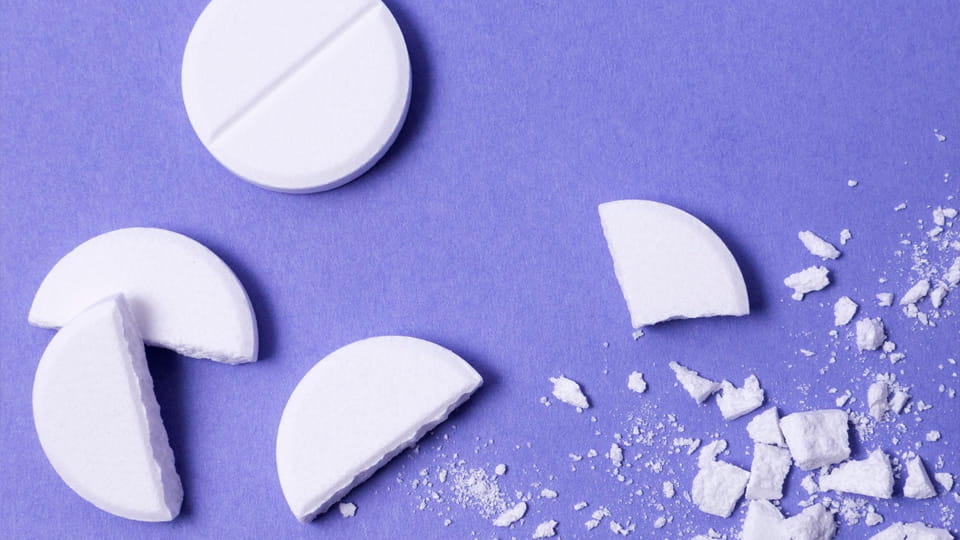
Après avoir pressé, packaging ODTs poses unique challenges. Two issues dominate: fragility and moisture sensitivity. Because ODTs are soft and porous, normal jostling can cause crumbling. Plus important encore, many ODT excipients (like sugars and superdisintegrants) are hygroscopic – they attract water from air. As one review noted, “excipients used in ODTs should disintegrate in a minimum amount of water, and… they may attract moisture from the surrounding; donc, special consideration is needed for storage in a dry place”. Even ambient humidity can degrade an ODT, causing it to swell or lose strength.
For these reasons, ODTs virtually always use high-barrier, conditionnement en dose unitaire. Most manufacturers package ODTs in blister packs made with aluminum foil or foil-laminated films. The aluminum foil backing provides an excellent moisture barrier. One stability study found that ODT tablets in a PVC/PVDC-aluminum blister pack absorbed significantly more moisture than the same tablets stored in an amber glass bottle – highlighting that even blisters must be properly chosen. The industry trend is to use cold-formed aluminum blisters or strip packs (foil sachets) with desiccant linings or included silica packets. Par exemple, a manufacturer’s guide notes that ODTs require “high-barrier materials (tel que plaquettes thermoformées en papier d'aluminium ou enveloppements de bandes) and specialized containers featuring moisture-proof closures and integrated desiccant”.
Why not bottles? Because of their softness, almost no ODT (except a few hard compressed ones) is suitable for a multi-dose bottle. The same packaging fragility that demands moisture protection also means ODTs would break apart under normal bottle fills and shakes. Industry sources emphasize that “high friability and a lack of mechanical strength mean ODTs often need to be packaged in individual blisters instead of bottles”. Only certain second-generation ODT technologies (par exemple. DuraSolv, WOWTAB) can survive bottle filling; even these prefer bottles with a desiccant cap and reclosable seal.
En pratique, alors, a typical ODT line is sealed in unit-dose blisters. Each tablet sits in its own cavity, behind foil that peels away. This has the added benefit of keeping each dose hygienic until use. The blister strips are usually cartoned (placed in paperboard boxes) as the secondary package for labeling. In cold and humid climates, manufacturers may add packs of dessicant inside cartons, or even flush with dry nitrogen. The bottom line: protect ODTs from heat and humidity at all stages.
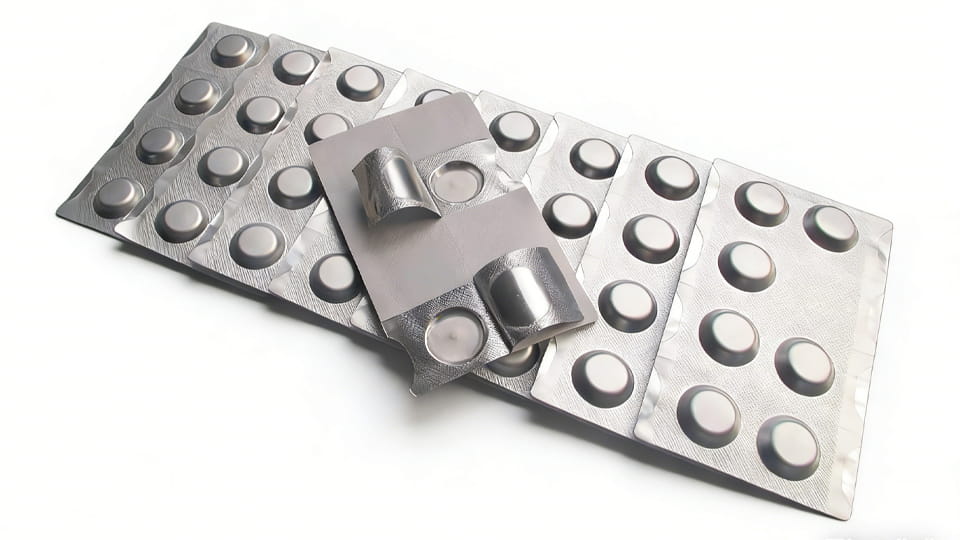
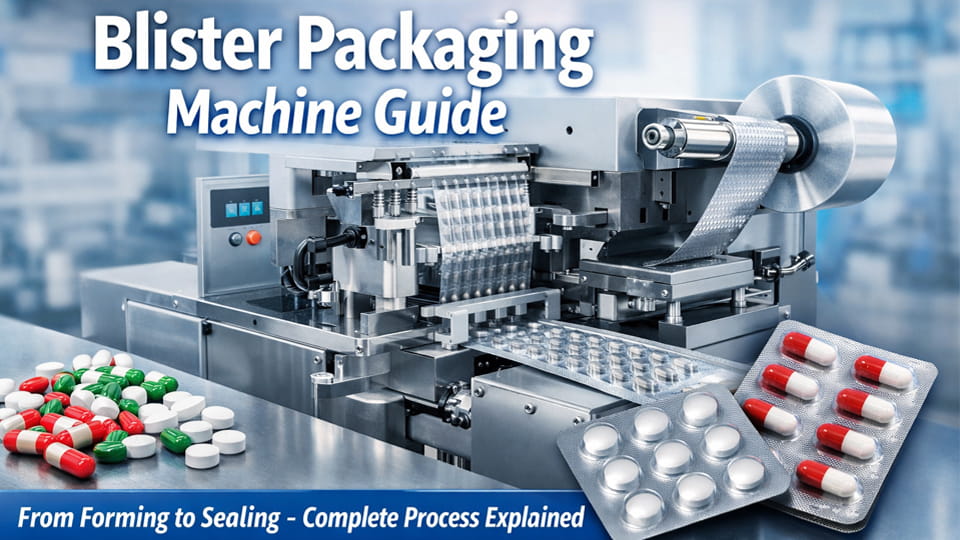
Given these needs, pharma packaging lines for ODTs focus on precision and protection. The core equipment is the machine d'emballage sous blister. Modern blister machines can form plastic pockets (PVC/PVDC or aluminum foil), fill them with tablets, and hermetically seal them with foil laminates. For ODTs, high-speed cold-form blister machines sont souvent préférés. In cold-formers, the foil (usually aluminum) is mechanically pressed into cavities and sealed at room temperature – this avoids the heat of hot-form machines, which could damage heat-sensitive ODTs. (Hot-blister machines are faster and cheaper, but the heat can melt or deform an ODT, so they’re rarely used for these products.)
A complete ODT packaging line typically includes:
Each of these machines must be designed for gentle handling of soft tablets. Par exemple, feeders and pick-and-place systems use vacuum or star-wheel mechanics to move tablets without scratching them. Conveyors and buffers are enclosed in low-humidity zones to avoid exposure. En bref, advanced blister lines with humidity control and precision timing are the industry standard for ODT packaging.
(Note: For smaller batches or clinical trial runs, tabletop blister packers and strip packaging machines are available. These semi-automatic units form and seal ODTs one-by-one under operator loading.)

Orally disintegrating tablets represent a rapidly growing niche in pharmaceuticals. They fill a real patient need for easy-to-take, fast-acting medications. Cependant, manufacturing and packaging ODTs requires extra care. From choosing the right excipients to using specialized blister machines and packaging materials, every step must protect the tablet’s integrity and moisture-sensitive nature. When done correctly, the result is an ODT product that delights users – dissolving easily on the tongue – while meeting regulatory stability requirements.
Whether you’re an API manufacturer or a packaging engineer, understanding the unique workflows for ODTs is key. By combining proven formulation strategies with robust packaging solutions (par exemple. high-barrier blisters and desiccants), you can bring safe, effective ODT products to market. ODTs are not just clever marketing – they can truly improve patient compliance. With the right machinery and know-how, any pharma line can master ODT production and stand out in this advanced dosage form category.
An orally disintegrating tablet (ODT) is a solid oral dosage form that dissolves or disintegrates quickly in the mouth without needing water, usually within a matter of seconds.
Unlike conventional tablets that must be swallowed with water, ODTs are designed to break apart rapidly on the tongue. They are softer and more porous to facilitate rapid disintegration.
ODTs can be manufactured by direct compression, lyophilisation (lyophilisation), spray-drying, sublimation, and molding techniques.
Formulating ODTs requires a balance between rapid disintegration and mechanical strength. They tend to be fragile and sensitive to moisture, making formulation and processing more complex.
ODTs often use excipients like mannitol (for smooth mouth feel) and super-disintegrants that help the tablet absorb saliva quickly and break apart fast.
Oui, because ODTs are typically moisture-sensitive and friable, they are often packed in high-barrier blister packs, cold-formed foil packs, or stick packs to protect from humidity and physical damage.
ODTs are generally not suitable for multi-dose bottles due to softness and risk of breakage. Some specially formulated ODTs may be bottle-packable, but foil blisters remain the industry standard.
Yes — ODTs are preferred for pediatric, geriatric, and other patient groups who struggle with traditional tablets, as they improve ease of administration and patient compliance.
ODTs are formulated to dissolve quickly — in many cases within seconds to under a minute — once placed in the mouth.
Oui, because they are sensitive to heat and moisture, ODTs should be stored in a cool, dry place and kept sealed in moisture-protective packaging until use.
Références:
1. Wikipédia – Orally disintegrating tablet
2.NOUS. Administration des aliments et des médicaments (FDA) Guidance — Comprimés à désintégration orale
3.AAPS Open – “Evaluation of orally disintegrating tablets: regulatory pathways…” (2026)
4.Pharma.Tips – “How are orally disintegrating tablets (ODT) manufactured?