
When Karim received a newly purchased Flüssigblasenverpackungsmaschine and put it into production for sauce packaging, he soon noticed something strange. When the machine was filling soy sauce, the filling accuracy was excellent. But when the product was switched to Mayonnaise, the accuracy dropped noticeably. What on earth was causing such a big difference?
Tatsächlich, Die filling pump for liquid blister packaging was the culprit. Directly determines dosing precision, it is not perfectly suitable for all liquid. Tatsächlich, different liquids require different pump designs. Unfortunately, the pump installed on Karim’s liquid blister machine was not well suited for thicker products like fish oil, which inevitably led to a noticeable drop in filling accuracy.
So here comes another question: which type of filling pump should you choose to ensure precise dosing?
In diesem Artikel, we’ll take a closer look at several common types of filling pump heads and make a comprehensive comparison, so you can choose the right one for your liquid blister packaging machine with confidence.
Wichtige Erkenntnisse
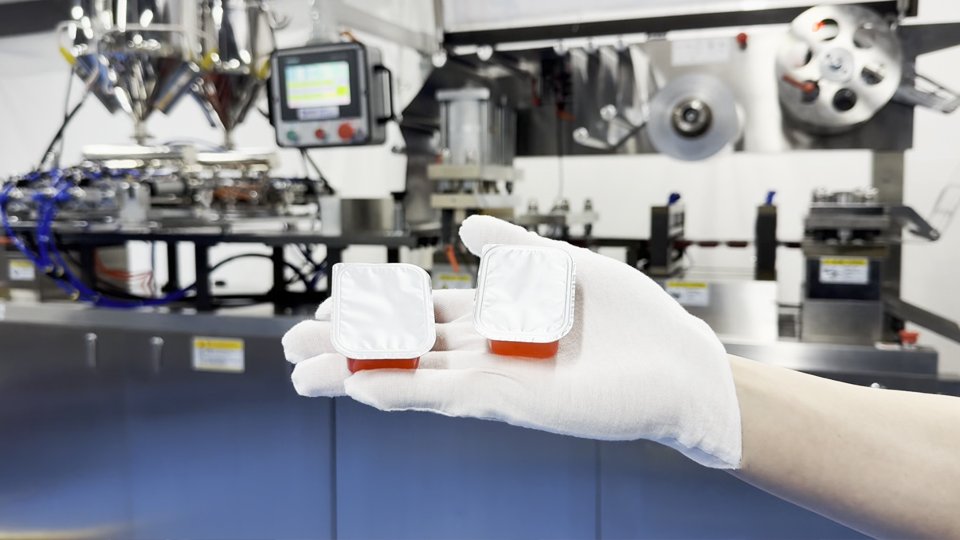
A filling pump for liquid blister packaging is a metering and filling device that precisely measures liquid like sauce and personal care products and then fills it into custom blister packs via cylinders, Getriebe, or other means. In liquid blister packaging machines, the filling pump is a component requiring extremely high filling accuracy; any splashing or dripping can affect the final packaging’s sealing effect. daher, the liquid blister packaging filling pump is not only a liquid delivery device but also a crucial guarantee for ensuring the integrity of the seal.
From thin saline solutions to thick tomato sauce, liquids come in all shapes and consistencies. Ebenfalls, filling pump in liquid blister packaging also come in many different forms.
In the manufacturing of liquid blister packing machines, manufacturers typically use the following three types of filling pumps:
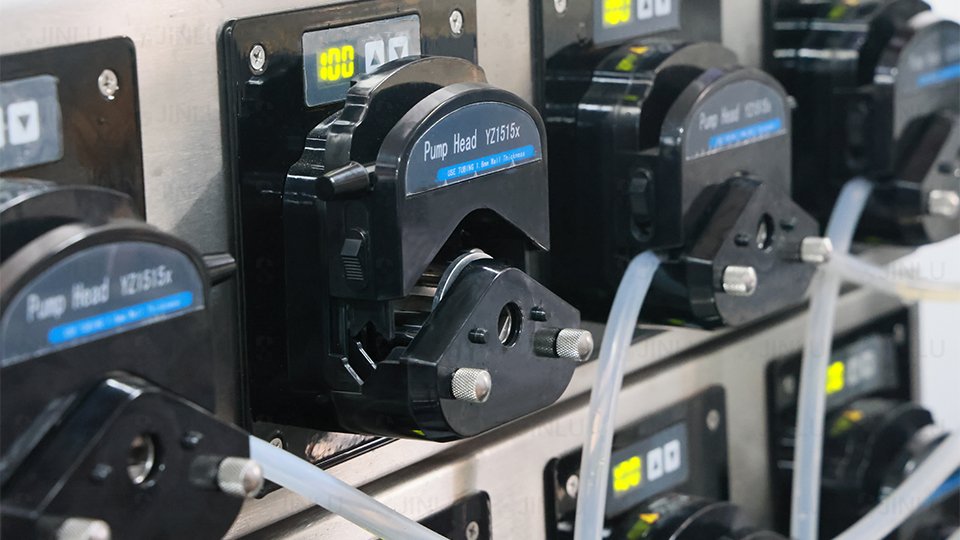
Peristaltic Pump:
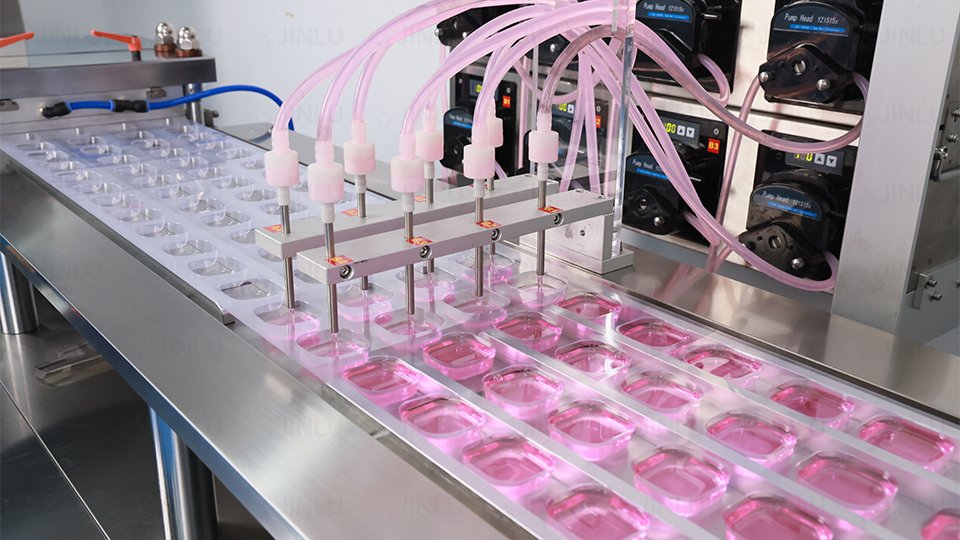
Peristaltic pump transfers liquid by rotating gears that compress a flexible tube, pushing the liquid forward through the tubing.
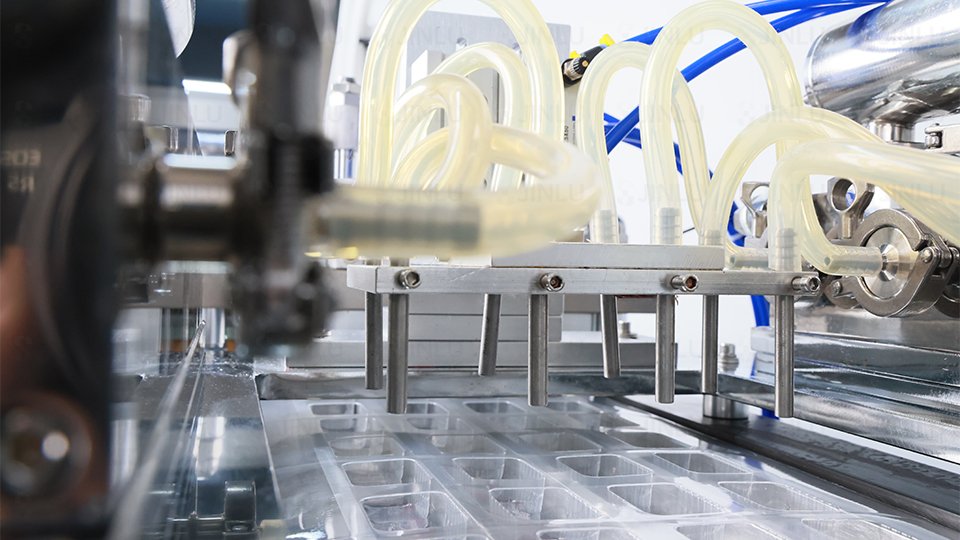
Plunger Pump:
Plunger pump, also known as a piston pump, works much like a medical syringe. Through multiple cylinders, the liquid is drawn in and then pushed out to the formed blister cavity.
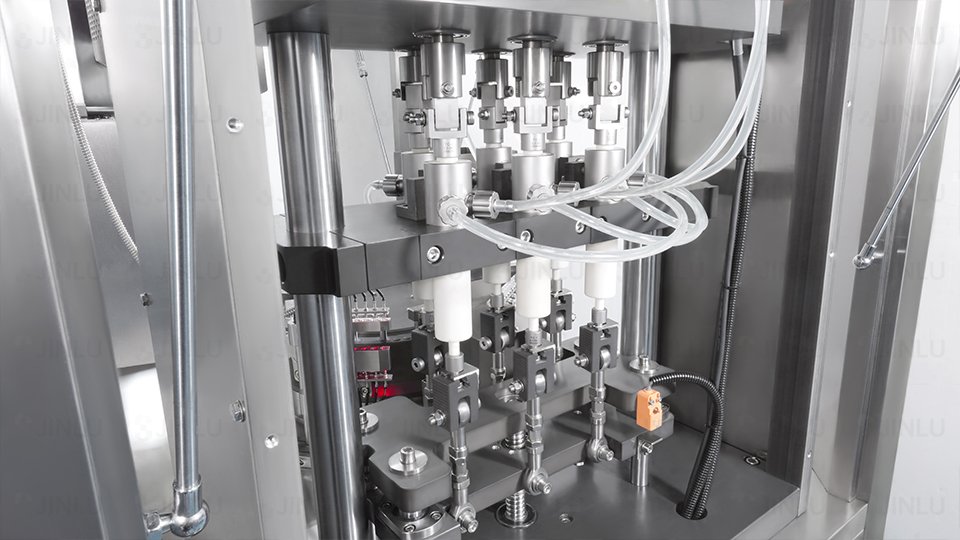
Ceramic Pump:
Ceramic pump is a high-precision, valveless pump made with ceramic components. It offers excellent chemical stability and is commonly used in high-end health supplement or pharmaceutical packaging where precise filling is critical.
To understand which to choose, we must look at the mechanical “heartbeat” of these systems within an automatic liquid blister packing machine. The following is a brief breakdown of each liquid blister packing filling pumps’ working principles.
STEP 1: A flexible tube is threaded through a circular pump head.
STEP 2: Rollers rotate and compress the tube, creating a vacuum by which the liquid is drawn in.
STEP 3: As the roller moves, it pushes the the liquid in the tube forward into the blister cavity.
STEP 1: The cylinder creates negative pressure. The valve opens as the set quantity of liquid flow into the chamber.
STEP 2: The rotary valve shifts, closing the hopper path and opening the nozzle path.
STEP 3: The piston pushes forward, forcing the liquid through the nozzle into the blister.
STEP 1: A rotary ceramic pump is aligned with a specially cut groove with the inlet.
STEP 2: The plunge rotates and pulls up, drawing liquid into the precision-machined chamber.
STEP 3: The piston rotates 180 degrees, aligning the groove with the outlet, and pushes downward to shear the liquid flow.
If you were to switch your production line from making eye drops to producing thick honey, you’d soon find yourself struggling to handle the honey accurately, much like trying to drink a thick milkshake with a coffee stirrer.
Pump selection is crucial because the filling pump for liquid blister packaging is closely linked to the liquid’s texture, fill dosage, and production standards. The table below, showing a concise comparison, can help you visually understand these differences.
Table1-Differences among peristaltic pump, ceramic pump, and plunger pump
| Besonderheit | Peristaltic Pump | Ceramic Pump | Plunger Pump |
| Am besten für | thin liquids. | High-value oils, Lösungsmittel | Viscous pastes, Gele, Cremes |
| Genauigkeit | ±1.0% – 2.0% (Am niedrigsten) | ±0.5% (Höchste) | ±1.0% (Medium) |
| Maintenance Efficiency | Exzellent
(Liquid only touches tube) |
Gut
(Easy disassembly) |
Difficult
(Valves & seals need cleaning) |
Peristaltic Pump: Consider peristaltic pumps when filling highly fluid liquids with relatively low precision requirements. Because the liquid does not come into contact with the pump’s mechanical parts, it is the standard filling equipment for vaccines.
Ceramic Pump: Hohe Präzision, capable of filling liquids and oils. Its good sealing properties and stable chemical properties endow it with corrosion resistance.
Plunger Pump: Plunger pumps are the preferred choice for filling large volumes of viscous liquids such as salad dressing and ketchup. These pump heads are widely used in large-scale production packaging lines.
If the above information has given you a preliminary understanding of liquid blister machine filling pump head selection, then the following section delves deeper into liquid blister pack filling heads, discussing their advantages and disadvantages, as well as factors that may need to be considered when making a selection, to help you finalize your decision.
| Vorteile | Nachteile |
| No cross-contamination: Liquid only contacts the tubing. | Pulsating flow: May cause splashing in small blister cavities. |
| Fast changeover: replacement takes only minutes. | Tubing fatigue: Long runs lead to reduced filling accuracy. |
| Gentle handling: Suitable for sensitive liquids. | Höhere Kosten: Tubes needs regular replacement. |
Peristaltic pumps are common in nutraceutical supplement workshops that produce and package products with good liquidity. Jedoch, it’s not a good choice when it comes to packaging sauce.
| Vorteile | Nachteile |
| high precision: Stable dosing over long production cycles. | Fragile: Ceramic parts can break if dropped. |
| Excellent chemical resistance: Handles many liquid types. | Particle sensitive: Not suitable for liquids with solid particles. |
| Low wear: Long service life with convenient maintenance. | Temperature sensitive: Sudden cooling after heating may damage it. |
Ceramic pumps are widely used in high-precision pharmaceutical and nutraceutical packaging, offering excellent accuracy and durability, but they must be handled carefully.
| Vorteile | Nachteile |
| Wide viscosity range: Works with both thin and thick liquids. | Seal wear: O-rings may wear and need replacement. |
| Niedrigere Anfangskosten: More affordable than ceramic systems. | Harder to clean: Many internal components. |
| High pressure capability: Suitable for viscous products. | Leak risk: Seal failure may cause product leakage. |
Plunger pumps are a versatile and cost-effective option for many liquid products, especially medium to high viscosity liquids, but they require regular maintenance and cleaning to maintain performance.
When configuring your liquid blister pack sealing machine, the following analysis will give you some insights in selecting the suitable filling pump for liquid blister packing:
Choose The Peristaltic Pump When:
Sterility is required: If you are packaging eye drops or injectable liquids.
Batch Sizes are Small: Small batch size: If you produce 6 different products per day. The savings in cleaning time outweigh the cost of piping.
Budget is Tight: The cost of peristaltic systems is often lower.
Choose The Ceramic Pump When:
Product Value is High: If you are packaging CBD oil or concentrated serums priced over $100 per liter. While peristaltic pumps have a higher initial cost, A 2024 manufacturing efficiency report indicates that the high-precision filling of ceramic pumps contributes to a 3% annual reduction in product volume compared to plunger pumps.
Chemicals are corrosive: If your liquid contains essential oils like tea tree that may interact with rubber, then choose the ceramic pump which is designed without rubber.
Choose The Plunger Pump When:
The Liquid Is Viscous: Liquid package including sauce package like ketchup or chocolate, oil package, or honey are viscous.
Volume is Large: For fillings exceeding 20 ml, plunger pumps are generally faster and more consistent.
Außerdem, Dr. Aris Thorne, a Senior Process Engineer at a leading European CDMO, adds: “Regardless of which pump you choose, you should request a ‘backflow’ function test from the machine supplier. If the nozzle cannot retract the last drop of liquid, your seal will fail.”
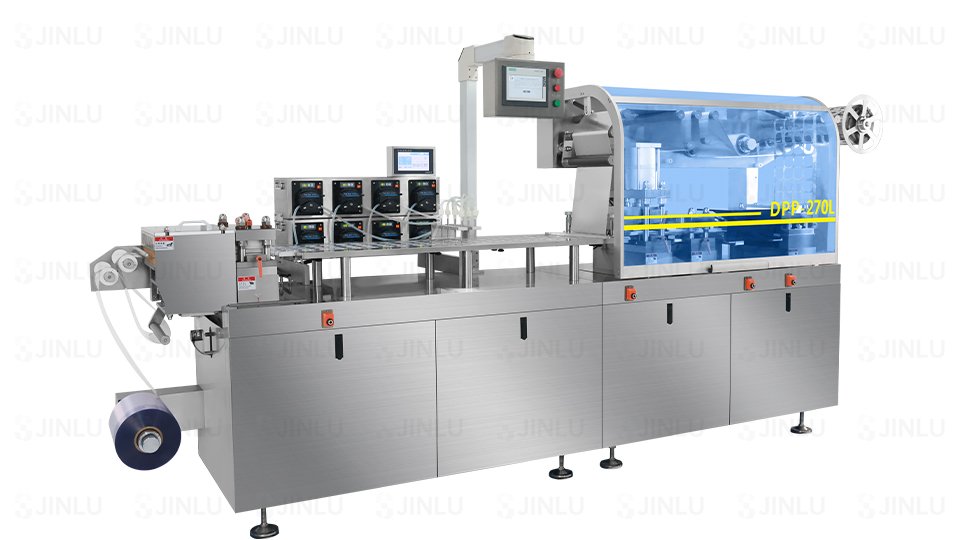
Bei Jinlu Packing, we understand that a blister packaging company needs more than just a machine; they need a competitive edge. Our flat plate liquid blister packing machine like DPP-270 series is engineered to solve the specific pain points of liquid dosing.
User-Friendly Design:
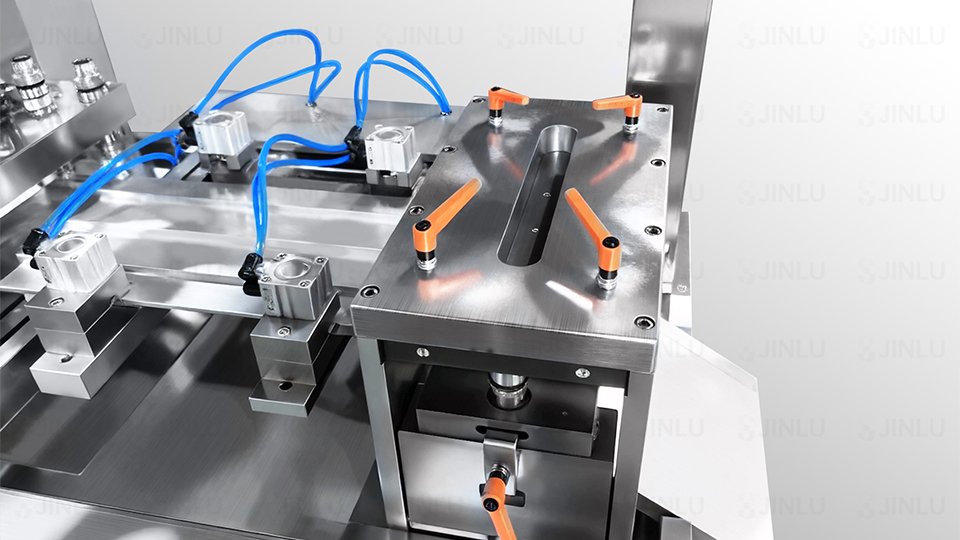
Operator-Friendly Blister Packing Machine:
Thoughtful End-To-End Service
Peristaltic pump, syringe, or ceramic pump? Choosing the right filling pump for liquid blister packaging might not be the most important factor when buying a machine, but it’s certainly one of the easiest to overlook. Having learned from past mistakes, Karim purchased a ceramic pump to ensure accurate fish oil filling, stating, “The efficiency that the filling pump in packaging liquid blister packs contributes may be far less than the machine’s speed does, but the losses caused by the wrong filling pump can be enormous.” If you’re still unsure which filling pump to choose, Fühlen Sie sich frei zu contact Jinlu Packing for a free consultation!
Almost any liquid! A liquid blistering machine can likely pack it as long as it can flow.
Once opened, liquid in a blister should be consumed within 24 hours immediately. Natürlich, it’s worth noting that in winter some products like ketchup need to be heated before packaged into the blister packs.
There’s no need to worry as long as you’re using high-quality equipment. Most filling pumps have a “back-suction” function. After metering, the pump will slightly reverse so that excess liquid will not leak.
Referenzen
[1] Pharmaceutical Manufacturing Efficiency Report 2024: Liquid Dosing Trends. https://www.pharma-manufacturing-trends.com/liquid-dosing-efficiency (Notiz: Illustrative link for format compliance)
[2] Grand View-Forschung: Pharmaceutical Packaging Market Size, Aktie & Trends Analysis Report By Material (Kunststoffe, Paper & Pappe), By Product (Primary, Secondary), By End-use, By Region, And Segment Forecasts, 2023 – 2030.
[3] The Environmental Protection Agency (EPA): Containers and Packaging: Product-Specific Data.