
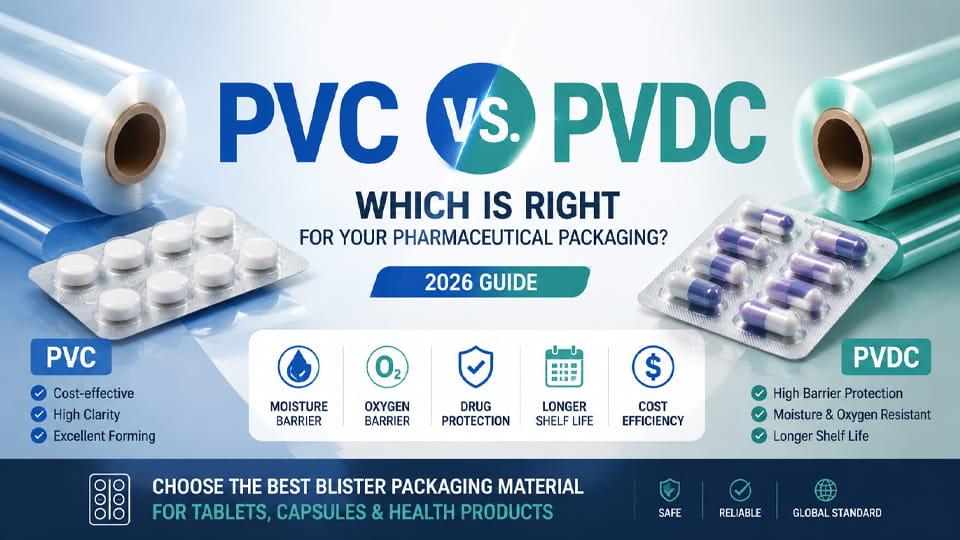
تغليف نفطة الأدوية (على سبيل المثال. أقراص وكبسولات) تُستخدم عادةً أفلام PVC أو PVC / PVDC الشفافة المختومة برقائق معدنية. اختيار الحق فيلم نفطة هو قرار كبير لأي منتج للأدوية. قد يبدو PVC وPVDC متشابهين, ولكن خصائصها حاجز الرطوبة والأكسجين, مدة الصلاحية, تختلف احتياجات التكلفة والمعالجة بشكل كبير. إذا كنت تعمل في مجال تصنيع الأدوية أو المشتريات, من المحتمل أنك سألت: هل PVC أو PVDC هو الخيار الأفضل بالنسبة لنا؟ عبوات نفطة الدواء? يقارن هذا الدليل الودود بين PVC وPVDC وجهاً لوجه فيما يتعلق بتغليف الأدوية. سنغطي ماهية كل مادة, كيف تختلف خصائصها العازلة والتكلفة, ونصائح عملية حول اختيار فيلم البثرة المناسب. بحلول النهاية, ستعرف ما إذا كان PVC عاديًا أو PVC مطليًا بـ PVDC (تسمى أحيانًا PVC/PVDC) يناسب احتياجات منتجك - أو إذا كان الحل المختلط هو الأكثر منطقية.
PVC (كلوريد البوليفينيل) هو واضح, بلاستيك مرن, ال المواد نفطة الأكثر شيوعا للأقراص والكبسولات. في بثور فارما, تعني كلمة "PVC" دائمًا غير ملدن, PVC جامدة. يبلغ سمك فيلم PVC النموذجي 200-300 ميكرومتر (في كثير من الأحيان 250 ميكرومتر). وهو بمثابة طبقة أساسية قابلة للتشكيل من البثرة. المزايا الرئيسية للـ PVC هي منخفضة التكلفة وسهولة التشكيل الحراري. انها واضحة (شفافية ممتازة), دائم, والقوالب بسرعة على خط التشكيل الحراري. يحب المصنعون PVC للمنتجات العادية مثل الأجهزة اللوحية التي لا تستلزم وصفة طبية, الفيتامينات والأدوية المستقرة.
يوفر فيلم نفطة PVC هيكل جيد والرؤية. يمكنك رؤية وحساب الحبوب من خلال العبوة, وإخراجهم بسهولة. PVC أيضًا مستقر كيميائيًا ضد الكثير سواغ وتمت الموافقة عليه في دستور الأدوية (دكتوراه. يورو. وجامعة جنوب المحيط الهادئ) للاتصال الطب. باختصار: PVC مادة موثوقة, فيلم نفطة "العمود الفقري" ل حساسة للتكلفة, منتجات تتحمل الرطوبة.
بي في دي سي (كلوريد البولي فينيلدين) هو أ بوليمر عالي الحاجز غالبًا ما يتم تطبيقه كطلاء على فيلم PVC. فيلم PVDC النقي (غير مصقول) من الصعب التشكيل الحراري من تلقاء نفسه, لذلك تظهر في العبوات الفقاعية كطبقة رقيقة جدًا (في الهياكل المزدوجة أو الثلاثية). تحتوي طبقة PVDC على المزيد من الكلور في تركيبته الكيميائية (CH₂CCl₂), مما يمنحها مقاومة رائعة للرطوبة والأكسجين.
في الممارسة العملية, بولي كلوريد الفينيل المطلي بـ PVDC هو المعيار لحزم نفطة عالية الحاجز. على سبيل المثال, الفيلم المزدوج النموذجي هو 250μm PVC مع طلاء PVDC 40-120gsm. سمكا PVDC (ارتفاع جي إس إم) ينتج عنه انخفاض WVTR (يصل إلى 0.25 جرام/م2/اليوم) و OTR قريب من الصفر. يشبه التشكيل إلى حد كبير PVC - حيث تقوم بتشغيل الفيلم المركب على جهاز التشكيل الحراري - ولكن يجب عليك التحكم في درجة حرارة الفرن حتى لا يتم معالجة طبقة PVDC بسرعة كبيرة.
عادة ما يتم تطبيق طلاء PVDC عن طريق المستحلب (ذات أساس مائي) طلاء, في تمريرات متعددة. هناك درجات PVDC "قياسية" و"فائقة الحاجز".. تعطي درجات الحاجز الفائق أكثر من ضعف مقاومة الرطوبة/O₂ لكل جرام من الطلاء. تشمل الهياكل النهائية الشائعة:
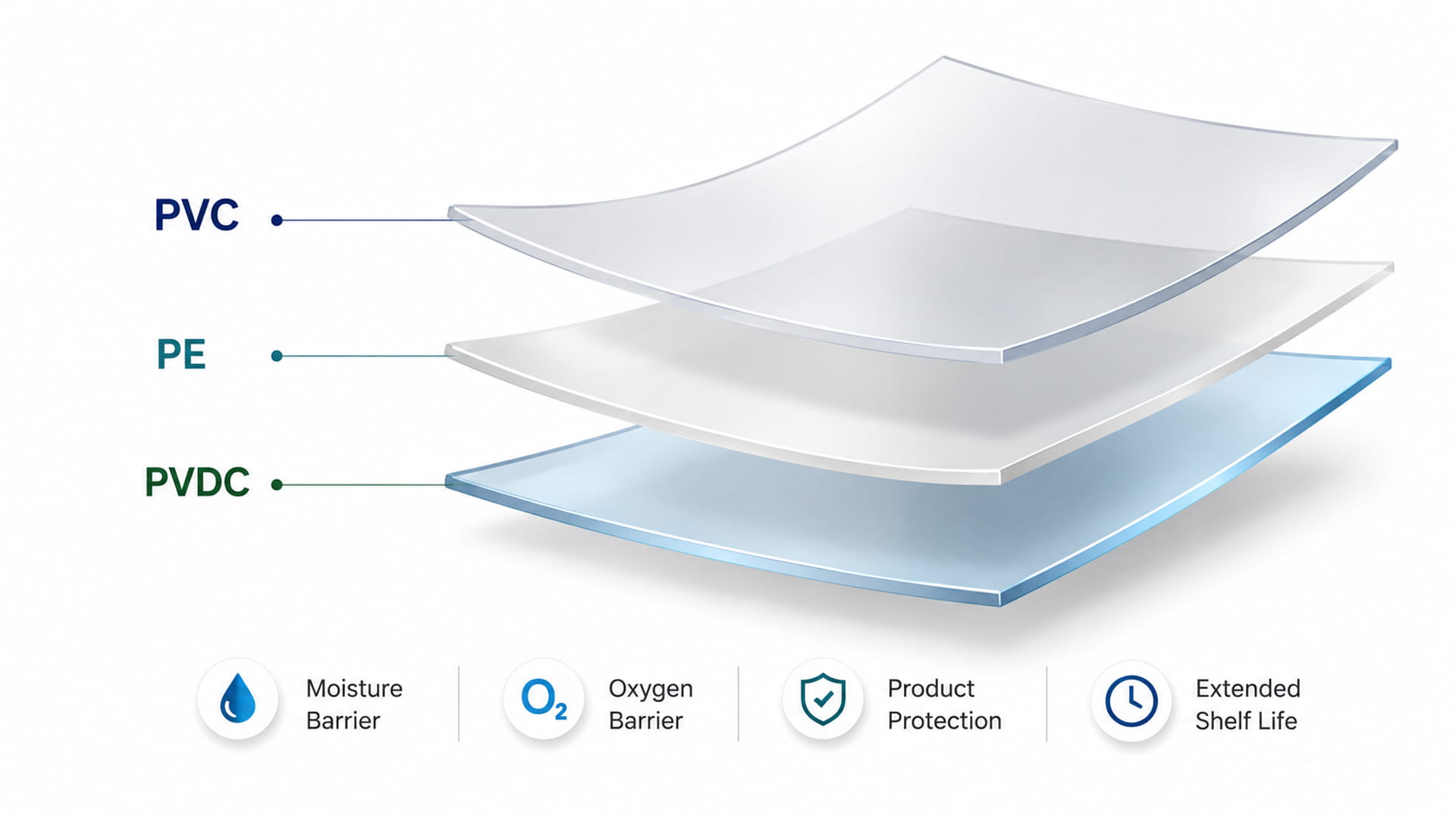
ببساطة: يشكل PVC شكل البثرة, بينما يقوم PVDC بإغلاقه بإحكام. حزمة نفطة مصنوعة من PVC العادي (مع دعم احباط) اقتصادية وواضحة, ولكنه يوفر فقط الحماية الأساسية. تكلف حزمة PVC / PVDC أكثر ولكنها تبطئ بشكل كبير دخول الرطوبة والأكسجين, حماية الأدوية الحساسة لفترة أطول.
| ميزة | PVC (غير مصقول) | بولي كلوريد الفينيل/PVDC (المغلفة) |
| حاجز الرطوبة | ★★☆☆☆ (معتدل) | ★★★★★ (عالي) |
| حاجز الأكسجين | ★★☆☆☆ (قليل) | ★★★★★ (عالي) |
| يكلف | قليل | متوسطة - عالية |
| الوضوح (الشفافية) | ممتاز | ممتاز |
| الحياة الافتراضية (في التعبئة والتغليف) | معتدل (أقصر) | طويل (ممتد) |
| سهولة التشكيل الحراري | سهل | سهل (مع الإعدادات المعدلة) |
| الأدوية الحساسة (الرطوبة/O₂) | لا (ليست مثالية) | نعم (مُستَحسَن) |
| التصدير/الأسواق الاستوائية | ملاءمة محدودة | ملاءمة جيدة |
| المنتجات المشتركة | الفيتامينات المتاحة دون وصفة طبية, أقراص | الأدوية الحساسة للرطوبة, صادرات |
طاولة: مقارنة أفلام نفطة PVC مقابل PVC / PVDC. (★ = تصنيف الحاجز, المزيد من النجوم = حماية أفضل.)
توضح هذه المقارنة السريعة سبب اختيار PVDC للتطبيقات الصعبة. PVC غير المطلي مناسب للاستخدام العام, لكن PVC/PVDC يعطي حماية أفضل بكثير.
الحماية الطبية هي كل شيء أداء الحاجز. الرطوبة والأكسجين يمكن أن يؤدي إلى تحلل واجهات برمجة التطبيقات, تؤثر على فاعلية, تسبب التكتل, أو تؤدي إلى تغيرات كيميائية. PVC وحده يوفر فقط حماية معتدلة: عند 38 درجة مئوية/90% رطوبة نسبية, يسمح فيلم PVC القياسي مقاس 250 ميكرومتر بدخول حوالي 3.0 جم/م2/يوم من الماء. وهذا يعني أن الكثير من الرطوبة يمكن أن تتسرب عبر نفطة PVC إذا تعرضت لها. في المقابل, فيلم PVC/PVDC مطلي جيدًا (على سبيل المثال. 250 ميكرومتر بي في سي + 80 جي إس إم بي في دي سي) قد تسمح فقط 0.30 جم/م²/يوم (10× رطوبة أقل). نفس القصة تنطبق على الأكسجين: يبلغ OTR الخاص بـ PVC حوالي 20 مل / م 2 / يوم, بينما يمكن أن ينخفض PVC/PVDC إلى ~0.1–1 مل/م²/يوم.
لماذا يهم هذا؟? انخفاض WVTR/OTR يعني مدة صلاحية أطول واستقرار. مكون حساس للرطوبة (مثل الحبيبات الفوارة أو البروبيوتيك) قد تسوء خلال 6 إلى 12 شهرًا فقط داخل PVC, ولكنها تظل مستقرة لمدة 2-3 سنوات في PVC/PVDC. مسار صناع الدواء WVTR (معدل انتقال بخار الماء) و OTR (معدل انتقال الأكسجين) عند تطوير التعبئة والتغليف. تعني القيم المنخفضة أن الفيلم يمثل حاجزًا أكثر صرامة.
باختصار: الأفلام المطلية بـ PVDC تحمي الأدوية بشكل أفضل بكثير. إذا كان منتجك حساسًا للرطوبة أو يحتاج إلى تاريخ انتهاء صلاحية طويل, عادةً ما يستحق PVC/PVDC أو أي فيلم آخر عالي الحاجز التكلفة الإضافية. يعد PVC وحده بمثابة حل وسط - فلا بأس حتى تنص متطلبات المناخ أو الرفوف الأسوأ على خلاف ذلك.
استخدم فيلم نفطة PVC عادي:
PVC هو العمود الفقري للعناصر اليومية. يفكر أقراص فيتامين C. في صيدلية المدينة, أو أسبرين في مناخ الشتاء. تتحمل هذه المنتجات بعض الرطوبة ولن تفسد بسرعة إذا تسربت العبوة قليلاً. وفقا لأفضل الممارسات الدوائية, فيلم PVC قياسي 250 ميكرومتر (RPVC) يستخدم عندما فعالية التكلفة والسهولة هي الأولويات.
مثال: قد تختار شركة تعبئة أقراص الفيتامينات 250 ميكرومتر من مادة PVC مع غطاء من رقائق الألومنيوم. تتمتع الأجهزة اللوحية بفترة صلاحية مدتها 12 شهرًا وتذهب إلى الأسواق المحلية. إن تكلفة PVC المنخفضة ووضوحها تجعلها مثالية.
استخدم أفلام PVC/PVDC:
إذا كانت حبوبك لا تتحمل الرطوبة أو الأكسجين, عادة ما يكون PVC/PVDC مطلوبًا. على سبيل المثال, أ مضاد حيوي للأطفال متجهة إلى مناخ استوائي قد يتم شحنها من سنغافورة إلى البرازيل. استخدام 250 ميكرومتر من PVC مع 80-100 جم من PVDC (فيلم "دوبلكس".) يمكن أن يحقق أ 12+ مدة الصلاحية شهر حتى في ظروف 30 درجة مئوية/75% رطوبة نسبية, وفقا لدراسات الحالة.
مثال: أقراص فيتامين سي الفوارة (التي تنتج الفوران في الماء) حساسة للغاية للرطوبة. ستقوم الشركة المصنعة بتشغيل بثور 250 ميكرومتر PVC / 80gsm PVDC لضمان بقاء الأقراص صلبة خلال التوزيع في آسيا. يتم تبرير ارتفاع تكلفة الفيلم من خلال منع فشل المنتج.
ما وراء PVC وPVDC, وتشمل المواد نفطة أخرى أكلار® (PCTFE) و على الإطلاق (الألومنيوم على شكل بارد). وإليك كيفية المقارنة:
| مادة | قوة الحاجز | مستوى التكلفة | الاستخدام النموذجي |
| PVC | واسطة | $ | أقراص قياسية, كبسولات (محلي) |
| بولي كلوريد الفينيل/PVDC | عالي | $$ | الأدوية الحساسة للرطوبة, صادرات |
| PVC + أكلار® | عالية جدًا | $$$$ | تخصص التكنولوجيا الحيوية, فارما الراقية |
| على الإطلاق | الحد الأقصى (صفر ضوء/رطوبة) | $$$$$ | الهرمونات, علم الأورام, المناخات القاسية |
بالنسبة لمعظم الاستخدامات الدوائية, PVC, PVC/PVDC وأحيانًا PVC/Aclar® يكون كافيًا. Alu-Alu هو مكان متخصص لواجهات برمجة التطبيقات فائقة الحساسية. (انظر جدولنا أعلاه لإجراء مقارنة سريعة.) في الممارسة العملية, PVC/PVDC هو الخيار الأكثر شيوعًا للحاجز العالي, تحقيق التوازن بين الأداء والتكلفة.
عند تقييم المواد, الميزانية والاستدامة غالبًا ما يكون وزنه جنبًا إلى جنب مع الأداء:
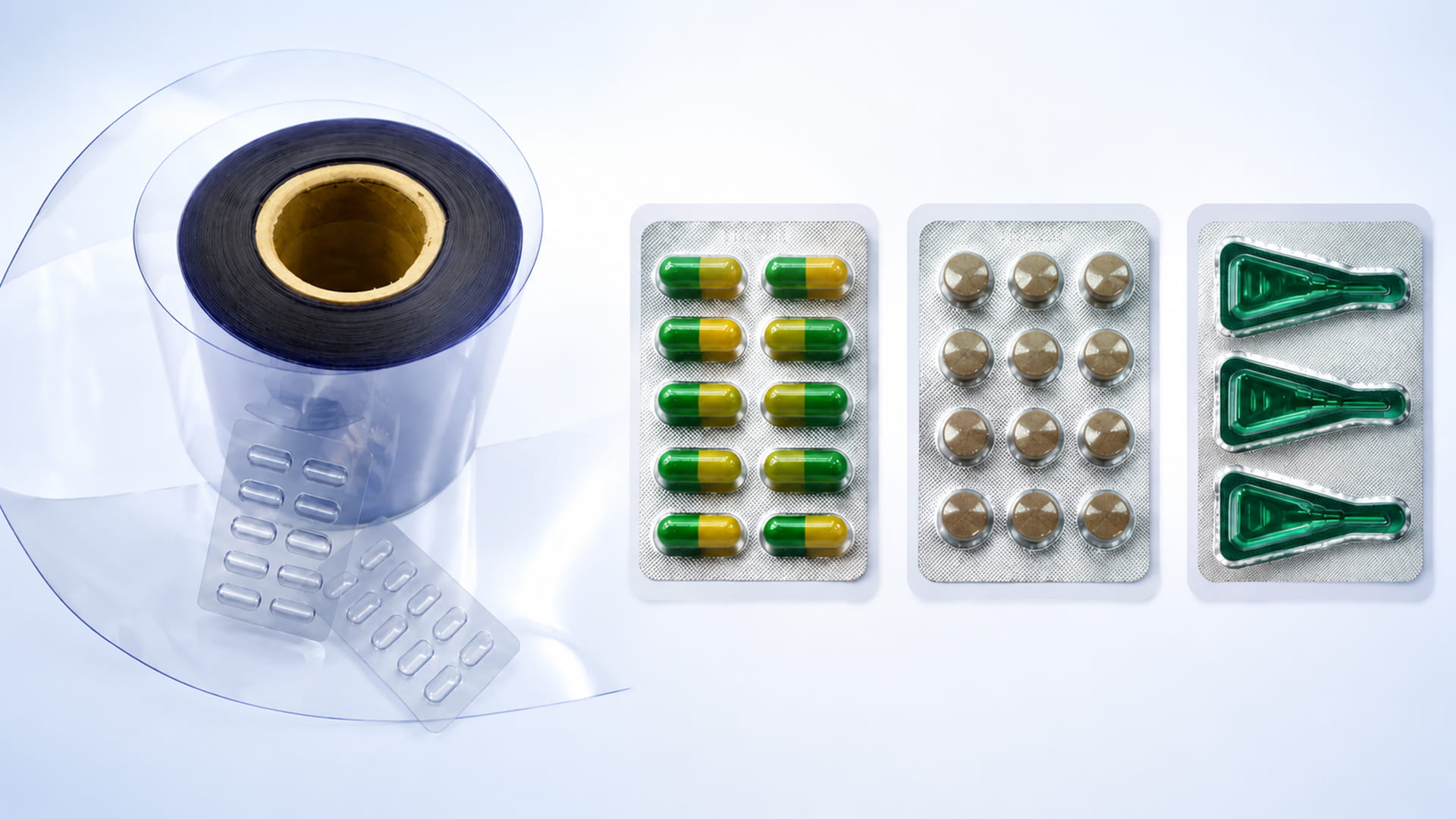
معظم عبوات الفقاعات الدوائية التي تراها يوميًا هي في الواقع بولي كلوريد الفينيل/PVDC بدلاً من PVC النقي. السبب: يوفر PVDC حاجزًا إضافيًا دون التضحية برؤية PVC وقابليته للتشكيل. فيما يلي بعض التنسيقات الشائعة:
في الممارسة العملية, ال نفطة PVC / PVDC / Alu هو العمود الفقري للعديد من الأقراص والكبسولات التي تحتاج إلى مدة صلاحية أطول. وإذا سئل "أيهما أفضل"., نفطة PVC أو PVDC?", تذكر أنه في كثير من الأحيان لا يكون الأمر واحدًا أو آخر، بل المجموعة هي التي تفوز.
فيما يلي بعض الأسئلة والأجوبة التوجيهية للاختيار بين أفلام PVC وPVDC في الأدوية:
سواء كنت تقوم بتعبئة الأقراص أو الكبسولات, تتداخل الخيارات المادية. سيناريو شائع:
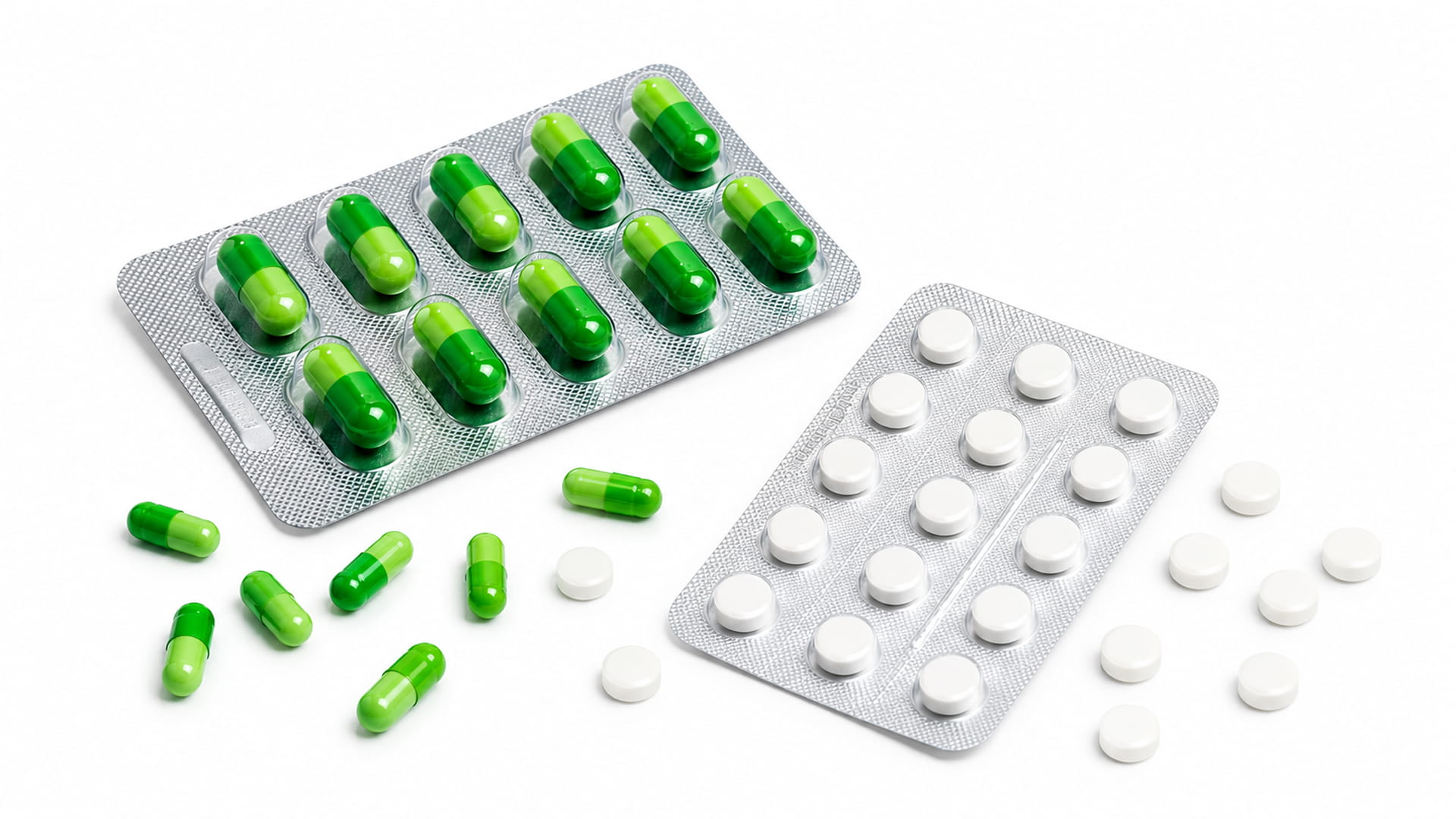
في كلتا الحالتين, ال تنسيق جرعة الوحدة يعزل كل جرعة, والتجويف الشفاف يتيح للمستخدمين رؤية الدواء. قد تتساءل عن ماكينات تعبئة الفقاعات: يمكن للخطوط الحديثة أن تشكل تجاويف من أفلام PVC أو PVDC. والفرق الرئيسي هو أن PVC المطلي بـ PVDC قد يحتاج إلى إعدادات تسخين مختلفة قليلاً على قالب التشكيل الحراري. استشر دليل المعدات أو البائع الخاص بك لطلب المعلمات الصحيحة.
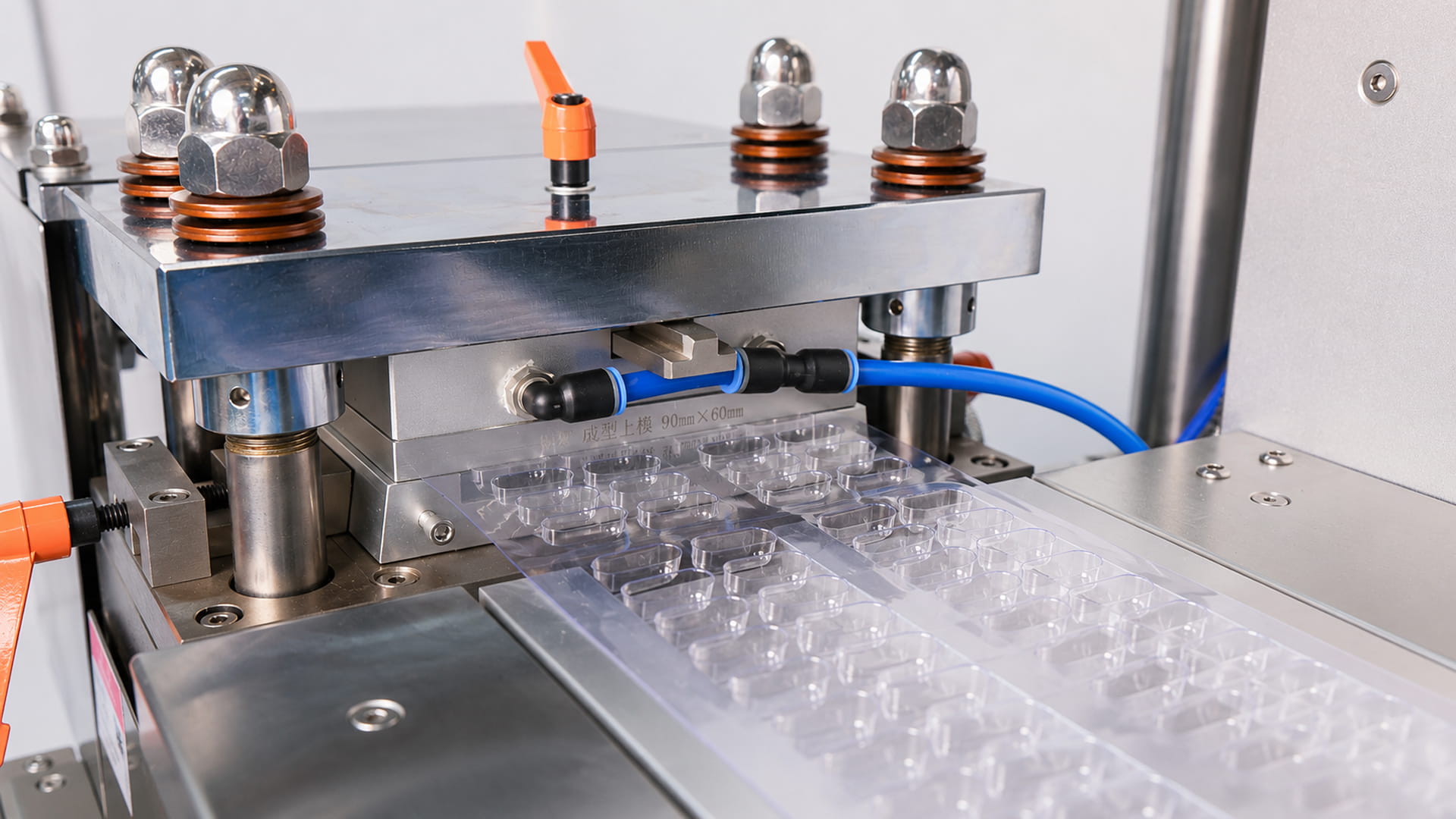
نعم. ماكينات تعبئة البليستر متوافقة بشكل عام مع كلتا المادتين. لا تحتاج إلى آلات منفصلة لـ PVC مقابل PVC/PVDC. لكن, أنت لا تحتاج إلى ضبط العملية:
الآلات الحديثة (مثل JinLuPacking دب-160 أو دي بي بي-270 ماكس التشكيلات الحرارية) التعامل مع PVC, PVC/PVDC وحتى الألومنيوم البارد. إنها تسمح لك بالتبديل بين الأفلام عن طريق تعديل ملف تعريف درجة الحرارة وتشكيل العمق. على سبيل المثال, عند تشغيل PVC/PVDC, قد تقلل التقنية من مصابيح الفرن 10-20% بالمقارنة مع PVC العادي. إجمالي, يعد الانتقال أمرًا سهلاً بالنسبة للمشغل ذي الخبرة.

تم تصميم آلات إنتاج نفطة JinLuPacking لتشغيل جميع أفلام نفطة الأدوية الرئيسية - PVC, بولي كلوريد الفينيل/PVDC, بولي كلوريد الفينيل/PE/PVDC, الألومنيوم, حتى شرائح عالية الحاجز. تعمل أدوات التحكم PLC ونظام الوصفات على تسهيل حفظ المعلمات لكل نوع فيلم. باختصار, يمكن لجهاز واحد أن يكون الحل الشامل لديك طالما قمت بإعداده بشكل صحيح للمواد PVC مقابل PVDC.
إن الاختيار بين PVC وPVDC يتلخص في احتياجات منتجك. أفلام PVC هي فعالة من حيث التكلفة وواضحة, مثالي للعديد من الأجهزة اللوحية والكبسولات القياسية. تقدم الأفلام المطلية بـ PVDC حاجز متفوق, حاسم للرطوبة- أو الأدوية الحساسة للأكسجين والتي تتطلب مدة صلاحية طويلة. في الممارسة العملية, ال نهج الهجين PVC / PVDC غالبا ما يفوز: فهو يستخدم وضوح PVC وقابليته للتشكيل مع إضافة حاجز PVDC حيثما يكون ذلك مهمًا.
عندما تكون في شك, تقييم عوامل مثل استقرار الطب, العمر الافتراضي المطلوب, ميزانية, وأهداف الاستدامة. على سبيل المثال, الاختيار الشائع هو بثور PVC/PVDC لأدوية التصدير, وبثور PVC-Alu العادية للمحلية, منتجات قصيرة المدى. فكر دائمًا في وضع الفشل: إذا فقد منتجك فعاليته 10% في وقت مبكر جدا, ماذا سيكلف ذلك? غالبًا ما يرشد تقييم المخاطر هذا ما إذا كان الفيلم ذو حاجز أعلى له ما يبرره.
على استعداد لتحسين التعبئة والتغليف الدوائي الخاص بك? الاتصال بـ JinluPacking للحصول على مشورة الخبراء والحلول المناسبة لتعبئة الفقاعات. يمكن لفريقنا مساعدتك في اختيار الفيلم المثالي (PVC, بي في دي سي, أو المركبات المتقدمة) والتوصية بإعداد آلة تغليف الفقاعة المناسبة. سواء كنت بحاجة إلى بثور أقراص قياسية أو كبسولات متخصصة مقاومة للأطفال, سوف نتأكد من أن عبواتك تحافظ على سلامة الأدوية ومتوافقة معها حتى النهاية.
PVC (بولي فينيل كلوريد) و بي في دي سي (بولي فينيلدين كلوريد) هما مادتان شائعتا الاستخدام لتغليف الفقاعات الصيدلانية. يستخدم PVC بشكل أساسي كفيلم أساسي بالتشكيل الحراري لأنه يوفر شفافية ممتازة, تشكيل سهل, وتكلفة منخفضة.
عادة ما يتم تطبيق PVDC كطبقة طلاء على فيلم PVC لتحسين أداء حاجز الرطوبة والأكسجين. مقارنة مع التعبئة والتغليف نفطة PVC القياسية, توفر نفطة PVC / PVDC حماية أفضل للأدوية الحساسة ويمكن أن تساعد في إطالة مدة الصلاحية.
بي في دي سي (بولي فينيلدين كلوريد) هي مادة بوليمر عالية الحاجز تستخدم على نطاق واسع في تطبيقات التعبئة والتغليف الصيدلانية والمواد الغذائية. لديها مقاومة ممتازة ضد بخار الرطوبة وانتقال الأكسجين, مما يجعلها مناسبة لحماية المنتجات التي تتطلب تحسين الاستقرار.
في عبوات نفطة دوائية, يُستخدم PVDC بشكل شائع كطبقة طلاء على فيلم PVC بدلاً من استخدامه كمواد تشكيل مستقلة. يؤدي الجمع بين PVC/PVDC إلى إنشاء طبقة نفطة عالية الحاجز مع أداء أفضل لحماية الأدوية.
قد يكون من الصعب التمييز بصريًا بين أغشية PVC وPVDC لأن كلا المادتين عادة ما تكونا شفافتين وتستخدمان في هياكل تعبئة الفقاعة المماثلة.
وتشمل طرق تحديد الهوية الرئيسية:
• الهيكل المادي: PVC هو عادة فيلم التشكيل الحراري الأساسي, في حين أن PVDC عبارة عن طلاء حاجز رقيق مطبق على PVC.
• أداء الحاجز: توفر الأفلام المطلية بـ PVDC حماية أفضل بكثير من الرطوبة والأكسجين من PVC القياسي.
• المواصفات الفنية: عادةً ما يحدد المصنعون المادة من خلال ملصقات الهيكل مثل PVC, بولي كلوريد الفينيل/PVDC, أو بولي كلوريد الفينيل/PE/PVDC.
لشراء وإنتاج الأدوية, يعد التحقق من ورقة مواصفات المواد الخاصة بالمورد الطريقة الأكثر موثوقية.
من حيث الرطوبة وحاجز الأكسجين, نعم. بي في دي سي (كطلاء) يوفر حاجزًا أعلى بكثير من PVC العادي. لكن PVDC أكثر تكلفة, لذلك فهو "أفضل" فقط إذا كنت بحاجة إلى هذه الحماية الإضافية. للبساطة, منتجات مستقرة, PVC عادة ما يكون جيدًا.
تكلفة إنتاج راتنجات PVDC أعلى, وتطبيق الطلاء هو عملية متعددة الخطوات. أنت تقوم أساسًا بإضافة مواد إضافية (الطلاء) ومعالجة إضافية. الأداء الإضافي يأتي بهذا السعر.
نعم. يمكن لـ PVDC تحسين مدة صلاحية الأدوية عن طريق تقليل تغلغل الرطوبة والأكسجين في عبوة البثرة.
العديد من المنتجات الدوائية, بما في ذلك الأقراص الحساسة للرطوبة, البروبيوتيك, وبعض المنتجات الغذائية, تتطلب عبوات حاجزة أقوى لأن الرطوبة والأكسجين يمكن أن يؤثران على جودة المنتج واستقراره.
لكن, تعتمد مدة الصلاحية الفعلية على تركيبة الدواء, هيكل التعبئة والتغليف, ظروف التخزين, ونتائج اختبار الاستقرار.
PVC/PVDC وPVC/PE/PVDC كلاهما عبارة عن هياكل تعبئة نفطة عالية الحاجز.
بولي كلوريد الفينيل/PVDC:
هيكل مزدوج قياسي حيث يتم تطبيق طلاء PVDC مباشرة على PVC. يوفر حماية محسنة للرطوبة والأكسجين.
بولي كلوريد الفينيل/PE/PVDC:
هيكل ثلاثي يضيف طبقة PE بين PVC وPVDC. يعمل هذا الهيكل على تحسين المرونة وتشكيل الأداء, خاصة بالنسبة للتجاويف العميقة للفقاعات.
الخيار الأفضل يعتمد على متطلبات المنتج, تصميم تجويف, وقدرة آلة التعبئة والتغليف.
إنه فيلم PVC مع طبقة PVDC رقيقة على جانب واحد. يوفر PVC القابلية للتشكيل والقوة; توفر طبقة PVDC حاجزًا للرطوبة/الأكسجين. معًا يشكلون طبقتين (دوبلكس) أو ثلاث طبقات (ثلاثي) بناء.
نعم. ماكينات الفقاعة الحديثة (مثل نماذج JinLuPacking) مصممة للـ PVC, PVC/PVDC وغيرها من الأفلام القابلة للتشكيل الحراري. ما عليك سوى تحديد الإعدادات الصحيحة. المفتاح هو التحكم في درجة حرارة الفرن وتشكيل المعلمات للفيلم المحدد.
لأسواق التصدير الحارة/الرطبة, بولي كلوريد الفينيل/PVDC (أو حتى PVC/Aclar أو Alu-Alu) يوصى به. غالبًا ما يفشل PVC وحده في المناخات الاستوائية.
مراجع:
1.أنظمة إغلاق الحاويات لتعبئة الأدوية البشرية والبيولوجية —— نحن. إدارة الغذاء والدواء
2.أنظمة التغليف البلاستيكية ومواد بنائها —— دستور الأدوية في الولايات المتحدة
3.تغليف نفطة الأدوية, جزء 1 الأساس المنطقي والمواد —— عاصفة
4.بولي فينيلدين كلوريد —— ساينس دايركت
5.الأساليب الكيميائية لتحديد PVC وPVDC في مواد التعبئة والتغليف الصيدلانية —— بوابة البحث
6.تأهيل المواد البلاستيكية المرنة / PVC – PVDC في صناعة الأدوية —— revistajrg.com