Yếu tố cần thiết cho sản xuất dược phẩm: Chọn đúng loại thép không gỉ
Yếu tố cần thiết cho sản xuất dược phẩm: Chọn đúng loại thép không gỉ
Tháng Một 13, 2026
Không có bình luận
TRONG sản xuất dược phẩm, stainless steel is everywhere – from large mixing tanks to sleek conveyor lines. That’s because pharma production demands materials that won’t react with drugs or carry contamination. Stainless steel alloys (mostly iron mixed with chromium, nickel, vân vân.) form a thin, passive oxide layer that shields them from rust and chemical attack. This makes them ideal forThiết bị dược phẩmlike reactors, pipes, valves, Và Máy đóng gói. Nói một cách đơn giản, stainless steel is durable, dễ dàng để làm sạch, and non-toxic – exactly what the industry needs. Trong hướng dẫn này, we’ll talk through the most common stainless steel grades used inpharma manufacturing, what makes each special, and how to pick the right one for your application.
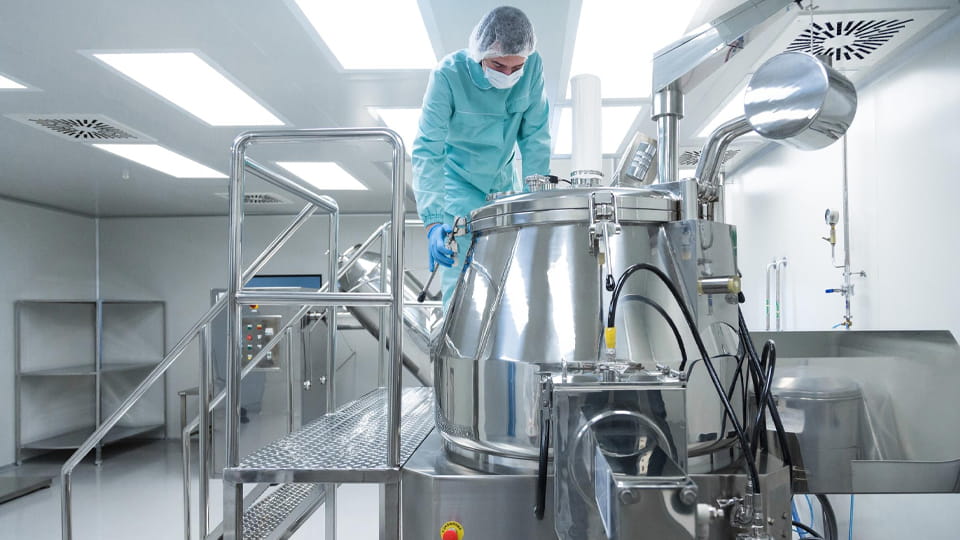
Photo: Stainless steel tanks and piping in a pharmaceutical company highlight how this material’s corrosion resistance and cleanliness are essential for drug production.
Why Stainless Steel is Essential in Pharma Manufacturing
Every pharmaceutical plant is governed by strict safety and purity rules. Equipment must withstand harsh cleaning processes (hơi nước, dung môi, acids) and high temperatures, without leaching anything into the product. Stainless steel’s high chromium content is key here – it creates a shiny, smooth surface that resists corrosion and is easy to sanitize. Trong thực tế, this means tanks and pipes made of stainless steel can be repeatedly sterilized (autoclaved or steam-cleaned) without degrading.
Kháng ăn mòn.Pharma environments often involve moisture, muối, và hóa chất. Stainless steel (especially 300-series alloys) resists most acids and cleaning agents, preventing contamination of drugs. The chromium-rich passive layer acts as a barrier, so even strong disinfectants won’t easily etch the surface.
Non-reactive and clean.By regulation, equipment in contact with medicines must not react with or contaminate the product. Stainless steel is chemically inert for most drugs, meaning it won’t leach metals into formulas. Its smooth, non-porous finish also prevents bacteria or residue from hiding in crevices. This “medical-grade” stainless steel design is essential for patient safety and drug integrity.
High-temperature strength.Processes like sterilization require materials that won’t warp or corrode at 121°C or higher. Alloys like 316L stainless hold up well under heat and pressure, unlike some cheaper steels. This makes them perfect for autoclaves, lò phản ứng, and heat exchangers in pharma lines.
Durability and longevity.Stainless steel is very strong and long-lasting. A correctly chosen alloy can run for years with minimal wear, reducing downtime and replacement costs. Tóm lại, you “install and forget” much of the time – as long as you follow good cleaning protocols.
Thanks to these advantages, stainless steel is the standard in pharmaceutical manufacturing. (Ngược lại, carbon steel or lower-grade metals simply can’t meet the sanitary and chemical demands.) The one caveat is cost: high-grade stainless is pricier than ordinary steel, but for pharma the benefits far outweigh the expense.
Common Stainless Steel Grades in Pharma Production
Not all stainless steel is created equal. “Stainless steel” is a broad term for hundreds of alloys. The 300-series austenitic grades are by far the most popular in pharma. Below are the key grades and where you see them:
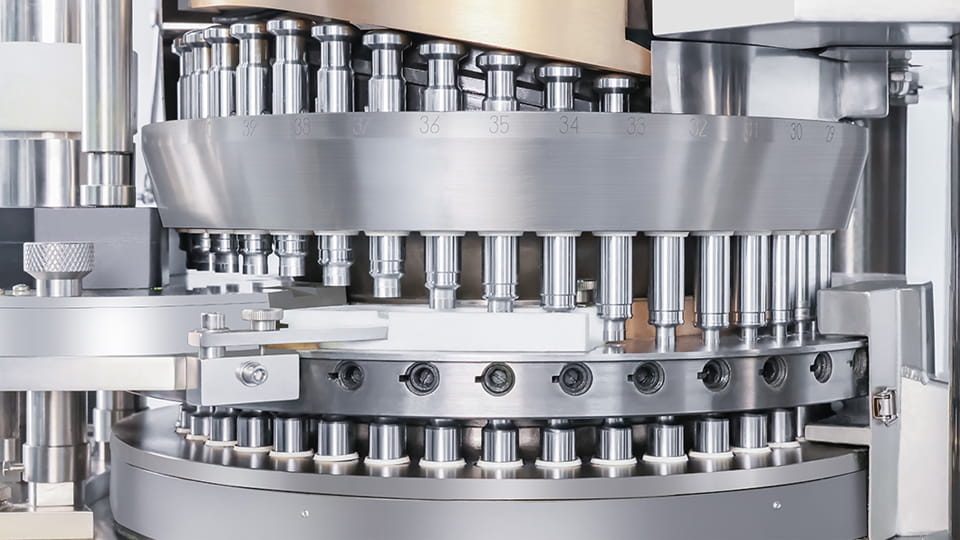
304 / 304L:This is the workhorse stainless steel. 304 contains about 18% chromium and 8% nickel, giving good corrosion resistance. 304L (“L” = Low carbon) has less carbon, making it even better for welding and high-purity applications. In pharmaceutical plants, 304/304L is often used for support structures, frames, and non-contact components. Ví dụ, the outer panels of a tablet press or non-critical conveyors might be 304. It’s also used for items like railings or enclosures.
316 / 316L:Sometimes called “marine-grade,” this alloy adds molybdenum (Mo) to 304’s mix (about 2-3% Mo). Molybdenum greatly improves resistance to chlorides and acids. 316 handles corrosive agents (like chloride salts or weak acids) better than 304. Kết quả là, 316L stainless (low-carbon version) is the default for all product-contact parts – mixing tanks, fermentation vessels, sanitary piping, and valves. Many process piping networks and pressure vessels in a drug plant are 316L. 316L resists “pitting” and “crevice” corrosion even in tough conditions, so it keeps medicines pure.
316Ti:This is 316 alloy stabilized with a bit of titanium. Its special feature is superb resistance to sensitization (grain boundary corrosion) at high temperatures (like during welding). It’s used in high-temperature reactors or heat exchangers where welded joints must remain corrosion-resistant. In practice it’s a niche grade – useful when your process gets very hot.
904L:A high-alloy austenitic steel that adds copper and extra nickel. Its extreme corrosion resistance is aimed at very aggressive chemistries, such as handling sulfuric or hydrochloric acid. In pharmaceutical setups, 904L is chosen for specialized acid-dosing equipment or piping that contact strong acids (ví dụ. cleaning acid or certain drug solutions). It’s expensive, so you only see it where absolutely needed.
2205 Duplex:A mixed-phase (austenitic+ferritic) alloy with roughly 22% chromium and 3% molybdenum. Its big advantage is strength: 2205 is stronger than 316 and still highly corrosion-resistant. You’ll find duplex steel in pressure vessels, high-stress reactors, or any equipment that needs both strength and corrosion resistance. Trong dược phẩm, it’s less common but used when stainless tanks must be extra strong or lightweight.
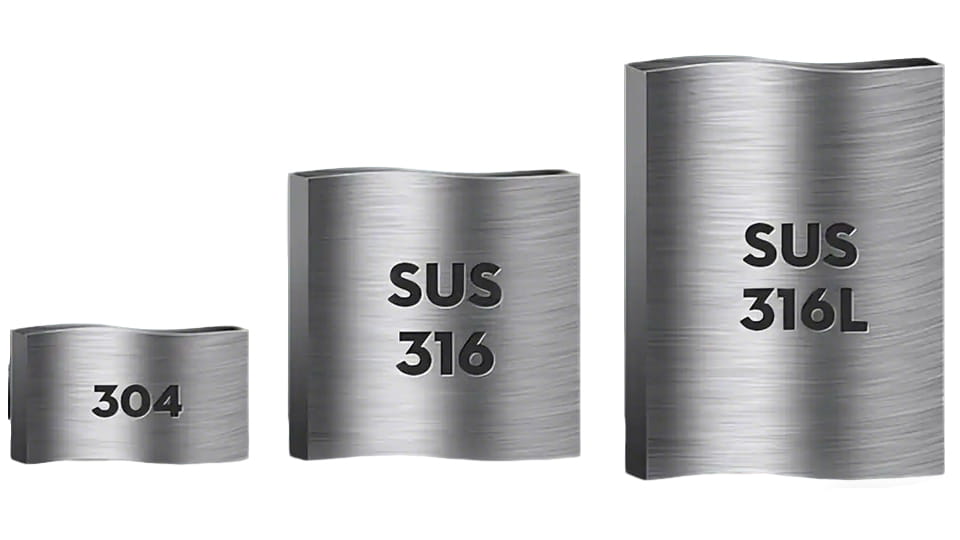
Recent industry reviews confirm these are the go-to grades: 304, 304L, 316, 316L, 316Ti, 904L, Và 2205 duplex. Trong thực tế, 316L (Và 316) are by far the most ubiquitous in pharma pipelines and vessels, with 304/304L used for secondary parts. (Ghi chú: cheaper 400-series ferritic grades like 430 are generally avoided in pharma, since they can corrode more easily and are magnetic.)
Comparing 304 vs. 316 Stainless Steel
A lot of engineers ask: “Should I use 304 hoặc 316?” The answer depends on your chemicals. The key difference is molybdenum in 316: it boosts corrosion resistance in salt and acid environments. Về mặt thực tế:
Kháng ăn mòn: 316 wins when chloride (muối) is present. Ví dụ, dung dịch muối, salt buffers, or any moisture with chlorides will eat at 304 nhanh hơn. If your process involves brines or strong cleaning agents, go 316L. 304 is still very corrosion-resistant in neutral or mild conditions (Nước, alcohols, most organic solvents).
Trị giá: 316 (and especially 316L) costs more than 304 due to its alloying elements. If your application doesn’t see harsh chemicals, 304 can save money. Many companies use 304 for non-contact parts (frames, outer shells) and reserve 316 for critical contact areas. Ví dụ, a granule packing machine may use 304 for the body but 316L for the feeder cups (as one manufacturer notes, “the part in contact with the material is made of SUS316”).
Heat tolerance:Both grades handle normal sterilization temperatures. But for very high temps (over ~500°C), 316Ti or other alloys are better.
Fabrication: 304 and 316L are both easy to weld and polish. The “L” variants (304L/316L) are preferred when heavy welding is needed, because their low carbon content prevents carbide precipitation. This helps maintain corrosion resistance near welds.
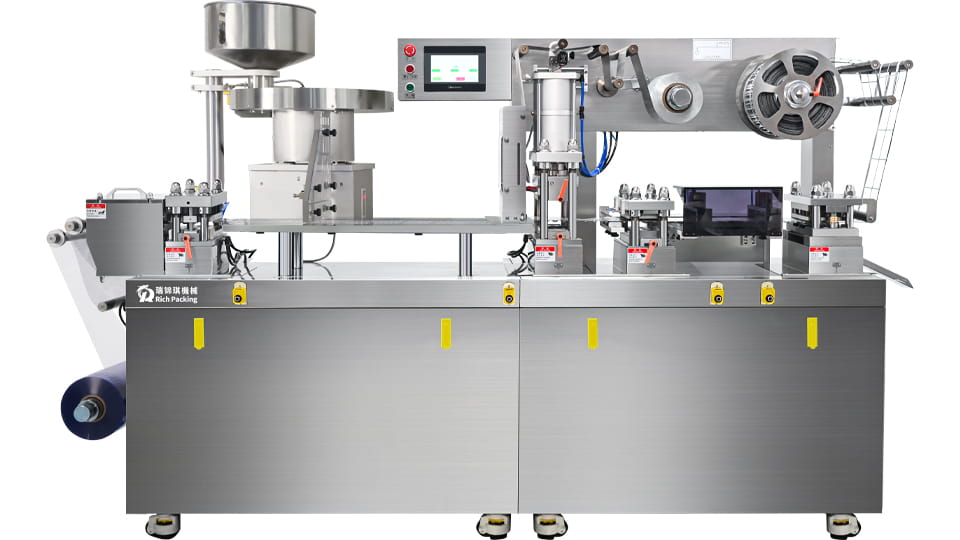
Tóm lại: use 316L for all wet-process equipment (tanks, pipes, máy trộn) Và 304 for dry or non-wet areas. This is standard in the pharmaceutical machinery industry. Ví dụ, máy đóng gói vỉ Và chất độn viên nangoften have SUS316 contact parts and SUS304 structures.
DPP-180pro Blister Machine for Capsule Tablet with SUS316 contact parts
Special High-Alloy Grades
Vượt ra 304/316, the other grades above serve special roles:
316Ti (Titanium-stabilized 316): Như đã đề cập, adds Ti to stabilize at high heat. Use it for high-temperature reactors or pipeline segments that will be welded or baked. The titanium prevents intergranular corrosion after welding.
904L:A niche acid-resistant alloy with copper. If your pharmaceutical line deals with strong acids (ví dụ. concentrated formic, sulfuric, or nitric acid), 904L can withstand what 316 would not. For most plants this is overkill – 316L suffices for dilute acids – but for specialty processes (like some vitamin syntheses or cleaning cycles), 904L is an option.
2205 Duplex:A cast/rolled alloy blending austenitic and ferritic steel. It’s popular in food and oil industries for extra strength. Trong dược phẩm, duplex stainless might be chosen when vessel walls must be thinner or pressures are high, since 2205’s strength lets you reduce thickness. Ví dụ, a high-pressure hydrogenation reactor or large distillation column might use duplex. It also resists stress corrosion cracking, which can matter in certain chemical processes.
Choosing the Right Grade: Key Considerations
Selecting the ideal stainless steel grade comes down to matching properties to your process demands. Here are some tips:
Chemical environment:List all chemicals (including cleaning agents) that touch the equipment. If chlorides or strong oxidizers are present, lean toward 316L or higher. For mostly solvents and water, 304L might suffice. Tables of chemical compatibility can help guide you.
Nhiệt độ:For autoclave cycles (usually 121–134°C) both 304L and 316L are fine. For higher temperatures (sterilization at 180°C+ or continuous hot service), consider stabilized or higher alloys (316Ti or 316H).
Regulatory standards:Pharma must meet cGMP and often FDA rules. Ví dụ, FDA requires that container materials not alter the drug’s purity or safety. Trong thực tế, this means using “pharma-grade” 300-series stainless and specifying proper surface finishes (ví dụ. electropolished, mirror-finish) to ease cleaning. Always check if your industry has any specific codes (ASME BPE, FDA 21 CFR, vân vân.) for materials.
Fabrication & BẢO TRÌ:Think about welding and construction. As Unified Alloys advises, some grades weld more easily than others. The L-grades (304L/316L) are generally chosen to avoid weld-induced corrosion. Cũng, using matching fasteners/materials is wise to prevent galvanic corrosion.
Cost and availability:Common grades (304L/316L) are readily available worldwide and have competitive pricing. Exotic grades like 904L or duplex cost more. Do a cost–benefit: sometimes it’s cheaper to clean 316 equipment more frequently than to buy a super-alloy machine. Also factor in lifecycle – a more corrosion-resistant steel may last much longer, offsetting higher purchase cost.
Tóm lại, start by listing your critical requirements (sanitary, corrosion, áp lực , temp). Then pick the grade that satisfies the worst-case condition. Most plants end up standardizing on 316L for piping and vessels, with 304L for non-critical parts. Điều đó nói rằng, keep in mind material finish and welding practices are just as important as grade. Trơn tru, polished surfaces make cleaning easy, and proper welding prevents weak spots.
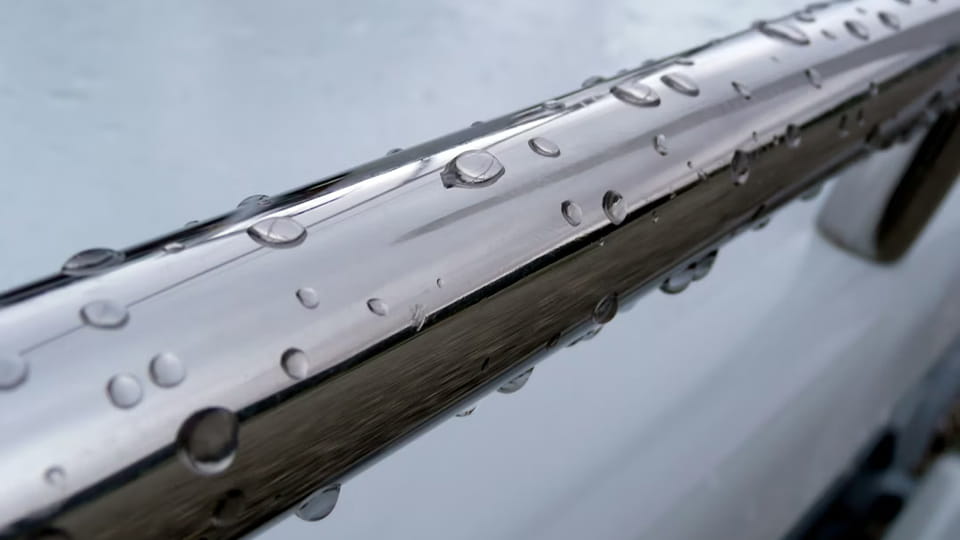
Photo: Water droplets bead on a polished stainless steel surface – a property that makes cleaning pharma equipment fast and effective. Nhớ: stainless steel must be kept clean. It’s smooth and resistant, but not self-cleaning. Follow strict cleaning-in-place (CIP) routines and inspect for wear. Even stainless equipment needs regular maintenance, especially on parts contacting products. Routine inspection for pitting or scratches, prompt repair of seals, and immediate clean-up of spills will keep corrosion at bay.
Bản tóm tắt
Trong sản xuất dược phẩm, stainless steel is king because it reliably meets the industry’s stringent needs. The most common grades are 304/304L (general use) and 316/316L (high-contact, high-purity use). Specialized alloys like 316Ti, 904L, and duplex 2205 serve niche roles when temperature, acids, or strength demands are extreme. Choosing the right grade ensures your machinery stays safe, tuân thủ, and long-lasting – so you can focus on producing quality pharmaceuticals.
Ready to Optimize Your Pharma Equipment?
If you’re planning a new pharmaceutical manufacturing line or upgrading existing pharma equipment, choosing the right stainless steel grade is a decision that impacts long-term performance, Tuân thủ, và chất lượng sản phẩm. Tại Đóng gói Jinlu, we design and build high-qualitymáy móc dược phẩm Và máy đóng gói dược phẩmwith industry-standard materials like 316L stainless steel and more.
Talk to our team today to get tailored solutions that fit your production needs and budget. Whether you need consultation on material selection, custom design, or turnkey system integration, we’re here to help you succeed inpharma production. Contact us nowto start your project.
Câu hỏi thường gặp – Stainless Steel in Pharmaceutical Manufacturing
What stainless steel grades are most commonly used in pharmaceutical manufacturing?
The most commonly used grades in pharmaceutical manufacturing are austenitic stainless steels such as 304/304L and 316/316L, with 316L being the predominant choice for product-contact applications due to its higher corrosion resistance and low carbon content.
What is the key difference between 304 Và 316 Thép không gỉ?
Grade 316 contains molybdenum (~2-3%), giving it significantly better resistance to chlorides and harsh chemicals than 304. This makes 316/316L more suitable for pharmaceutical processes, especially where corrosive solutions and sanitization are frequent.
Why is 316L preferred over 316 in pharmaceutical equipment?
316L has a lower carbon content than standard 316, which reduces carbide precipitation around welds and improves resistance to corrosion after welding—an important factor in pharma production environments.
Can 304 stainless steel be used in pharmaceutical production?
Đúng, 304/304L can be used for non-product-contact and structural components, such as frames, supports, and external panels. But it is less ideal for direct contact with products compared to 316L because of its lower resistance to aggressive chemistries.
What makes stainless steel “sanitary” for pharmaceutical use?
Sanitary stainless steel isn’t just about the alloy grade—it also involves surface finish and compliance standards (VÍ DỤ., smooth low-roughness finishes, electropolishing, and regulatory specifications like ASME BPE or FDA). These characteristics help prevent microbial retention and contamination.
Is surface finish important for pharmaceutical stainless steel equipment?
Tuyệt đối. A proper finish (VÍ DỤ., electropolished surfaces with low roughness) makes it easier to clean and sterilize, reducing the risk of contamination and meeting strict pharmaceutical hygiene standards.
What applications in pharmaceutical manufacturing typically use stainless steel?
Stainless steel is widely used for process piping, tanks, vessels, lò phản ứng, valves, and pharmaceutical packaging machines because it resists corrosion, withstands repeated cleaning/sterilization, and does not leach contaminants into products.
Can stainless steel piping be used in high-purity pharmaceutical systems like WFI (Nước pha tiêm)?
Đúng. High-purity systems such as WFI lines generally require 316L stainless steel with electropolished finishes due to its superior corrosion resistance and cleanability in critical environments.
Are there grades beyond 316L used in special pharmaceutical applications?
Đúng. Specialized alloys like 904L (for aggressive acidic environments) and duplex stainless steels (giống 2205) for high-strength applications are used where standard grades may not suffice, although these are less common than 316L.
How does stainless steel help maintain regulatory compliance in pharma equipment?
Stainless steel’s corrosion resistance, khả năng làm sạch, and ability to withstand sanitization help equipment meet cGMP, FDA, and other regulatory hygiene standards. The right grade combined with proper fabrication ensures regulatory compliance and product safety.
Petty fu, Người sáng lập Jinlupacking, mang lại 30 năm kinh nghiệm trong lĩnh vực máy móc dược phẩm. Dưới sự lãnh đạo của ông, Jinlu đã phát triển thành một nhà cung cấp thiết kế tích hợp đáng tin cậy, sản xuất, và bán hàng. Petty đam mê chia sẻ kiến thức chuyên sâu về ngành của mình để giúp khách hàng giải quyết sự phức tạp của bao bì dược phẩm, đảm bảo họ không chỉ nhận được thiết bị, mà là mối quan hệ đối tác dịch vụ một cửa thực sự phù hợp với mục tiêu sản xuất của họ.