×

Çevrimiçi servis

💬 WhatsApp: +86 1801179332
💡
  • Ev
  • Bloglar
  • Birim Doz Paketleme: Anlam & Türler, Plus En İyi Paketleme Makineleri

Birim Doz Paketleme: Anlam & Türler, Plus En İyi Paketleme Makineleri

What is Unit Dose Packaging? Basit anlamda, unit dose packaging (also called single-dose packaging) means each individual dose of a medication is pre-packaged and sealed by itself. Imagine one pill or tablet placed in its own little pouch or blister cavity, with all the drug information printed right on that package. Each package contains exactly one dose, so you don’t have to count pills from a bottle. This approach is very common in hospitals and pharmacies: Örneğin, üzerinde 75% of oral medications in U.S. hospitals are dispensed in unit dose form. Başka bir deyişle, a “medication unit dose” is one dose of medicine ready for immediate use. This packing style is about safety and convenience – each dose is sealed and labeled, ready for a single use.

Unit dose packaging has grown in popularity because it helps healthcare providers give the right dose at the right time. It prevents mix-ups, since each package is clearly marked and contains only one dose. Think of it like the difference between bulk packaging (a bottle of 100 tabletler) and a unit dose pack (a small blister with one tablet). With unit dose packs, nurses and patients don’t have to count out pills – they just grab one package and open it. This also reduces handling errors. Aslında, studies show that properly labeled single-dose packs greatly cut down medication errors.

  • Why use unit dose packaging? It boosts patient safety and convenience. Each dose stays clean and protected (no touching multiple pills), and is ready to use. According to one packaging expert, unit-dose containers are “designed to hold a quantity of drug intended for administration as a single dose”. By removing manual counting and bulk containers, unit-dose systems ensure the right medication in the correct strength reaches the right patient at the right time, every time.
colorful blister packs holding a single tablet dose
İmaj: A stack of colorful blister packs, each holding a single tablet dose.


Why Unit Dose Packaging Matters

Unit dose formats may sound simple, but they offer big benefits for pharmaceutical producers and healthcare users. Here are some of the key advantages:

  • Hygienic and Tamper-Evident: Every single dose is sealed in its own pouch or blister cavity, so it’s protected from dirt, nem, ve kontaminasyon. If a blister is opened or broken, you notice it right away (no tampering goes unnoticed).
  • Doğru Dozajlama & Less Waste: Since each dose is pre-measured, there’s no risk of counting mistakes. Patients and caregivers take exactly one dose packet or tablet, preventing over- or under-dosing. This precision also cuts down on leftover pills – if a patient doesn’t need the whole supply, the remaining unit doses are still sealed and untouched.
  • Taşınabilir & Convenient: Unit dose packs are often lightweight and easy to carry. A single-dose sachet or blister can go in a pocket or bag. This is handy for travelers or patients on-the-go. Tersine, carrying a large bottle of pills every day can be cumbersome.
  • Mükemmel Koruma: Quality unit-dose packaging (like blister packs with foil backing) provides strong barriers against humidity, ışık, and air. This keeps each dose potent and stable until use. Örneğin, foil-backed blisters can shield tablets from moisture for long shelf life.
  • Improved Compliance: By arranging doses into daily or timed packs (calendar cards, Örneğin), pharmacists can help patients keep track of their regimen. A “unit-dose pack” labeled by day or time makes it obvious if a dose has been missed. Some blister packs even come in a calendar format to guide patients through their medicine schedule.

These perks make unit-dose packaging a must-have in many settings – hospitals, long-term care, and even consumer health products. According to one source, unit-dose systems were originally created for hospitals to ensure safe, efficient drug distribution. Over time they’ve “vastly expanded” into other industries (like cosmetics or retail supplements) because of their safety features. Bugün, unit dose packs are prized by pharmacists, nursing staff, and procurement managers alike for their ability to simplify inventory control and reduce errors.


Common Types of Unit Dose Packaging

There are several popular ways to pack a single dose, depending on the product’s form (hap, toz, sıvı, vesaire.). Below are the most common unit-dose formats used in pharmaceuticals and related fields:

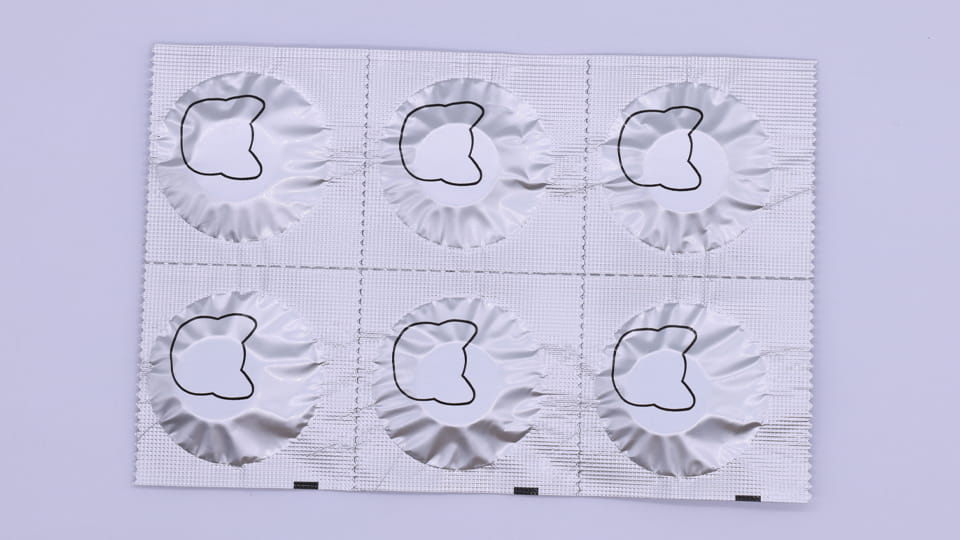
  • Blister paketleri: These are rigid or semi-rigid pockets (kabarcıklar) made from thermoformed plastic, each containing one pill or capsule. A foil or plastic lid (destek) is heat-sealed over the blisters. When a patient needs a dose, they push the pill through the foil or peel it open. Blister paketleri are a classic unit-dose format. They provide a clear view of the product and an excellent moisture barrier. Each blister can be labeled with drug name, kuvvet, ve son kullanma tarihi. (“Blister unit dose” packs are widely used for tablets and capsules.)
    classic Unit Dose Packaging Blister Packs
  • Şerit paketleri (Blister Strips): Think of a flat strip of pills sealed between layers of foil or plastic. Unlike the hard-shell blister, şerit paketleri are flexible and often made of laminated foil/plastic film. Each segment of the strip contains one tablet or capsule and is sealed along its edges. To get a dose, you tear or peel off one section. Strip packs are lighter than boxed blisters and useful when a slim form is needed. They still protect the dose individually but are more compact for shipping or storage.
    classic Unit Dose Packaging Strip Packs (Blister Strips)
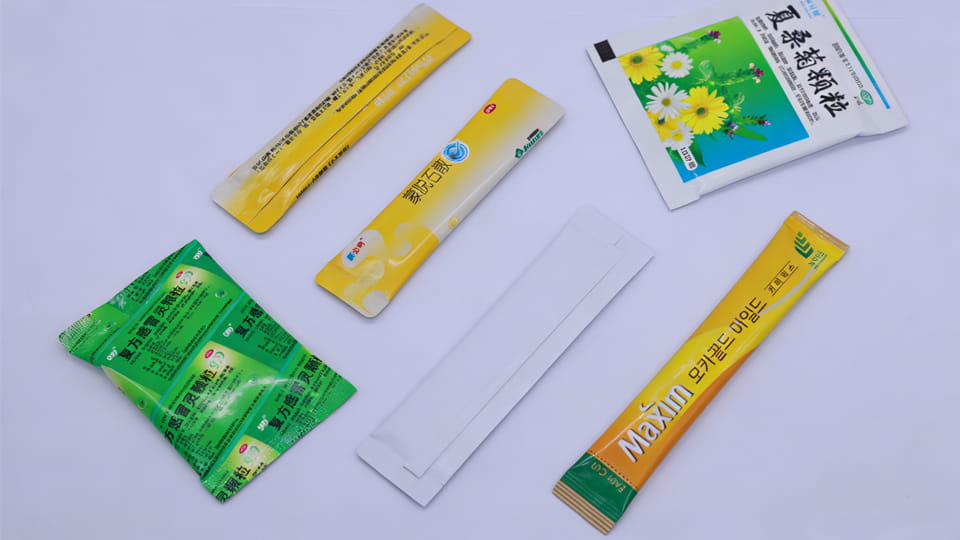
  • Sachets and Stick Packs: Tozlar için, granüller, or sometimes liquids, unit doses often come as small sealed pouches. These are like mini-sachet packets (common in drink mixes) or stick packs (long narrow packets). Each sachet contains exactly one dose of the product. Örneğin, an oral powder supplement could be packed in a single-use sachet. Stick packing machines (vertical form-fill-seal machines) are frequently used for this format. Sachets are portable and ensure precise dosing of powders or crystalline drugs. They’re especially common for unit-dose oral suspensions and effervescent powders.
    classic Unit Dose Packaging Sachets and Stick Packs
  • Unit-Dose Bottles/Vials: Some liquid or larger-dose medications are packaged in small single-use bottles, ampoules, veya şişeler. Örneğin, ophthalmic (eye drop) solutions might be bottled in tiny one-dose vials. Injectable drugs often use single-dose vials or ampoules (made of glass), each pre-filled with the exact volume needed for one treatment. These containers are sealed (rubber stoppers for vials, sealed glass neck for ampoules) and meant for single use. They are more expensive but essential for sterile injectables. (Pharmacies and hospitals then use automatic filling and stoppering machines to produce these unit-dose vials.)
    classic Unit Dose Packaging Bottles&Şişeler
  • Pre-Filled Syringes & Pens: Although not always called “packaging,” pre-filled devices are essentially single-dose units. A pre-loaded syringe or auto-injector pen comes with one drug dose, sealed inside. This is common in vaccines and biologic drugs. From a packaging perspective, the syringe + ilaç + needle enclosure is one complete single-use unit. These often require specialized assembly and packaging lines.

Each of these formats keeps one dose isolated. Örneğin, calendar packs are special blister cards arranged by day/time, still a unit-dose concept – each blister is one dose arranged in a schedule. Her durumda, the core idea is the same: individual, tamper-evident packaging for each dose.

Quick Comparison: Genel olarak, tablets/capsules use blister packs or strips, powders/liquids use sachets or small bottles, and injectables use single-dose vials/ampoules. The choice depends on the drug’s physical form and stability needs. Often, the unit dose packaging is the primary packaging (the container that touches the drug) and is complemented by a secondary carton or box with labels and instructions.

Units of Use: Some products combine multiple single doses into a strip or card, but each unit is still single-use. Örneğin, unit-dose blister cards might hold 7 daily doses, but each day’s dose is sealed separately. Aynı şekilde, a unit-dose pouch can contain a ready-to-mix medicine, which is still one dose. The key is that at dispensation time, each dose is separable and used one at a time.


Packaging Machines for Unit Dose Products

Behind every unit-dose package there is specialized machinery that forms, doldurma, and seals the dose. Here’s an overview of the types of machines used to make unit dose packs:

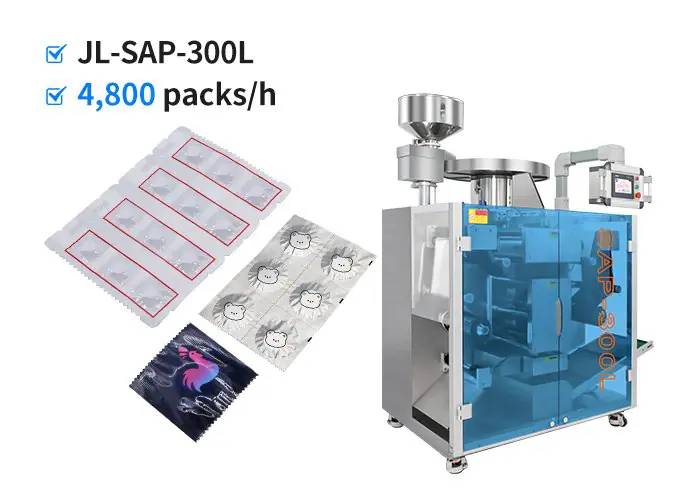
  • Blister Ambalaj Makinaları: These machines form plastic sheets into cavities (kabarcıklar), insert the tablets or capsules, and then seal them with a foil or plastic backing. Blister machines come in two main types: intermittent-motion (forming one pack at a time on a flat platen) and continuous-motion (high-speed rolls of film moving through stations). An example is the fully-automatic blister line for tablets. A blister machine will heat and mold the plastic web, fill each cavity with the right pill, and then heat-seal a foil on top. Blister machines often run at hundreds of units per minute. (At the end, a die-cut station separates the packs if needed.)

    Kapsül Tablet için DPP-180pro Blister Makinesi
    Kapsül Tablet için DPP-180pro Blister Makinesi
  • Strip Packing Machines: Strip packs can be made on specialized packaging lines or by simpler machines that feed tablets into a continuous laminate web. They fold and seal the laminate around each pill. While not as common as blister lines, some blister machines have a “strip mode” that allows only heat-sealing of a flat strip of film over tablets. Whether blister or strip, these machines ensure each tablet is individually sealed.

    Şerit paketleme makinesi
    Şerit paketleme makinesi
  • Sachet/Stick Pack Machines (Form-Fill-Seal): Single-dose sachets and stick packs use vertical or horizontal form-fill-seal (VFFS/HFFS) makineler. For stick packs, a vertical form-fill-seal machine extrudes a tubular film, fills it with powder or liquid, and then seals and cuts it into stick-sized packs. Örneğin, a single-dose oral powder is filled by volume or weight (often via an auger filler) before sealing. These machines handle film rolls (flexible packaging materials) and make precise pouches. They are very flexible: one machine can often switch between different sachet sizes.

    Poşet Çubuk Paketleme Makinası
    Poşet Çubuk Paketleme Makinası
  • Bottle/Vial Filling & Capping Lines: For unit-dose liquids, machines similar to standard bottling lines are used but on a smaller scale. A vial filling machine or bottle filler will fill each small vial/bottle with the exact dose volume. Then an automatic stoppering/capping machine seals it (rubber stopper for vials, plastic cap for bottles). These lines often include an automated tablet counter for solids in bottles, ve etiketleyiciler. Örneğin, an ophthalmic solution might be dosed into 5 mL vials, each one machine-dispensed. Capping and induction sealing ensure sterility.
  • Ampoule Filling Machines: Ampoules (thin glass vials for injectables) require a specialized ampoule filling and sealing machine. These machines typically fill liquid via a dosing pump, then use flame or mechanical means to melt the glass tip closed. The output is a sealed glass ampoule with one dose inside. Ampoule machines are used for vaccines, enjekte edilebilir ilaçlar, or eye drops that need a sterile one-use container.
  • Pre-filled Syringe Assembly Machines: If a product is delivered as a pre-loaded syringe or autoinjector, then assembly machines fill the syringe barrels with drug and attach the plunger and needle sheath. Each filled syringe is then capped as a unit dose. These machines often resemble small-scale vial filling equipment but designed for syringe components.

Manufacturers often refer to these machines collectively as unit-dose packaging machines or blister machines, sachet machines, vial filling lines, vesaire. Örneğin, a pharmaceutical OEM might advertise a “blister packaging line for tablets/capsules” or a “stick pack machine for unit-dose powder”. The key is that each of these machines is set up to ensure one dose per package.

Choosing the right machine: The choice depends on the product:

  • A drug in tablet form? Go with a blister packing machine or strip packer.
  • A powdered medicine? Use a sachet/FFS machine (often with auger filler) for unit-dose sachets.
  • A sterile liquid? Use a vial/ampoule filling line with capping.
  • A cream or gel? Perhaps single-use tubes or ampoules (tube-filling machines exist too). Often packaging companies will mix and match – e.g., a blister machine plus a cartoner if they want to carton the unit doses for shipping.

Örneğin, JinLu Paketleme notes that blister packs are made on blister packing machines, and stick or sachet packs are made on sachet packaging machines. Pratikte, a factory producing unit-dose packs will have a packaging line that may combine multiple machines (forming/sealing machine + etiketleme + kartonlama, vesaire.) to go from raw dose to finished packaged unit.


How to Choose a Unit Dose Packaging Solution

When selecting a unit dose format and machine, consider these factors (bullet points for key tips):

  • Dozaj formu: Tablets and capsules → blister or strip; Liquids → vials/ampoules or unit-dose cups; Powders/granules → sachets/stick packs. Match the machine to the product form.
  • Protection requirements: Need extra barrier (moisture/light)? Kabarcıklar (especially alu/alu foil) offer high protection. If a simple peelable film is enough, strip or sachet might suffice. For very sensitive injectables, use amber glass vials or foil pouches.
  • Üretim hacmi: Blister and sachet machines can be very fast (hundreds per minute), but require capital investment. For smaller runs or budgets, manual blister packers or semi-automatic machines exist. Consider automatic vs manual based on batch size.
  • Regulatory/Labeling: Ensure each single-dose pack allows printing or labeling of all required info (ilaç adı, kuvvet, lot, son kullanma tarihi). Blisters and strips often have space on the backing foil. Sachets must have printable film. Check that the machine can handle printing or labeling requirements.
  • Cost and ease of use: Unit-dose packaging is generally more expensive than bulk bottles. Buyers (like pharma plant managers) must weigh the added safety/convenience vs cost. Sometimes companies outsource packaging if they can’t invest in machinery.
  • Compliance needs: Hastanelerde, things like unit-dose dispensing systems often need compatible packaging. If your products are destined for those systems, conform to the standards they accept (Örn., certain blister shapes or coding).

Özetle, match the type of unit pack to your product, and choose a machine that can reliably handle it. Many machine vendors (Jinlu Paketleme gibi, Bosch, vesaire.) offer unit-dose solutions – just be sure to describe your dose form (tablet, şişe, kese, vesaire.) and required output.


Çözüm

Unit dose packaging is all about one-at-a-time medication safety. By pre-packaging each single dose, manufacturers and pharmacies can improve accuracy, hijyen, ve kolaylık. The most common unit-dose formats are blister packs, şerit paketleri, poşetler, and single-use bottles/vials. Each format requires specialized equipment – for example, kabarcıklı paketleme makineleri, form-fill-seal (kese) makineler, and vial fillers.

If you’re in the pharmaceutical or supplement industry, understanding unit-dose packaging is crucial. It can help your customers (hastaneler, clinics, patients) use medications correctly. And if you manufacture packaging machines, offering the right unit-dose solutions can give you a competitive edge.

Key Takeaway: Birim Doz Paketleme (also called single-dose packaging) means packaging each pill, tablet, or dose individually. It comes in several types (kabarcıklar, şeritler, poşetler, flakon, vesaire.), and requires matching packaging machines. The result is safer, error-proof dosing that modern buyers and regulators increasingly expect.


FAQs on Unit Dose Packaging

What is Unit Dose Packaging?

Unit dose packaging refers to the method of packaging each individual medication dose in a separate sealed unit, like a blister pocket, kese, şişe, or strip. Each package contains exactly one pre-measured dose that can be administered directly, which helps protect the drug’s integrity and reduce errors.

Why is Unit Dose Packaging important in healthcare?

Unit dose packaging enhances medication safety and accuracy, protects doses from contamination, makes dosing convenient, and supports efficient inventory management in hospitals, clinics, eczaneler, and home care.

What are the main types of Unit Dose Packaging?

The most common types include:
• Blister packs – plastic cavities sealed with foil for tablets and capsules.
• Strips – laminated strip packs containing single pills.
• Sachets/Stick packs – for powders or granules.
• Single-use vials or ampoules – for liquids and injectables.
• Pre-filled syringes – ready for injection.

What is a blister unit dose pack?

A blister unit dose pack is a type of packaging where each tablet or capsule sits in its own cavity (kabarcık), sealed with foil or film. This keeps each dose separate, temiz, and easy to identify and dispense.

How does Unit Dose Packaging help reduce medication errors?

Because each dose is individually labeled and sealed, there’s less risk of miscounting or mixing up medications. Clear labeling and dose separation help ensure patients and caregivers give the correct dose at the correct time.

What machines are used to make Unit Dose Packaging?

Different machines are used depending on the packaging type:
• Blister packaging machines for tablets and capsules.
• Vertical form-fill-seal machines for sachets/stick packs.
• Vial/ampoule filling and capping machines for liquid doses.
• Pre-filled syringe assembly lines for injection doses.
These machines form, doldurmak, fok, and prepare unit doses efficiently.

Is Unit Dose Packaging only used in medicine?

HAYIR. While it’s most common in pharmaceuticals and hospitals, unit dose concepts are also used in other industries such as nutraceuticals, kozmetik, kişisel bakım, food sampling, and industrial liquids where precise single-use dosing adds value.

What are the benefits of Unit Dose Packaging for patients?

Patients benefit from accuracy, kolaylık, taşınabilirlik, reduced contamination, easier compliance tracking, and clearer labeling of each dose – making medicine regimens simpler to follow.

Can Unit Dose Packaging improve inventory control?

Evet. Because each dose is separated and labeled, hospitals and pharmacies can better track medication usage, control stocks, and reduce waste or leftover unused doses.

Does Unit Dose Packaging protect medicine stability?

Evet. Sealed individual units can protect medicines from moisture, oksijen, ve ışık, helping maintain potency and extend shelf life until the moment of use.


Referanslar:
1. Unit dose packaging definition — Law Insider
2.Single Unit and Unit Dose Packages of Drugs — ASHP Technical Assistance Bulletin
3.Unit Dose Packaging System – Definitive Healthcare
4.Recent trends and future of pharmaceutical packaging technology – National Library of Medicine

 

Bu Makaleyi Paylaş:
Resim Küçük fu
Küçük fu

Küçük fu, Jinlupacking'in kurucusu, getiriyor 30 ilaç makineleri sektöründe uzun yıllara dayanan uzmanlık. Onun liderliği altında, Jinlu, tasarımı entegre eden güvenilir bir tedarikçiye dönüştü, üretme, ve satış. Petty, müşterilerin ilaç ambalajının karmaşıklıklarını aşmasına yardımcı olmak için derin sektör bilgisini paylaşma konusunda tutkuludur, sadece ekipman almamalarını sağlamak, ancak üretim hedeflerine göre uyarlanmış gerçek bir tek elden hizmet ortaklığı.

İçindekiler

Sorgunuzu Gönderin

Bir yanıt yazın

E-posta adresiniz yayınlanmayacak. Gerekli alanlar * ile işaretlenmişlerdir

Ücretsiz Fiyat Teklifi Alın

*Gizliliğinize saygı duyuyoruz ve tüm veriler korunuyor. Kişisel verileriniz yalnızca JL çözümü için kullanılacak ve işlenecektir..