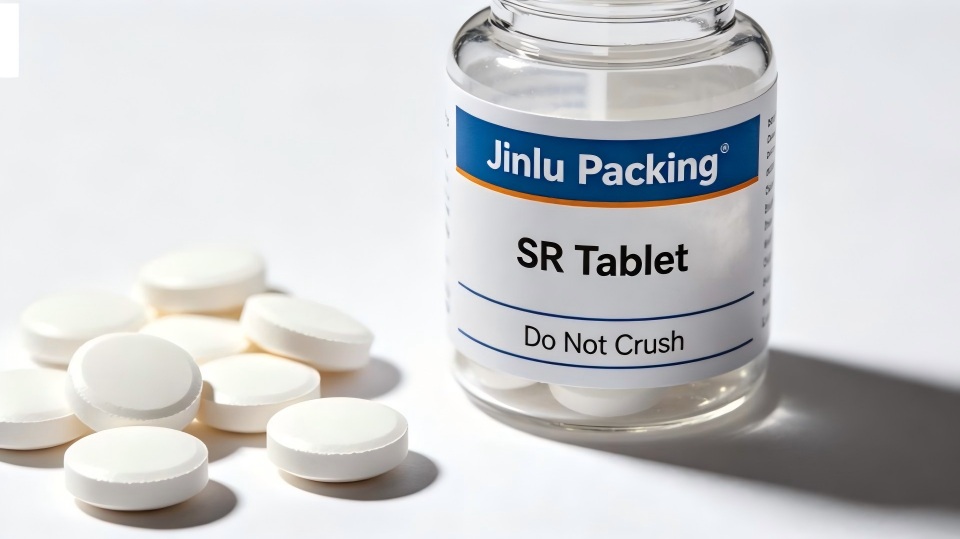
Tablet dozaj formları iki temel tipte gelir: kaplamalı Ve kaplanmamış. Bir kaplanmamış tablet herhangi bir ek kabuk içermeyen, yalnızca sıkıştırılmış bileşenlerden oluşan basit bir sıkıştırılmış haptır (aktif ilaç artı yardımcı maddeler). A kaplamalı tablet, tersine, sıkıştırmadan sonra uygulanan ince bir dış katmana veya kabuğa sahiptir. Bu kaplama bir polimer film olabilir (film kaplı), şeker bazlı kabuk (şeker kaplı), enterik katman, veya diğer işlevsel film. Kaplama görünümün ötesinde işlevlere de hizmet ediyor; ilacı koruyabilir, maske tadı, kontrol sürümü, veya yutulabilirliği iyileştirin.
Örneğin, Figür 1 bir film kaplama makinesinin tabletlere tek biçimli bir polimer filmi nasıl uyguladığını gösterir, pürüzsüz oluşturma, parlak haplar. Bu kaplama yutmayı kolaylaştırabilir ve tabletin çekirdeğini nemden ve havadan koruyabilir. Tersine, düz kaplanmamış tabletler mattır, genellikle kireçli, ve çevreye karşı daha savunmasız.
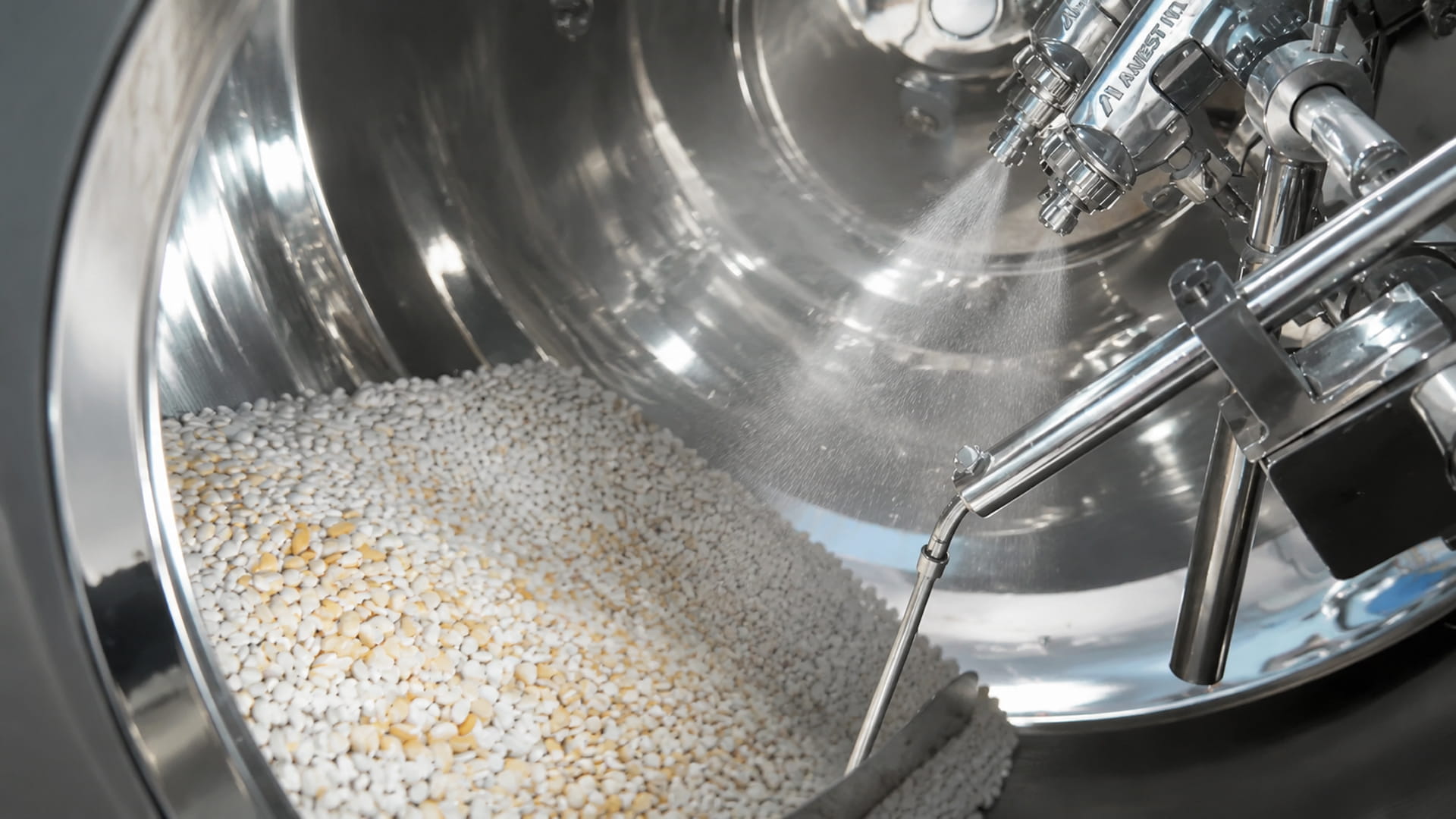
Figür 1. Film kaplama uygulayan yüksek hızlı bir tablet kaplama makinesi. Kaplama koruyucu bir etki katıyor, her tablete pürüzsüz katman, Görünümü ve stabiliteyi iyileştirmek.
Örneğin, A film kaplı tablet ince bir polimer filme sahiptir (genellikle hidroksipropil metilselüloz veya benzeri) bu hapın hacmini artırmaz. A şeker kaplı tablet kalın bir kısmı var, tatlı şurup kabuğu – yapımı daha zahmetli ve çok daha ağır. Bir enterik kaplı tablet pH'a duyarlı polimerler kullanır, böylece mideden geçer ve bağırsakta çözünür. Her kaplama tipinin kendine göre artıları ve eksileri vardır (aşağıdaki tabloya bakın).
| Kaplama tipi | Tanım | Birincil Kullanımlar |
| Kaplamasız | Kaplama yok; tablet çekirdeği açığa çıktı | Hızlı sürüm, maliyete duyarlı, stabil ilaçlar |
| Film kaplama | İnce polimer film (örneğin. HPMC) | Tat maskeleme, nem/ışık koruması, kolay yutma, marka |
| Şeker kaplama | Kalın şeker şurubu katmanları | Güçlü tat maskeleme, pürüzsüz parlak kaplama, pediatride sıklıkla |
| Enterik kaplama | pH'a duyarlı polimerler (Eudragit) | Mideyi veya ilacı koruyun; gecikmiş bağırsak salınımı |
| Diğerleri | Uzmanlaşmış/kontrollü salım | Sürekli salım, hedeflenen teslimat, vesaire. |
Masa 1. Kaplanmamış ve kaplanmış tabletlerin karşılaştırılması ve yaygın kaplama türleri.
Kaplama sadece görünüş için değildir; fonksiyonel adım tablet üretiminde. İlaç mühendisleri soruyor, “Tablet kaplama olmadan performans gösterebilir mi??“Evet ise, kaplanmamış bir tablet daha basit ve daha ucuzdur. Ancak teknik bir fayda olduğunda kaplamalar eklenir. Tabletleri kaplamanın başlıca nedenleri şunlardır::
Kısacası, kaplama işlevsellik katar. Keyfi olarak yapılmadı, ama ne zaman tadına baksan, istikrar, veya kontrol konularını serbest bırakın. Bir sektör rehberinin belirttiği gibi, “kaplama yalnızca açık bir işlevsel fayda sağladığında uygulanır”.
Kaplamalı tabletler dayanıklılığı ve kullanım kolaylığını birleştirir. Anahtar avantajlar arasında:
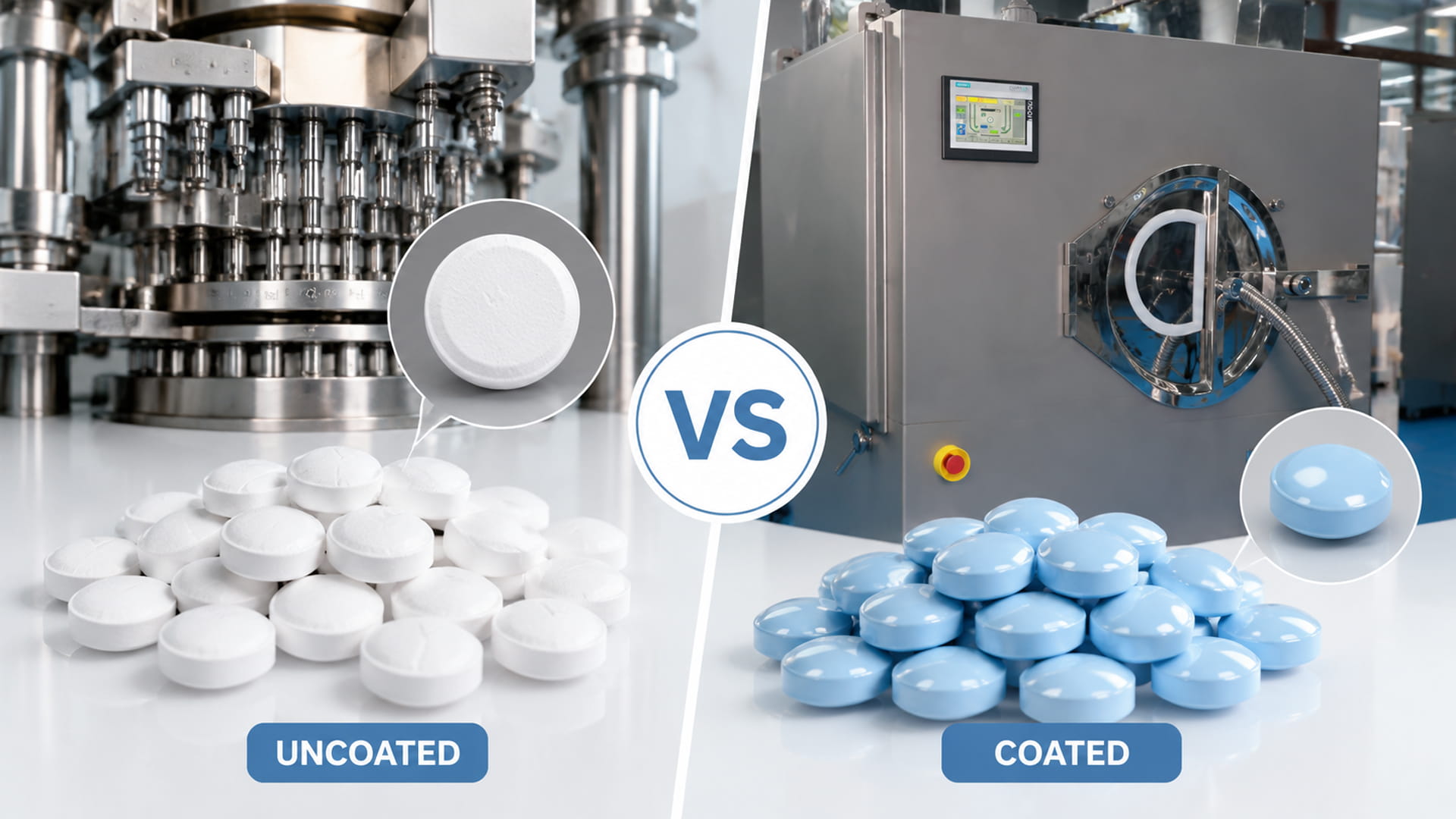
Figür 2 kaplanmamış tablet ile film kaplı tableti karşılaştırır. Kaplamalı tablet (Sağ) açıkça pürüzsüz bir yapıya sahip, çekirdekteki her türlü izi veya pürüzlülüğü maskeleyen parlak dış yüzey.
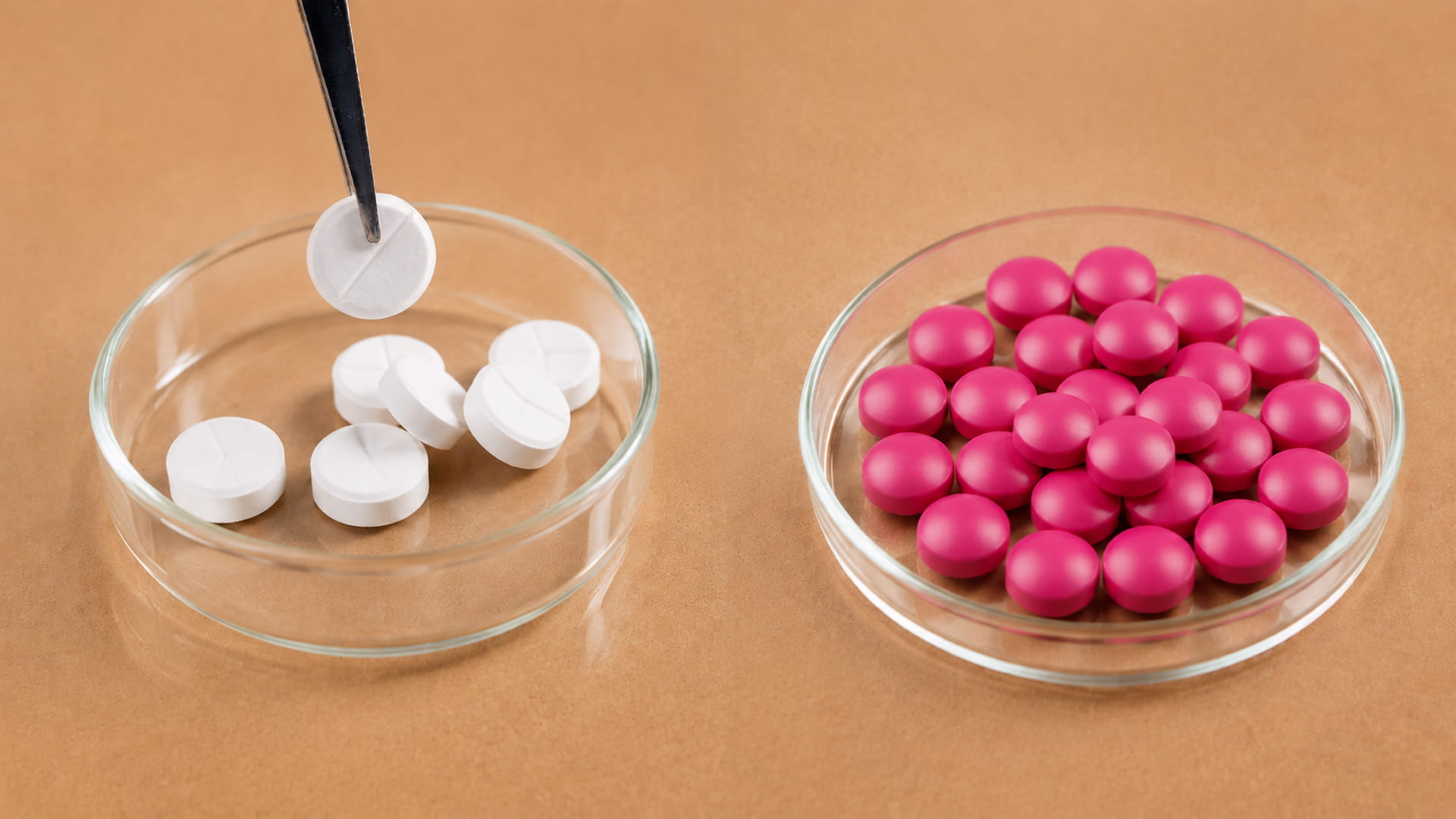
Figür 2. Kaplamasız (sol) vs film kaplı (Sağ) tabletler. Film kaplı tablet pürüzsüz bir yapıya sahiptir., Çekirdeğin rengini ve dokusunu maskeleyen tekdüze yüzey. Bunun gibi kaplamalar yutulabilirliği artırır ve içindeki ilacı korur.
Kaplamaların faydalarını açıklamak kolaydır: kaplanmış tabletler genellikle "daha iyi görünür", daha uzun süre dayanır, ve aşağı inmek daha kolay” sıradan haplardan daha. Bu avantajlar, kaplamanın aşamaları ve maliyeti artırmasına rağmen, daha sonra sorunları azaltabilir (zarar, şikayetler, erken sona erme). Bir gıda takviyesi CMO'su, "kaplanmış tabletlerin ek materyaller içerdiğini" belirtiyor, emek ve zaman, kaplama reddedilen partileri azaltabilir, müşteri şikayetleri, ve pazar sonrası kalite sorunları”. Uzun vadede, kaplamalı tabletler genellikle ürünün yaşam döngüsü boyunca tasarruf sağlar.
Elbette, düz tabletlerin hâlâ yeri var. Kaplamasız tabletler basitlik ve maliyet etkinliği sunar:
Basitçe söylemek gerekirse, kaplanmamış bir tablet “Yapımı kolay ve ucuz”. Fizibilite çalışmalarında iyi bir temel başlangıç noktasıdır. Eczacı blogu ayrıca kaplanmamış tabletlerin daha ucuz olduğunu ve üretiminin daha az zaman aldığını belirtiyor, ve daha hızlı çözünerek ilacı daha çabuk serbest bırakıyorlar.
Fakat, bu kazanımlar ödünleşimlerle birlikte gelir: kaplanmamış bir tablet "ilaç çekirdeğini çevresel hasara karşı savunmasız bırakır", ve hastalar için daha az kabul edilebilir olabilir. Dolayısıyla üreticiler bu faktörleri tartıyor: kaplamaya gerek yoksa, muhtemelen atlayacaklar.
Kaplamalar herkese uygun değildir. Endüstri birkaç ana kaplama türünü kullanıyor, her biri belirli kullanımlar ve faydalar:
Film kaplı ve Şeker kaplı Tabletler: Kısacası, film kaplamaları ince, dayanıklı, ve yüksek hızlı üretime uygundur. Minimum miktarda hacim kattıkları ve hızlı bir şekilde uygulandıkları için büyük ölçüde şeker kaplamaların yerini aldılar. Fakat, şeker kaplamaları hâlâ üstün tat maskeleme ve klasik bir görünüm sağlıyor, bu nedenle tadın çok önemli olduğu çiğnenebilir vitaminler gibi ürünlerde bulunurlar.
Film kaplı ve Enterik kaplı Tabletler: Temel fark yayınlanma yeridir. Anında salınan bir film kaplaması midede çözünür ve genellikle yutulabilirliği veya stabiliteyi artırır. Enterik bir kaplama gecikmeler bağırsak pH'ına kadar çözünme. Örneğin, mide ekşimesi ilacı mideyi önlemek için enterik bir kaplama kullanabilir, oysa günlük bir vitamin için normal bir film kaplama gerekebilir..
Üreticiler tabletleri gerçekte nasıl kaplıyor?? Dikkatlice kontrol edilen bir püskürtme ve kurutma işlemidir. Temel adımlar şunlardır:
Modern tablet üretiminde aşağıdaki gibi ekipmanlar kullanılır: döner tablet presler (çekirdek oluşturmak için) Ve yüksek hızlı kaplama makineleri (film veya şeker kabukları uygulamak için). Bir tablet presi saatte yüzbinlerce tek tip maça üretebilir. Daha sonra özel bir kaplama makinesi (temel olarak püskürtme nozülleri ve hassas hava akışına sahip paslanmaz çelik bir tambur) kaplama çözümünü hareketli tabletlere uygular..
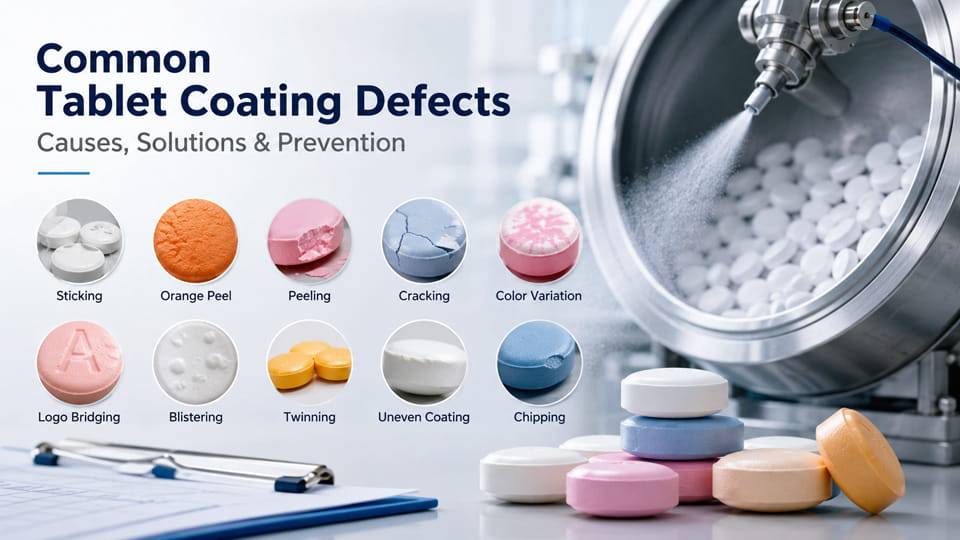
Bu adımların her biri sıkı bir şekilde kontrol edilmelidir. Çok fazla püskürtme veya çok sıcak hava, “portakal kabuğu” dokusu veya soyulma filmi gibi kusurlar. Bu yüzden gelişmiş kaplama makineleri (JinluPacking'dekiler gibi) Otomatik PLC kontrolleri var, hassas püskürtme nozulları, ve hatta parametreleri ayarlamak için gerçek zamanlı izleme. Sonunda, kesinlik önemlidir: Tutarlı performans için her tabletin doğru kaplama kalınlığına sahip olması gerekir.
[jl_youtube src=”https://www.youtube.com/embed/LFJJ-cEpfCk”]
Laboratuvar geliştirmeden ticari tablet üretimine geçerken, Doğru tablet kaplama makinesini seçmek kritik bir karar haline geliyor. Üretim yöneticileri genellikle ekipmanı kaplama tekdüzeliğine göre değerlendirir, kapasite, otomasyon seviyesi, temizlik gereksinimleri, ve bakım maliyetleri. En yaygın tablet kaplama ekipmanı şunları içerir::

Figür 3. Jinlu'nun endüstriyel yüksek hızlı tablet kaplama makinesi. Kaplama çözeltisi püskürtülürken ve kurutulurken tabletler içeri doğru yuvarlanır. Bölme tipi karıştırıcılar ve malzeme sirkülasyon sistemleri gibi özellikler, eşit kapsama alanı ve verimli kaplama sağlar.
Bir kaplayıcıda aranacak temel özellikler şunları içerir::
Kaliteli ekipmanlara yatırım yapmak karşılığını verir: iyi bir kaplayıcı yüksek kaplama homojenliği sağlar, minimum kusur, ve daha yüksek hızlarda çalışabilir. Bu, üretim süresini ve emeği azaltır. Bir blogun belirttiği gibi, modern film kaplama “her zamankinden daha hızlı ve daha tutarlı”,” otomatik kontroller ve geliştirilmiş makineler sayesinde.
Özetlemek gerekirse, kaplanmış ve kaplanmamış tabletler arasındaki ana farklar şunlardır:
Masa 2 (altında) bu farklılıkları vurguluyor. Kaplamalı kaplamanın genel olarak "daha iyi" olmadığını unutmayın; daha iyidir kaplama gerektiğinde. Bir SSS yanıtı olarak: “Kaplanmış tabletler her zaman kaplanmamış tabletlerden daha mı iyidir?? İşlevsel bir neden söz konusu olduğunda kaplamasız tabletler kullanılır, tat maskeleme veya koruma gibi. Bir formülasyon stabil ve lezzetli olduğunda, kaplamasız tabletler genellikle basitlik ve maliyet açısından tercih edilmektedir”.
| Özellik | Kaplamasız Tabletler | Kaplamalı tabletler |
| Yüzey | Mat, görünür toz/granüller | Düz, parlak veya renkli film |
| Tat/Koku | Acı veya nahoş fark edilebilir | Kaplama hoş olmayan tatları/kokuları maskeler |
| Yutma kolaylığı | Çoğu zaman daha zor, özellikle büyük olanlar | Kaygan yüzey sayesinde daha kolay |
| Koruma (Nem/Işık) | Güçlü ambalaj gerektirir | Film bariyer ekliyor, stabiliteyi artırır |
| Uyuşturucu istikrarı | Neme karşı daha savunmasız, sıcaklık | Daha iyi stabilite ve raf ömrü |
| İşleme Karmaşıklığı | Daha basit süreç, daha az adım | Ek kaplama adımı gerekli |
| Zaman/Maliyet | Daha düşük üretim maliyeti | Daha yüksek ön maliyet ancak potansiyel olarak daha düşük yaşam döngüsü maliyeti |
| Serbest bırakma kontrolü | Sadece hemen sürüm | Gecikmeli veya kontrollü serbest bırakmayı etkinleştirebilir (enterik, sürekli) |
| Markalama/Görünüm | Sınırlı (düz renk) | Renkli olabilir, markalaşma için basılmıştır |
Masa 2. Kaplanmış ve Kaplanmamış Tabletler: temel özelliklerin karşılaştırılması.
Pratikte, Formülatörler ve üreticiler ürünün ihtiyaçlarına göre karar verirler. Bazı genel kurallar:
Bazen karar paketlemeye gelir: kaplanmış tabletler genellikle şişelerde veya kavanozlarda daha iyi sonuç verir çünkü daha az toz tutarlar. İçinde Blister paketleri, her iki form da işe yarar, ancak kaplama daha basit paketlemeye olanak sağlayabilir. Sözleşmeli üreticiler (CMO'lar) sık sık sor: “Bu tableti kaplamasız yapabilir miyiz??” ve yalnızca gerekirse bir kaplama adımı ekleyin.
Yaygın bir soru, kaplanmış bir tabletin ikiye mi yoksa ezilmişe mi kırılacağıdır. Genel olarak, HAYIR: kaplanmış bir tabletin bölünmesi veya ezilmesi kabuğun amacını bozar. Bir polimer kaplamanın ilacın salınımını kontrol etmesi veya koruması amaçlanır.. Ezmek ilacı bir anda açığa çıkarır, emilimi değiştirebilir veya tahrişe neden olabilir. Kaplamalı tabletler (özellikle enterik veya uzatılmış salınımlı olanlar) bozulmadan kalmalı. Daha küçük bir doza ihtiyaç duyulursa, tabletin puan çizgisi olup olmadığını kontrol edin (bazı anında salınan tabletler bunu yapar) veya bir eczacıya sorun. Bir uzman notunun söylediği gibi: "Genellikle hayır; ezmek koruyucu tabakayı yok edebilir ve ilaç salınımını değiştirebilir. Her zaman önce bir eczacıya danışın”.
Sonunda, kaplanmış ve kaplanmamış tabletler basitlik ve işlevsellik arasında bir dengedir. Kaplanmamış tabletlerin yapımı daha ucuz ve daha hızlıdır, ama ilaç çekirdeğini açıkta bırak. Kaplamalı tabletler karmaşıklığı ve maliyeti artırıyor, ancak net faydalar sağlayın: daha iyi stabilite, tat maskeleme, yutulabilirlik, ve marka farklılaşması. Modern ilaç üretiminde, günlük kullanımda en çok kullanılan haplar (vitamin, OTC ilaçları, nutrasötikler) koruma ve verimlilik arasında doğru dengeyi sağladığı için film kaplıdır.
Fakat, formülasyon izin verdiğinde, Firmalar maliyet nedeniyle kaplamasız tabletleri tercih edebilir. Anahtar şudur: tablet tipini ilacın ihtiyaçlarına göre eşleştirin. Ürününüz tat maskeleme veya kontrollü salınım gerektiriyorsa, bir kaplama genellikle gereklidir. Değilse, sade bir tablet yeterli olabilir.
Tablet kaplamayla ilgili sorularınız veya ekipman seçeneklerini keşfetmek için, uzanmak! JinLuPacking'deki ekibimiz tablet baskı makinelerinde uzmandır, kaplama makineleri, ve komple tablet üretim hatları. Film için yüksek hızlı bir kaplama sistemine ihtiyacınız olup olmadığı, şeker, veya enterik uygulamalar, veya tablet formülasyonunuzu optimize etmeye yönelik tavsiyeler, Yardım etmek için buradayız. Fiyat teklifi veya daha fazla bilgi için bizimle iletişime geçin, ve tabletlerinizin doğru kaplamayı ve performansı elde etmesini sağlayalım.
Kaplanmış tabletlerin ek bir katmanı vardır (film, şeker veya fonksiyonel polimer) sıkıştırılmış çekirdek üzerine uygulanır, kaplanmamış tabletler herhangi bir dış katmanı olmayan düz sıkıştırılmış haplardır. Kaplama işlevsel amaçlara hizmet eder: tadı maskeleyebilir, API'yi nemden/ışıktan koruyun, ve kontrol serbest bırakılması. Kaplanmamış tabletler hemen çözünür ve yapımı daha ucuzdur, ancak ilacı çevreye maruz bırakıyorlar ve çoğu zaman tadı acı oluyor.
Tabletler stabiliteyi artırmak için kaplanmıştır, hasta kabul edilebilirliği, ve performans. Bir kaplama nemi korur- veya ışığa duyarlı API'ler, hoş olmayan tatları maskeler, ve tabletin yutulmasını kolaylaştırır. Özel kaplamalar (enterik filmler gibi) bağırsağa kadar salınımı geciktirebilir, mide tahrişini önleme. Kısacası, kaplama tabletin görünümünü ve raf ömrünü artırır, kontrollü ilaç dağıtımını ve daha iyi hasta uyumunu mümkün kılabilir.
Her ikisi de evrensel olarak “daha iyi” değildir – uygulamaya bağlıdır. Kaplanmış tabletler koruma ve hasta çekiciliği avantajına sahiptir, ancak daha pahalıdırlar ve ekstra işlem gerektirirler. Kaplanmamış tabletler daha basittir, Daha hızlı, ve üretimi daha ucuz, ve ilacı hızla serbest bırakıyorlar. Bir ahır için, Maliyetin öncelikli olduğu anında salınan ilaç, kaplanmamış ideal olabilir. Tadı maskeleme ve stabilitenin öncelikli olduğu acı veya neme duyarlı bir ilaç için, kaplamalı daha iyi bir seçimdir.
Üç ana tablet kaplama yöntemi şunlardır::
• Film Kaplama: İnce polimerik tabaka (genellikle su bazlı) sprey ile uygulanır; bugün en yaygın olanı. Minimum ağırlık artışıyla nem koruması ve markalama sunar.
• Şeker Kaplama: Çoklu şurup katmanlarından oluşan kalın şeker kabuğu; parlak bir görünüm verir ve tadı iyi maskeler, ancak toplu ekleme yapar ve uzun işlem gerektirir.
• Enterik Kaplama: Mide asidine direnen ve bağırsaklarda çözünen, pH'a duyarlı bir film. Bu teknik olarak özel polimerlerle yapılan bir tür film kaplamadır., Aside duyarlı ilaçlar için veya mide tahrişini önlemek için kullanılır.
Film kaplı tabletler, daha ince bir kabukla önemli kaplama avantajlarının çoğunu kazanır. İyi bir sulu film kaplaması ilacı koruyacaktır (nem/ışık bariyeri), tat ve kokuyu maskelemek, ve tablet boyutunu önemli ölçüde artırmadan estetiği iyileştirin. Film kaplamalar modern kaplayıcılarda çabuk kurur, yüksek verim sağlıyor. Ayrıca belirli salım profilleri için de formüle edilebilirler. (enterik veya sürekli) polimer seçimine göre.
Genel olarak, Evet. Kaplanmamış tabletler genellikle daha hızlı parçalanır ve çözülür çünkü bariyer tabakası yoktur. API hemen mide sıvılarına maruz kalır, daha hızlı bir başlangıca yol açar. Tersine, anında salınan bir film kaplaması bile hafif bir gecikme sağlar (çünkü önce katmanın erimesi gerekiyor). Fakat, kaplamanın bileşimine ve kalınlığına bağlı olarak fark küçük olabilir.
Ortak kaplama ekipmanı şunları içerir::
• Delikli Pan Kaplayıcılar (Yüksek Hızlı Kaplayıcılar): Dönen delikli tamburlara sahip endüstri standardında makineler. Isıtılmış hava tamburun içinden akar, yüksek kurutma verimliliğine ve düzgün kaplamaya olanak tanır.
• Akışkan Yataklı Kaplayıcılar: Tabletler bir hava akımı üzerinde asılı bırakılır ve alttan veya üstten püskürtülür. Çok düzgün ince katmanlara sahip peletler veya küçük tabletler için iyi.
• Geleneksel Kaplama Tavaları: Esas olarak şeker kaplama için kullanılan büyük açık tavalar (emek yoğun ve modern eczacılıkta çoğunlukla geçerliliğini yitirmiş bir yöntem).
Her makine tipi parti büyüklüğüne göre seçilir, tablet boyutu/şekli, ve kaplama malzemesi. Büyük ölçekli film kaplama için, delikli tavalar (Jinlu'nun tablet kaplama makinesi gibi) en yaygın olanlardır.
Kaplama ilaç salınımını geciktirebilir veya değiştirebilir. Enterik bir kaplama mide asidinin salınmasını önler, yani ilaç sadece bağırsakta salınır. Diğer özel kaplamalar (sürekli salınımlı filmler) sıvıların nüfuzunu yavaşlatan polimerler içerir, yayının saatlerce uzatılması. İşlevsel olmayan film kaplamaları bile (derhal serbest bırakılması için) kaplanmamış bir çekirdeğe kıyasla salınımı biraz yavaşlatabilir, çünkü önce bariyerin çözülmesi gerekiyor. Böylece, kaplamalar, API'nin nerede ve ne kadar hızlı teslim edileceğini hassas bir şekilde ayarlamak için bir araç sağlar.
Film kaplamalar çok yönlü ve etkilidir. İlacı korurlar ve minimum işlem süresiyle tadı/görünümü iyileştirirler. Modern sulu film kaplamaları çabuk kurur, yüksek verimli üretim için gerekli olan. Ayrıca renklerin ve tanımlayıcıların eklenmesine de izin verirler, marka farklılaşmasına yardımcı olmak. Çünkü farklı sürüm profillerine göre tasarlanabilirler, film kaplamalar, tabletlerinde hem kalite hem de performans sunmak isteyen ilaç şirketleri için güçlü bir iş gücüdür.
Şirketler birden fazla faktörü değerlendiriyor. İlaç kararsızsa, acı, veya mide korumasına ihtiyacı var (enterik salınım), kaplamalı tabletleri seçiyorlar. Formülasyon zaten stabilse, tadı kabul edilebilir, ve maliyetin en aza indirilmesi bir önceliktir, kaplanmamış olarak giderler. Bir sektör rehberinin özetlediği gibi: “tat maskelemeye ihtiyacınız varsa” kaplı tabletler kullanın,” “nemden koruma, ışık veya oksidasyon,” veya “kontrollü/gecikmeli salınım”; Formülünüz stabilse ve ekstra korumaya gerek yoksa kaplanmamış olanı seçin. Esasen, karar ürün gereksinimlerine göre verilir (API kimyası, Hedef Sürümü, pazarlama ihtiyaçları) üretim hususlarına karşı (maliyet, ekipman kullanılabilirliği).
Referanslar:
1.Tablet Film Kaplamanın Farmasötik Uygulaması —— Ulusal Tıp Kütüphanesi
2.Tablet Kaplama —— Michigan Kimya Mühendisliği Üniversitesi
3.Tablet Kaplama: İlaç Üretimi için Proses Sistemleri Mühendisliği —— Bilimsel
4.Farmasötik Kaplama ve Farklı Yaklaşımları, bir İnceleme —— Ulusal Tıp Kütüphanesi
5.Farmasötik Film Kaplama Üzerine Kapsamlı Bir İnceleme: Geçmiş, Sunmak, ve Gelecek —— Ulusal Tıp Kütüphanesi
6.Tablet Film Kaplamanın Farmasötik Uygulaması —— MDPI
7.Tablet Üretim Teknolojilerindeki Gelişmeler: Bölüm 10 – Kaplamalı tablet teknolojileri —— Bilimsel