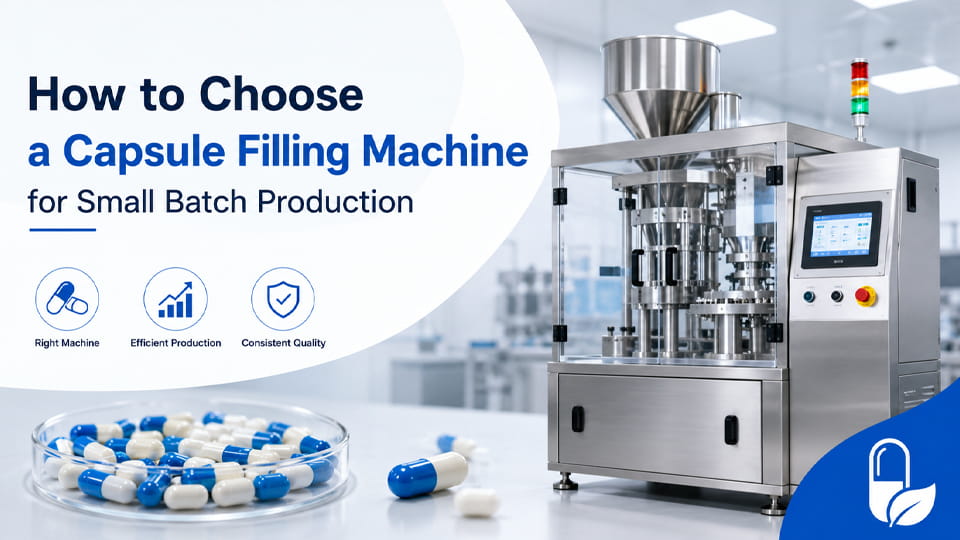

European buyers rarely start with capacity. They start with cleaning validation, fill weight stability and data integrity. Every question ends at the same point. Was this capsule filling machine designed for compliance? This article takes the six most asked questions and shows where the answers live in the machine design.
A compliant machine has nothing to hide. Its surfaces clean fast. Its lubrication stays sealed. Its capsule fill weight holds batch after batch, and its records trace every dose. When auditors walk a capsule filling line, they look for design intent, not promises.
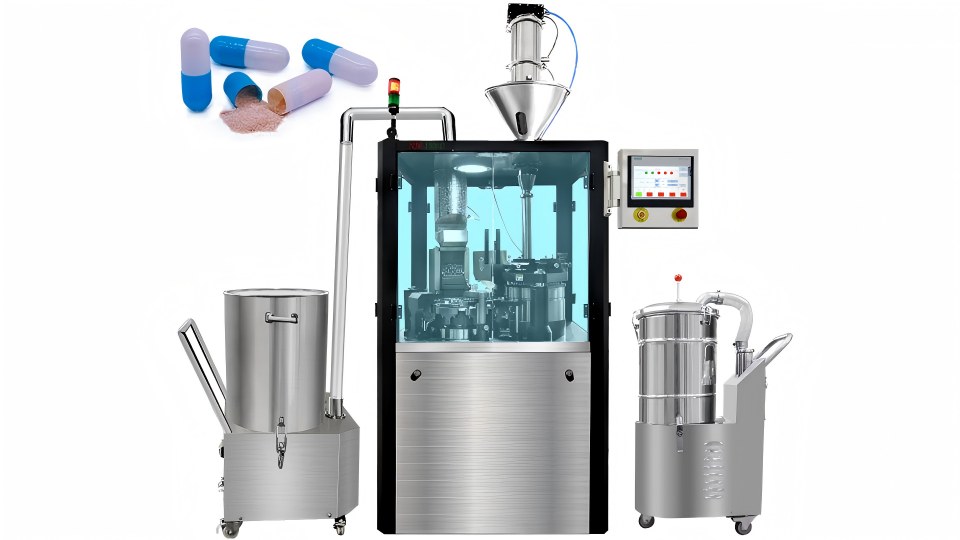
Compliance has two layers. The first layer is mandatory. CE machinery rules, EU GMP annexes and product standards set the floor. The second layer is what the machine helps the customer prove. Cleaning validation, performance qualification and data integrity all sit here. Certificates cover layer one. Design delivers layer two.
A machine can hold every certificate and still fail an audit. Certificates show the machine exists. They do not show how it behaves after a year of powder, dust and changeovers. Layer two is where audits actually happen.
The CE mark proves the machine met the Machinery Directive (The core regulation for CE machinery compliance, to be repealed on 20 Ocak 2027 and replaced by the new (AB) 2023/1230 Machinery Regulation). It says nothing about residual powder in a bearing or a gap behind a seal. When a customer asks whether the unit will pass PQ, the answer comes from drawings and materials. A folder of certificates is not enough.
Fixing compliance after installation is expensive. Every weak point found during validation means downtime, rework and delayed audits. The retrofit bill almost always exceeds the price difference saved at purchase. That is why compliance must sit in the design phase, before the machine ships.
Surface roughness decides how fast cleaning validation passes. Rough steel holds powder. Smooth steel releases it. The causal chain is simple. The rougher the surface, the harder the clean, the longer the validation.
All product-contact parts use 316L stainless steel with electropolishing. Electropolishing lowers surface roughness, removes adhesion points and lets cleaning agents reach every contact face. This material package meets EU GMP expectations for cleanable surfaces and gives cleaning validation a stable starting point.
Sticky or hygroscopic powders behave differently. A PTFE coating option reduces adhesion for these materials. Fewer residue points mean shorter cleaning cycles and fewer sampling locations. For some products, the coating is the difference between passing and failing a swab test.
Lubricant in powder is the most hidden cross-contamination risk on a capsule filler machine. It is hard to see and hard to detect. One gram of grease in a batch can scrap the entire lot. The machine answers this risk with a set of complementary seals.
The drive shaft uses a double-seal configuration. A first NBR seal stops lubricant from leaking out. A second silicone seal stops powder from entering the bearing. The turntable adds a silicone sealing ring, so powder cannot reach the inside of the disc.
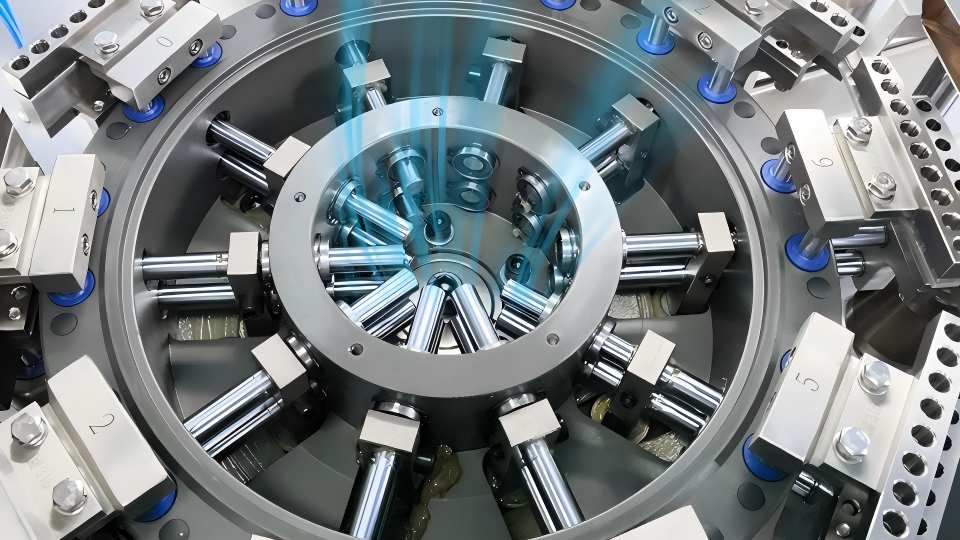
The transverse twin shafts use PTFE oil-free bearings. They need no lubrication for life. Removing the oil source removes the contamination source. Fewer lubrication points also simplify the maintenance schedule.
The lubrication system feeds oil in fixed zones and fixed cycles. Lubrication stays where it belongs and never drifts toward the powder path. Together these designs solve two problems. Grease cannot reach the powder, and dust cannot jam the bearings. Cleanroom particle levels stay under control.
Fill weight is the most direct score on an audit sheet. The European Pharmacopoeia sets clear limits on capsule fill weight uniformity[1]. A batch that exceeds the limit fails. Consistency depends on the indexing mechanism, not on operator skill.
The machine uses a Zeiss optical dividing head for indexing. The indexing shaft is machined in one pass, so no stacking error comes from secondary assembly. Each station lands in the same position, cycle after cycle[5].
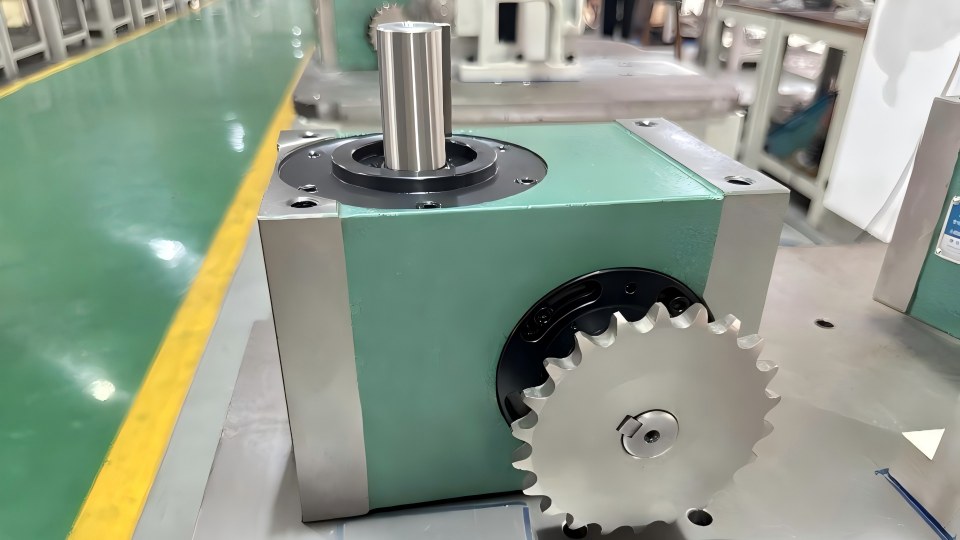
The inner cam is formed in one pass on a CNC machining center. No split halves, no seams, no gaps. At high speed the motion stays smooth and quiet (under 75dBA). Smooth motion protects both the machine and the product.
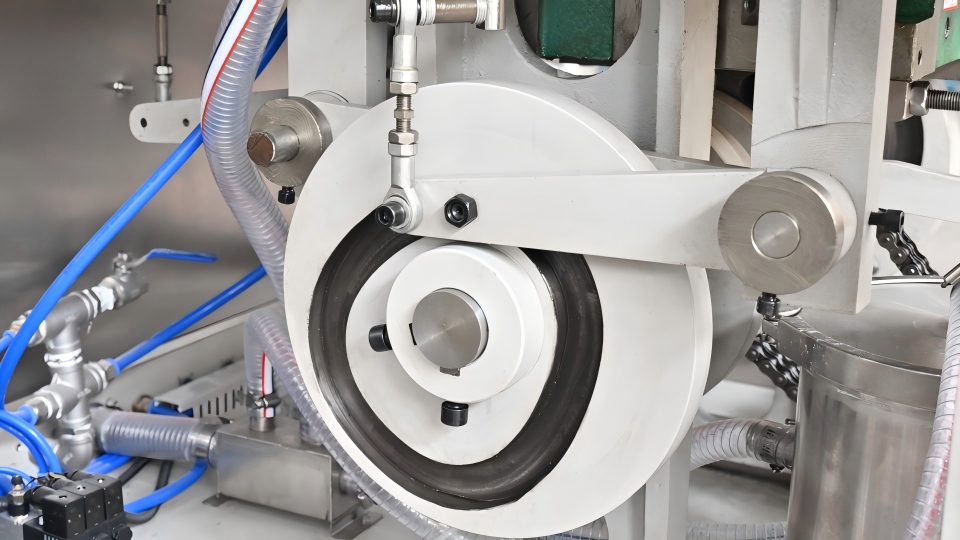
The dosing disc supports three-dimensional adjustment. The disc loads evenly, and capsule fill weight adjusts quickly and precisely. Total weight error stays within three percent[5]. That number gives performance qualification a stable data basis.
How does a capsule filling machine work to hold that number? Powder settles into the dosing disc, excess powder is scraped level, and the filled plug transfers into the empty shell. The sequence depends on alignment and repeatability. When alignment holds, fill weight holds too.
Average fill weight of capsules changes with powder bulk density and capsule size fill weight tables. Operators match the capsule fill weight chart to the target dose before a run. Capsule fill weight calculation starts with density, target dose and shell volume. Capsule fill weight and capsule size are linked by these numbers, so change parts must follow the size.
Change parts switch the same host between capsule filling machine 000, kapsül dolum makinesi 00 and capsule filling machine size 0 as well as other size modes. Each size setup uses the same indexing accuracy, so validation data carries across sizes.
GMP controls rework materials strictly. Recovered powder must be fully separated from dust and capsule debris. If separation is poor, rework lives in a grey zone. Many plants never solve this, so their rework process stays questionable.
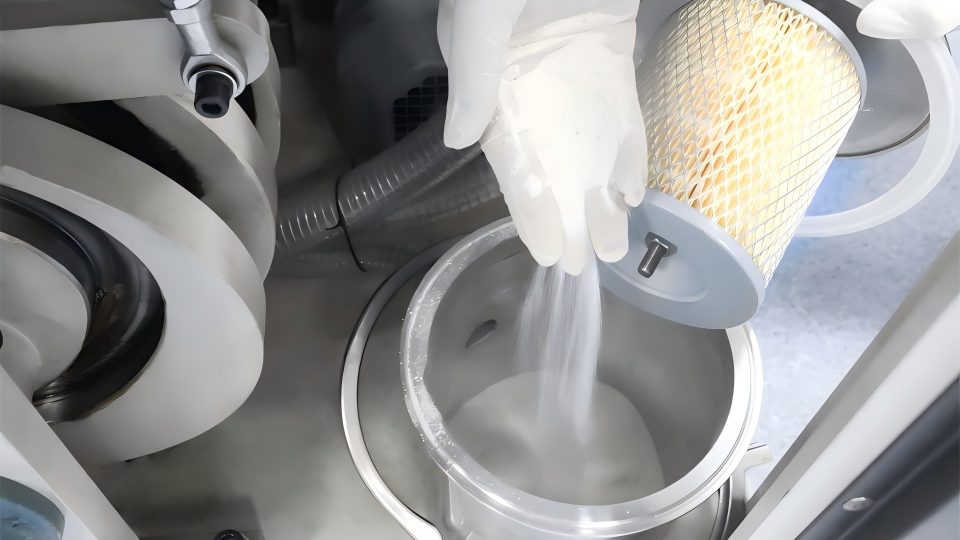
The machine ships with a powder and waste capsule separation unit. Qualified powder and broken shell debris are handled separately, so recovered powder stays clean. An optional separation device collects powder and waste capsules independently.
Powder recovery reaches close to one hundred percent. Less material is wasted, and the recovered material keeps its purity. The real value is compliance. Rework moves from a grey practice to a documented process. Every recovered batch has a clear source and destination.
Selling into Europe means meeting the CE Machinery Directive[4]. Interlocked guards, emergency stops and protective covers are the baseline. They protect operators and meet the mechanical safety requirements. Safety is the entry ticket.
Door interlocks, emergency stop and guard design all follow the Machinery Directive (The core regulation for CE machinery compliance, to be repealed on 20 Ocak 2027 and replaced by the new (AB) 2023/1230 Machinery Regulation). An operator who reaches into a running machine gets stopped, not harmed. These are basic expectations for any capsule unit sold in Europe.
Auditors care more about data. The Siemens HMI detects low powder, missing capsules and mechanical faults, then alarms and stops automatically with diagnostic prompts[5]. Shift output, cumulative output and runtime are recorded in real time. A configurable printer adds production date, batch number and coding. Alarms leave records, operations leave traces and batches carry codes. These electronic records satisfy EU GMP Annex 11 data integrity requirements[3]. They build full batch traceability from feeding to finished capsules.
Design qualification promises easy cleaning and easy maintenance. The promise lives or dies in daily operation. If a part is hard to reach, operators find shortcuts. If it is easy, they follow the procedure.
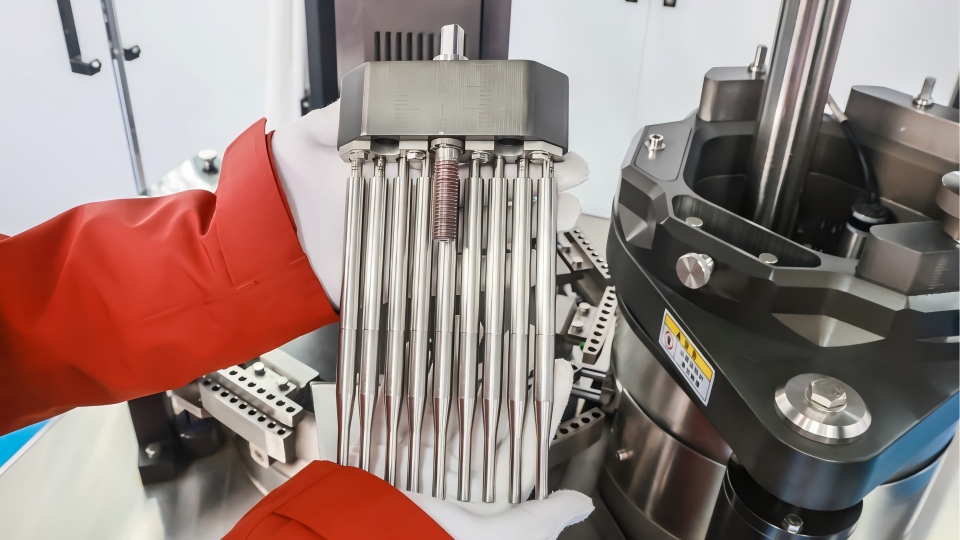
The filling rod holder uses a slide-in cassette design, also known as integrated design. Changing filling rods needs no reaching into the machine interior. Alignment happens outside, which is faster, safer and free of hand-contact contamination.
Modular structure and inching operation let operators complete a full mold change within fifteen minutes[5]. Cleaning time in the cleanroom drops because the machine opens less. How to use a capsule filling machine well is mostly about how fast it can be cleaned and changed.
An online compressed air cleaning system keeps the upper and lower molds dust-free and improves capsule feeding. Shorter open time in the clean zone means lower exposure risk. The DQ commitment lands in every batch change and every cleaning shift.
The six modules work in parallel. Materials decide whether cleaning validation passes. Seals decide whether contamination stays out. Indexing decides whether fill weight holds. Recovery decides whether rework is legal. Electricals decide whether data can be traced. Structure decides whether maintenance stays clean.
Each module is a complete causal chain. Where the risk comes from, how the design removes it and which rule it meets. That risk-driven approach means customers receive a production tool prepared for audit, not a machine that needs process workarounds.
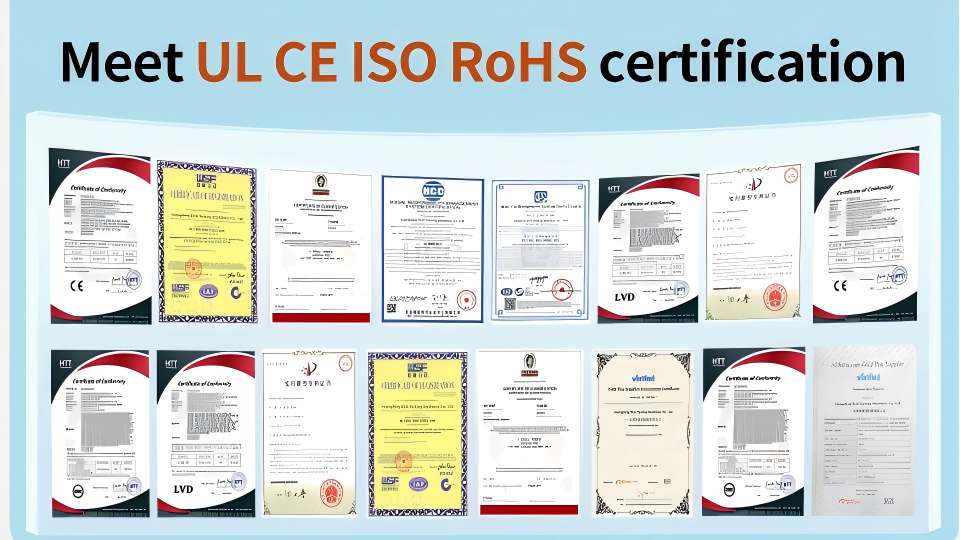
iyi kapsül dolum makinesi for European buyers is one where these answers are already built in. Our D-series automatic capsule filling machine is produced to cGMP standards and holds a CE certificate. Buyers get three years of warranty and one year of free spare parts. For a capsule filling machine manufacturer that designs compliance first, the six answers above are not claims. They are drawings.
Evet. Product-contact parts are 316L stainless steel with electropolishing. Surfaces release powder quickly, and a PTFE coating option handles sticky materials. Cleaning validation starts from a surface designed to pass.
HAYIR. Double seals on the drive shaft stop grease at the source. Silicone rings on the turntable and PTFE oil-free bearings add a second barrier. Grease stays out of the powder path. Lubrication is timed and zoned, so oil never drifts into product zones.
Total weight error stays within three percent. A Zeiss optical dividing head and one-piece cam hold alignment, while three-dimensional dosing adjustment makes fine tuning fast. Average fill weight of capsules stays stable across batches and operators.
Evet. Powder and waste capsules are separated before recovery. Recovered powder keeps its purity, and the optional separation unit collects the two streams independently. Every recovered batch has a documented source and destination.
Evet. The Siemens HMI records alarms, shift output, cumulative output and runtime. Batch number and production date can be printed on demand. The records meet EU GMP Annex 11 and support full batch traceability.
Evet. Door interlocks, emergency stops and protective guards follow the CE Machinery Directive. Training time is short, and safety features are standard, isteğe bağlı değil. A capsule fill machine with guarded access protects both operator and product.