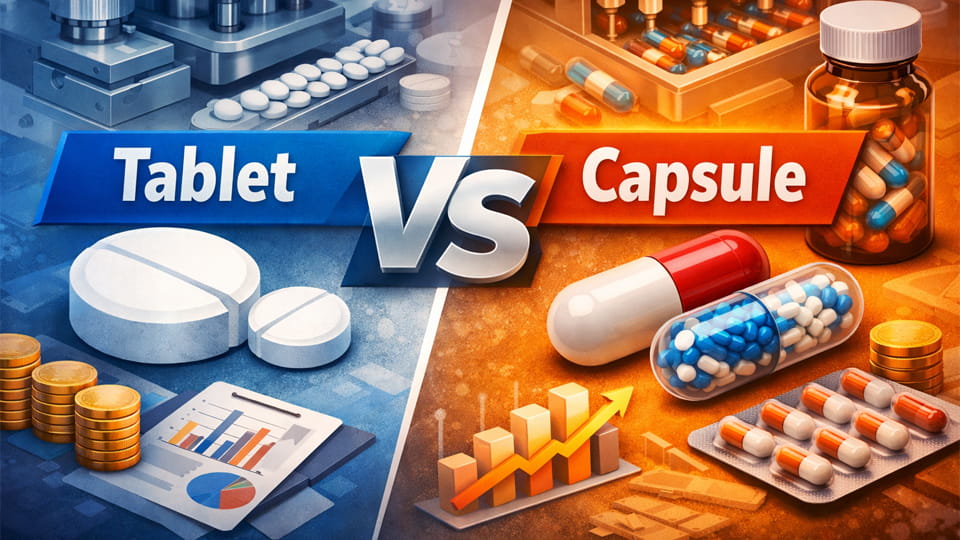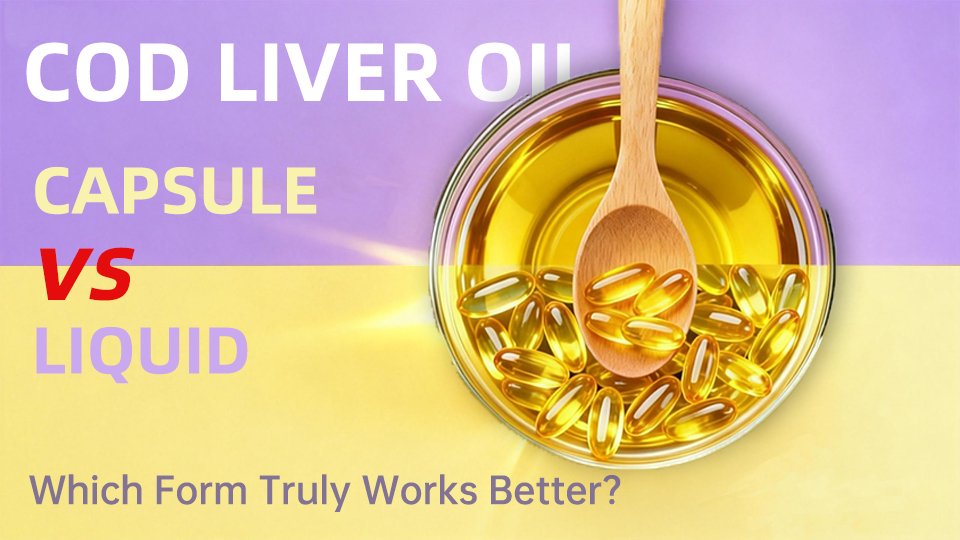

เจลาตินแคปซูล – the familiar pill shapes in multicolor – come in two main types: hard-gelatin (hard-shell) แคปซูล และ soft-gelatin (ซอฟเจล) แคปซูล. These popular dosage forms are made from animal-derived collagen (เจลาติน) and are favored in pharmaceuticals and supplements because they dissolve easily, come in standard sizes, and can hold a wide range of ingredients. Hard gelatin capsules consist of two rigid parts (a cap and a body) that are filled separately, while soft gelatin capsules are a single-piece, flexible shell typically filled with liquid or semi-solid formulations. ในแง่การปฏิบัติ, softgel capsules (often called gelatin softgel capsules, softgel gelatin capsules, or soft gelcaps) excel at delivering oil-based or liquid medicines, whereas hard capsules are used for powders, เม็ด, or multiple-particulates. In the following sections, we’ll break down what each capsule type is, พวกมันถูกสร้างขึ้นมาอย่างไร, and why one might be chosen over the other in pharmaceutical packaging.
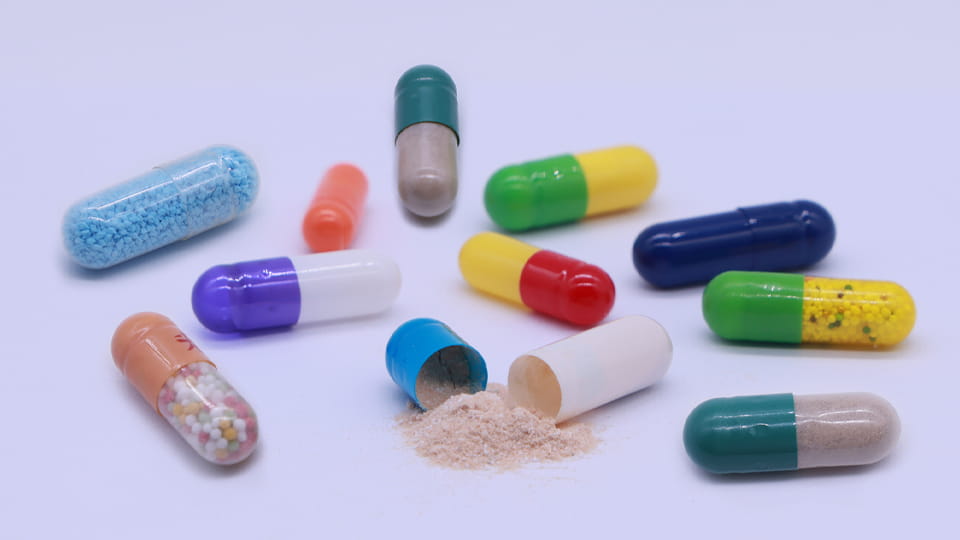
แคปซูลเจลาตินแข็ง (sometimes just called “hard capsules”) are the classic two-part shells used to enclose drugs or supplements in powder, เม็ดเล็ก, bead, or tablet form. Each hard capsule consists of a cylindrical body and a cap that snaps together. Empty hard capsules are manufactured by dipping metal molds into a gelatin solution; after drying and trimming, the resulting shells are assembled later for filling. This two-step process – first making the shell, then filling it – is relatively simple and cost-effective.
Hard capsules accommodate a broad range of contents. They can contain dry powder blends, เม็ด, microtablets, or even tiny pellets and plugs. This flexibility makes them ideal for medications or supplements requiring multiple active ingredients (ตัวอย่างเช่น, a vitamin blend with different minerals and enzymes). Because hard capsules are rigid, they do not leak and can be coated if needed for modified release. They come in standardized sizes (#5 through #000) to fit common dose volumes. In many factories, automated capsule-filling machines load these empty shells with powder and seal them quickly – making hard gelatin capsules a mainstay of large-scale production.
Hard capsules have some practical advantages: they typically allow high-speed filling equipment and the use of many excipients (ฟิลเลอร์, ผู้ยึดติด, ฯลฯ) to fine-tune the formulation. อย่างไรก็ตาม, hard capsules are less suited to oil-based or highly viscous ingredients. They also must be handled carefully to avoid moisture: if they absorb water they can swell or degrade, and if they dry out they can become brittle. Compared to a quick-dissolving softgel, a hard capsule’s rigid shell may take slightly longer to release its contents in the stomach. (See the summary table below for a side-by-side look at some of these features.)
แคปซูลเจลาตินอ่อน, often shortened to “softgels,” are made in one step by forming and filling a single continuous gelatin shell around a liquid or semi-solid core. Unlike two-piece hard capsules, a softgel is a sealed, flexible pouch. Its shell contains gelatin plus plasticizers (commonly glycerin or sorbitol) to give it elasticity. Because of this plasticized formula, softgels have a thicker, more elastic wall than hard capsules.
Softgels are ideally suited for encapsulating oils and liquids that are difficult to deliver in other forms. Common examples include fish oil, vitamin D or K in oil, and certain liquid medication suspensions. The soft, pliable shell is neutral in taste and easy to swallow, which makes these capsules very consumer-friendly. ในความเป็นจริง, many supplements (like omega-3 fatty acids from fish oil) use softgels precisely because oils fit naturally into these capsules.
From a processing standpoint, softgel production is usually done on rotary die encapsulation machines. These machines feed two rolls of gelatin ribbon around nozzles: one carries the gelatin shell material, and the other carries the liquid fill. When the rolls meet, the machine punches out and seals each filled capsule in one continuous operation. This single-step molding and filling is technically more complex and costly than hard capsule filling, but it creates a hermetically sealed capsule. Once hardened by cooling, these softgels hold their liquid fill without leakage.
Soft gelatin capsules have advantages in dosage effectiveness: many liquid or dissolved drugs absorb into the body faster. The gelatin dissolves quickly in stomach fluids, releasing the fill rapidly. Softgels also mask unpleasant tastes or odors of their contents, since nothing leaks out until the capsule dissolves. อย่างไรก็ตาม, the requirements for softgels can be stricter: the liquid fill’s chemistry must be compatible with gelatin (E.G. avoid alcohols or aldehydes that break down the shell). They also require specialized encapsulation equipment and careful humidity control to prevent the shells from sticking together or becoming brittle.
Understanding the differences between hard and soft gelatin capsules is crucial for choosing the right format. In plain terms:
Below is a quick comparison of features for easy reference:
| คุณสมบัติ | Hard Gelatin Capsule | Soft Gelatin Capsule |
|---|---|---|
| โครงสร้าง | Two-piece (หมวก + ร่างกาย); separable | One-piece, sealed, ยืดหยุ่นได้ |
| Shell Composition | เจลาติน (or HPMC) + น้ำ; no plasticizer | เจลาติน + กระด้างไนล (glycerin/sorbitol) |
| Fill Type | Dry powders, เม็ด, มินิแท็บเล็ต, ลูกปัด | ของเหลว, น้ำมัน, อิมัลชัน, or semisolid (no free solids) |
| การผลิต | Two-step: make shells, then fill with powder in a filler | One-step: รูปร่าง & fill simultaneously on rotary die machine |
| การใช้งานทั่วไป | Vitamin powders, ยาปฏิชีวนะ (as powder), โปรไบโอติก, ฯลฯ. | Fish oils, cannabinoids, soft oral liquids, certain injectables pre-dosed, ฯลฯ. |
| Dissolution Speed | ปานกลาง; may need disintegration (often under 30 นาที) | Fast; gelatin softens and dissolves quickly (often within ~20-30 min) |
| ข้อดี | Versatile (mix solids), simpler equipment, lower cost per capsule | Ideal for oils/liquids, higher bioavailability for some drugs, better patient acceptance (กลืนง่าย, tasteless) |
| ความท้าทาย | Not suited for liquids; may taste or degrade if not coated; fill process relatively slower than tableting | More complex to make; limited excipient options; requires moisture control; higher packaging cost |
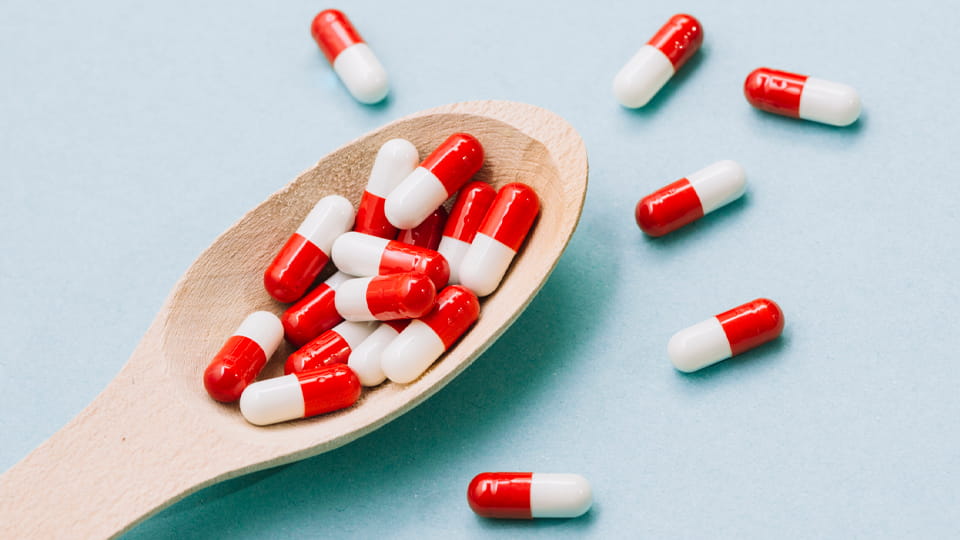
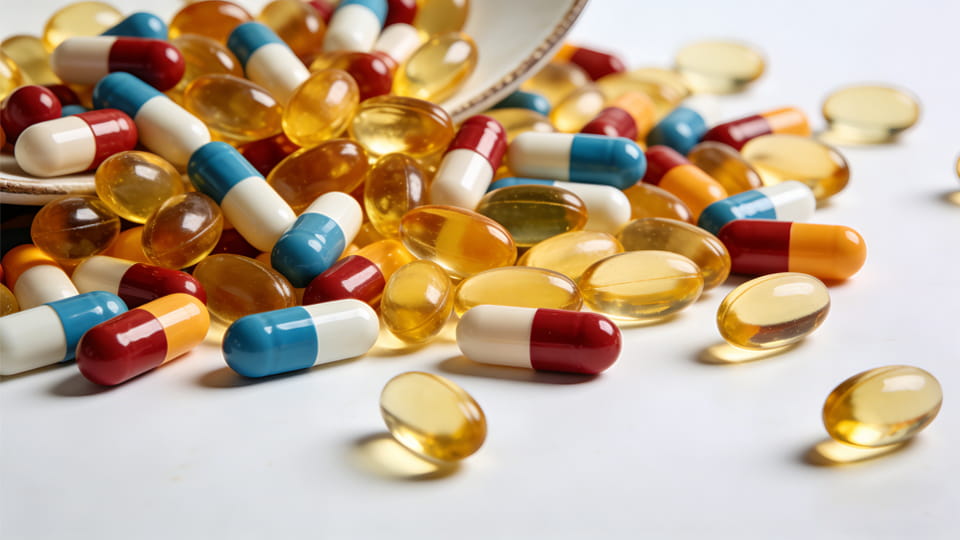
รูป: Red-and-white hard gelatin capsules on wooden spoon. Hard capsules hold dry ingredients and are manufactured in two steps (shell formation and filling). ในทางตรงกันข้าม, softgel capsules (one-piece, often golden-colored) are filled with liquids or oils and made in a single step.
โดยสรุป, แคปซูลเจลาตินอ่อน (ซอฟเจล) are excellent for liquid or oily fills and for improving bioavailability of certain drugs. As Gelita notes, the gelatin used in softgels can be tailored (with plasticizers) to control release rates, and consumers find softgels easy to swallow. Because they form a hermetic seal around the fill, softgels can protect light- or oxygen-sensitive ingredients quite well. On the downside, softgels need tight quality control: incompatible fill solutions (such as those with high acidity or containing alcohol) can react with gelatin shells, and the manufacturing line is a single-point failure for each capsule (if the machine goes down, filling stops entirely).
Hard gelatin capsules offer great flexibility for formulating powders and combining multiple components. They allow for a variety of excipients (ฟิลเลอร์, flow aids, granulation binders, ฯลฯ) and can accommodate technologies like enteric coating or capsule-in-capsule designs. They are usually cheaper per unit at high volume and use more straightforward filling machinery. อย่างไรก็ตาม, they are not suited for liquid fills (unless using special techniques like liquid-filled hard capsules), and some patients find two-piece capsules harder to swallow if they have a bad taste or take longer to dissolve.
For packaging machinery buyers and pharmaceutical engineers, the choice often comes down to the product’s formulation and the target market. If the active ingredient is a liquid oil, or if rapid action is needed, a soft gelatin capsule is often the best pick. If the dosage needs multiple powdered actives or modulatable release coatings, a hard capsule may be better. Modern manufacturing even allows hybrid solutions: ตัวอย่างเช่น, Liquid-Fill Hard Capsules (LFHC) combine some benefits of both by encapsulating liquids into hard shells, bridging the gap between the two types.
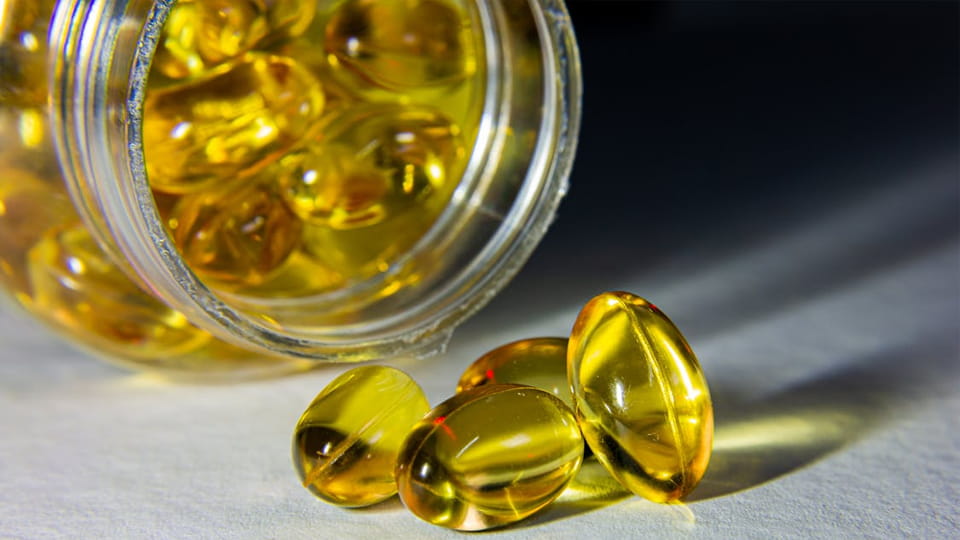
รูป: Close-up of golden soft gelatin capsules. Softgels are one-piece capsules with a plasticized gelatin shell, ideal for oily or liquid fills like vitamins and nutraceuticals.
In any case, both forms are well-established in industry. Whether you “capsule soft” refers to the softgel format or the flexible quality of the shell, the key is to align the capsule type with the drug’s properties. Whichever you choose, capsule filling lines are available: fully automatic two-piece capsule fillers for hard capsules, and rotary die machines for softgel encapsulation. Working with a knowledgeable equipment supplier (เช่น Jinlu Packing) can help match the machinery to the capsule style and production volume.
By understanding these differences and how they affect stability, patient experience, และการผลิต, you can make an informed decision for your pharmaceutical packaging needs.
From a production standpoint, hard capsules and softgels require different equipment. Hard capsule shells are typically dipped or molded and dried first. A dipping machine coats metal pins with molten gelatin to form the cap and body pieces. These shells dry on trays before being trimmed and sent to a filling line. At the filling stage, automatic capsule fillers (with tamping pins, volumetric hoppers, ฯลฯ) dose powders into the body and lock on the cap. Additional machines may polish and inspect the filled capsules. In large factories, semi- or fully-automatic filling machines are used for speed and consistency.
Soft gelatin capsules use specialized encapsulation machines that form the shell and fill in one step. ตัวอย่างเช่น, a rotary die encapsulator uses two gelatin ribbons and pumps liquid fill between them. The dies rotate, cutting and sealing each softgel on the fly. Another method (“dropping” or “molding”) drops liquid fill into a gelatin mold and seals it. ไม่ว่าในกรณีใด, softgel machines inject a measured dose of liquid (often an oil suspension) directly into molten gelatin and seal it almost instantly. After encapsulation, soft gels go to drying tunnels to reach the proper moisture content. Compared to hard capsule lines, a softgel line integrates gelatin melting, การห่อหุ้ม, and often drying on one continuous system.
The illustration above shows a simplified capsule manufacturing flow. Hard capsule production begins with gelatin mixing and dipping to make empty shells, followed by filling (with powders) และการปิดผนึก. Softgel production, ในทางตรงกันข้าม, directly combines the shell and fill using a softgel machine. Both types of lines end with quality checks and packaging. ในทางปฏิบัติ, engineers select equipment based on the capsule type: ฟิลเลอร์แคปซูล, polishers, and blister packers for hard shells, versus encapsulators and banding machines for softgels.
Choosing between hard and soft gelatin capsules depends on the formulation and goals. Use soft gelatin capsules when your active ingredient is a liquid or oil, or when you want very fast drug release. Softgels provide excellent bioavailability for oily or poorly soluble drugs and conceal bad tastes. ในทางกลับกัน, hard gelatin capsules are preferred for flexible powder blends, controlled-release beads, or when you need to mix multiple dry ingredients. Hard capsules can also be made vegetarian (E.G. HPMC shells) to meet dietary requirements.
ในระยะสั้น: softgels excel at delivering oils and vitamins in a quick-dissolving, easy-to-swallow form, while hard capsules offer formulation versatility and stability for powders and pellets. Both must be manufactured under strict conditions (ความชื้น, temperature control) to ensure the gelatin shells don’t harden or stick. By understanding their differences, pharmaceutical engineers and purchasing managers can select the right capsule and machinery for their product’s needs.
โดยสรุป, hard and soft gelatin capsules each have strengths and best uses. แคปซูลเจลาตินแข็ง (two-piece shells) excel with dry, multi-ingredient formulations – they are simple, economical, and very versatile. แคปซูลเจลาตินอ่อน (ซอฟเจล, one-piece shells) excel with liquid or oily fills – they provide excellent protection and are user-friendly to swallow. By matching the capsule type to your formulation and production needs, you can ensure maximum product stability and consumer acceptance.
A soft gelatin capsule (ซอฟเจล) is a one-piece, flexible gelatin-based capsule that is hermetically sealed and typically filled with liquids, น้ำมัน, or semi-solid formulations such as fish oil or liquid medications. These are often referred to as gelatin softgel capsules, softgel gelatin capsule, or soft gel caps and are known for easy swallowing and rapid dissolution.
A hard gelatin capsule has two separate pieces (a cap + ร่างกาย) and is generally filled with dry powders, เม็ด, or mini-tablets, while a soft gelatin capsule is a single sealed piece filled with liquids or semi-solids. The softgel’s shell contains plasticizers like glycerin to give flexibility.
• Hard gelatin capsules: Best for dry powder formulations, เม็ด, เม็ด, or combinations of solid actives.
• Soft gelatin capsules: Ideal for liquids, น้ำมัน, อิมัลชัน, low-melting liquids, and certain semisolids that are difficult to deliver in solid form.
Softgels provide a hermetically sealed environment that protects oil-soluble ingredients from oxidation and can facilitate better bioavailability and dosage accuracy for lipophilic (ที่ใช้น้ำมัน) actives.
Standard hard gelatin capsules are designed for dry fills only. Liquid fills in hard capsules require special technologies such as liquid-filled hard capsules (LFHC), which combine features of both soft and hard capsule processes.
ใช่. Soft gelatin capsules usually dissolve more quickly in gastric fluids due to their plasticized, flexible shell and liquid contents, potentially leading to faster release of the active ingredients. Hard capsules may take longer to disintegrate depending on formulation and coatings.
Many traditional gelatin capsules use animal-derived gelatin. อย่างไรก็ตาม, for vegetarian or vegan needs, alternative materials like hydroxypropyl methylcellulose (HPMC), พูลลูแลน, or plant-based polymers can be used to produce non-animal gelatin capsules.
Softgels are easy to swallow, mask unpleasant tastes or odors, are suitable for liquid fills, and often support fast dissolution and improved bioavailability. They also provide a hermetically sealed barrier for sensitive ingredients.
Hard capsules are versatile for powders and blends, generally cost-effective to produce, compatible with many excipients, and can be customized with color or printing for branding. They are widely used for multi-ingredient or multiparticulate formulations.
Soft gelatin capsules are made in a single step that simultaneously forms and seals the capsule with its fill. Hard capsules are produced in two stages where empty shells are formed first, then filled and sealed later. This makes softgel production more complex but suitable for liquid fills, while hard capsule production is simpler and widely automated.
อ้างอิง:
1.แคปซูลเจลาตินอ่อน (ซอฟเจล) – PubMed (กสทช)
2.แคปซูล: Hard and Soft Gelatin Capsules – PharmaAcademias
3.Differences Between Hard Gelatin Capsules and Soft Gelatin Capsules – Pharmapproach
4.แคปซูลเจลาตินอ่อน – Encyclopedia MDPI