
Capsule color and imprinting are more than just decoration – they’re vital for safety and quality. Different colors and prints help patients and pharmacists identify the drug and its strength at a glance, while also protecting light-sensitive ingredients. An FDA rule (21 CFR 206.10) even requires most pills and capsules to carry a unique code imprint that, combined with the product’s size, shape and color, uniquely identifies the drug and its source. In de praktijk, a red-and-white capsule with “A123” printed on it instantly tells you the dosage form and manufacturer. Color choice (wit, groente, blauw, enz.) and opacity (clear vs. ondoorzichtig) can then be used to signal the brand or distinguish strengths without extra labelling.
Kortom, capsule color and printing serve four key functions:
Below we’ll dive into how capsule colors and prints achieve these goals, what information they carry, and how modern inspection ensures everything’s correct.
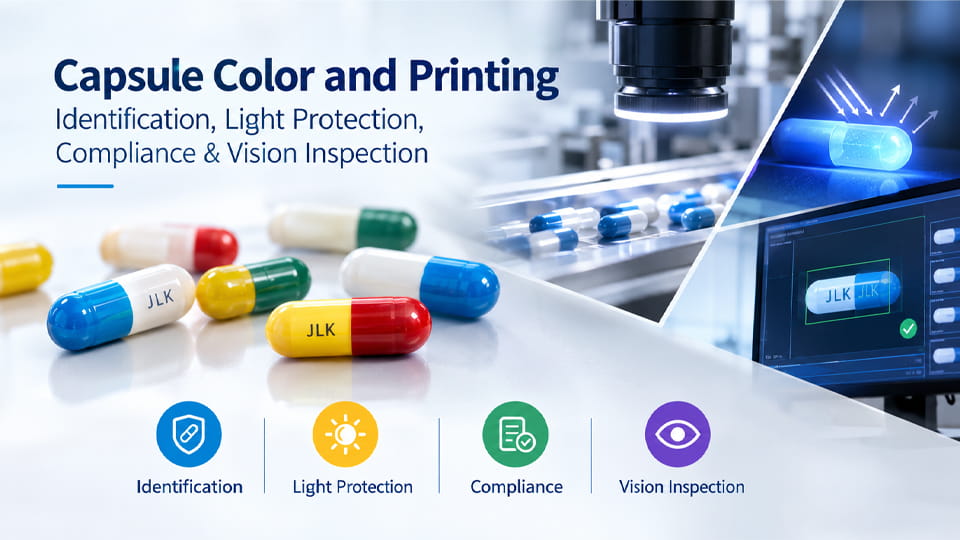
Imagine you are a pharmacist or nurse holding two lookalike capsules. How do you avoid mixing them up? Capsule color and markings are the first line of defense. Different colors or imprint codes let healthcare workers instantly distinguish products. Bijvoorbeeld, a 10 mg and a 20 mg capsule of the same drug are often made in different colors so that they can’t be confused by patients or staff. Manufacturers also use distinctive colors and logos as part of their brand identity, much like a commercial logo on a package.
According to the FDA’s regulations, nearly all solid oral dosage drugs (including capsules) must carry a unique “imprint code” on the shell. This imprint (brieven, numbers, symbols or a logo) must allow anyone to identify the active ingredient and dosage strength. Bijvoorbeeld, the code “XTY 50” might correspond to Drug X 50 mg made by Acme Pharma. This requirement helps prevent counterfeit medicines and dosing errors.
In de praktijk, the imprint code is applied by specialized capsule printing machines. Depending on the print method (zie hieronder), the imprint might wrap axially around the capsule or run lengthwise (radial orientation). Hoe dan ook, the combination of capsule color + printed text/logos creates a visual signature for that product. As Keyence explains: “The imprint code identifies the drug’s active ingredient and dosage, and it may be a symbol, logo, nummer, or letter”. Met andere woorden, capsule color and print together are like the product’s fingerprint.
By using well-chosen colors (brand colors, or contrasting halves on two-tone capsules) and clear imprints, manufacturers reduce medication errors. For patients – especially the elderly or those on multiple drugs – seeing a familiar color/shape is a cue that “this is my heart pill, not my diabetes pill.” Healthcare professionals also rely on color/print cues in emergency situations. All of this works only if the printing is legible and consistent, which is why quality control (visie inspectie) is so important (covered later).
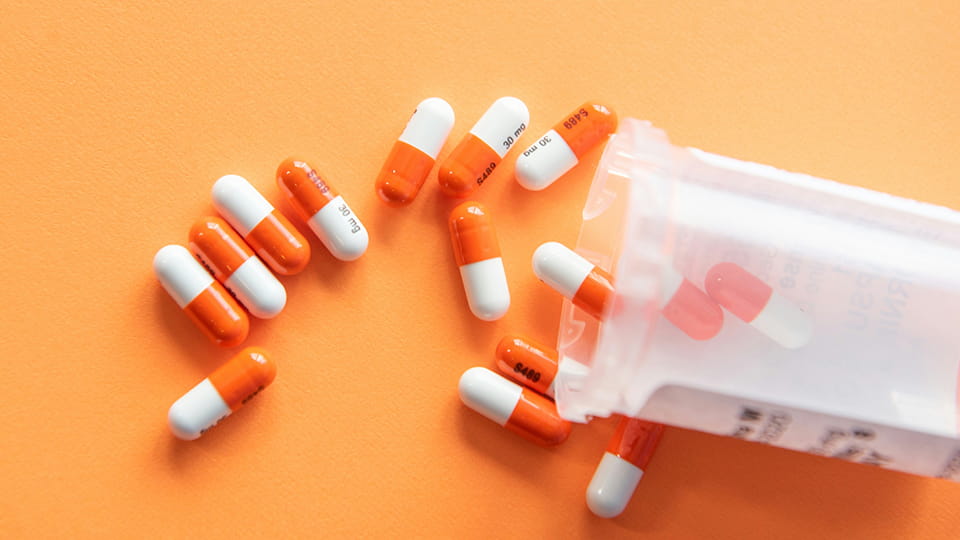
Besides identification, capsule color and material affect how much light passes through the shell – which in turn affects drug stability. Veel API's (actieve farmaceutische ingrediënten) Zijn photosensitive, meaning UV or visible light can degrade them. According to photostability guidelines (Ik Q1B), manufacturers must test how light exposure affects new drugs, including when in capsules and packaging.
Capsule shells come in various transparencies:
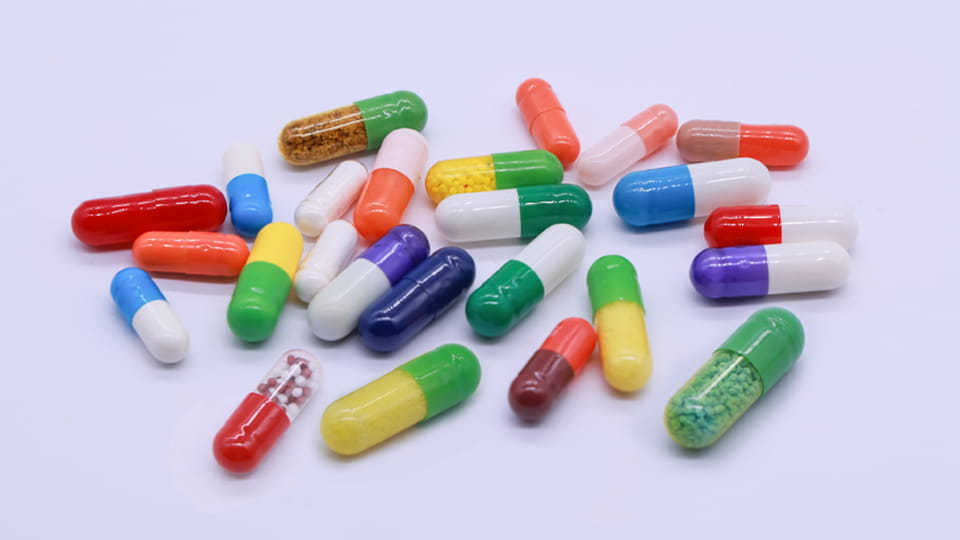
Bijvoorbeeld, many ophthalmic capsules and vitamins use opaque white shells. Titanium dioxide is a common opacifier and colorant in capsule shells – it provides a bright, consistent white color and absorbs UV light. As a capsule supplier notes, “Titanium dioxide is an excellent opacifier… doing a great job of protecting the capsule’s fill from degradation by light”. If TiO₂ isn’t used, some manufacturers switch to calcium carbonate, but this usually yields only a semi-opaque (not fully opaque) result.
Kortom, darker or opaque capsules can add passive light protection. Echter, remember that shell color is not a guarantee of stability. Even an opaque capsule may not block all UV or specific wavelengths. For highly photosensitive drugs, additional protection (bijv. amber-blister foil or over-pouches) is still recommended under ICH Q1B guidance. A clear or lightly tinted shell offers little protection, whereas a fully opaque shell combined with UV-blocking packaging gives the best stability.
Printing on the curved surface of a capsule is challenging. The main methods used in the pharmaceutical industry include:
Gelatine vs. HPMC-schelpen require different preparation. Gelatin capsules often need degreasing (like an alcohol wipe) to remove surface moisture so ink adheres properly. HPMC (vegetarisch) shells can sometimes be printed without extra prep, but they tend to be more hydrophilic, so ink choice is critical. In alle gevallen, printing inks are formulated to be food-grade and pharmaceutically approved to ensure safety. (Bijvoorbeeld, the capsule manufacturers use FDA-approved dyes and titanium dioxide that are safe to ingest.)
Axial vs. Radial printing: Capsule printers can orient prints along the length (axiaal) or around the circumference (radiaal). Some machines hold the capsule and rotate it under a fixed print head (axiaal). Others move the print head around the capsule (radiaal). Cap-only or body-only printing is also possible for two-piece capsules. The choice depends on the capsule shape and desired print coverage.
Samengevat, each printing technology has trade-offs. Laser is ideal for simple marks without inks, while inkjet/pad can handle multicolor logos and alphanumeric codes. Manufacturers choose based on speed, flexibiliteit, ink management, and capsule material. The key is always to match the method to the need: a quick logo, a detailed multi-color imprint, or a special anti-counterfeit mark.
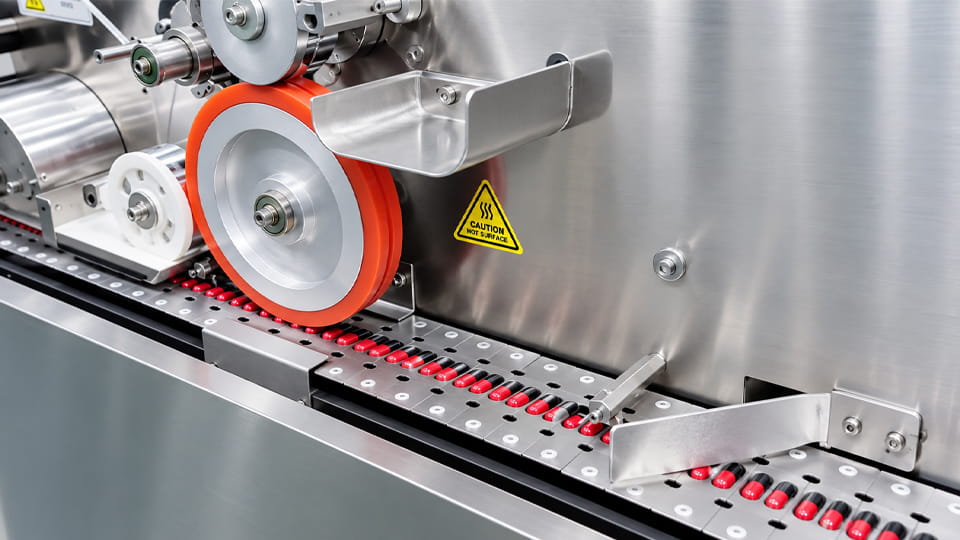
Typical capsule imprints include:
Cruciaal, anything printed on the capsule must be clear and legible. FDA encourages using alphanumeric codes rather than abstract symbols, since letters/numbers are easier to recognize. All inks and colorants used for printing must be FDA-approved for oral use. Bijvoorbeeld, if a green logo is printed on the capsule, the green ink contains specific FD&C dyes certified for pharmaceutical use.
It’s important to note that serialization or barcodes are applied at the packaging level, not on the capsule. Modern track-and-trace laws (DSCSA, EU-MKZ) require barcodes on boxes or blisters, not on individual capsules, due to space constraints. Thus the capsule itself carries only human-readable imprints, leaving machine-readable codes to cartons or labels.
Pharmaceutical capsules are subject to strict regulations on both markings and colorants:
In de praktijk, these rules mean you cannot arbitrarily change capsule color or ink without ensuring compliance. The combination of color, shape and imprint on the capsule serves as a crucial part of the product’s etikettering in the eyes of regulators. Bijvoorbeeld, FDA once confirmed that mismatch between the capsule imprint and the labelling (or absence of required imprint) can trigger a warning letter. Op dezelfde manier, using a non-approved dye could lead to an audit finding.
Algemeen, capsule color and printing are as regulated as any other drug component. Consultation with regulatory experts is recommended whenever selecting new shell colors or inks, especially given evolving global trends (like “titanium dioxide–free” formulations).
After capsules are filled and printed, kwaliteitscontrole (QC) catches any defects before packaging. Machine vision inspection is now standard on high-speed lines. Vision systems with high-resolution cameras and lights scan each capsule for:
Bijvoorbeeld, one supplier notes that capsule print defects to look for are “missing characters, weak ink, smears, double prints, broken logos, and poor position”. The system may rotate each capsule to capture the full printed band around it, then use pattern-matching and OCR algorithms to detect even subtle flaws.
Artificial intelligence is even being added to these inspection systems. AI models can distinguish between an acceptable printing variation and a true defect by training on many examples. Hoe dan ook, all vision systems share a limitation: they only check zichtbaar attributes. They cannot confirm fill weight, potency or internal mix – those require separate checks.
A robust QC setup will log any rejects, alarms and trends. Bijvoorbeeld, frequent “blurred print” rejections might indicate a needed nozzle cleaning or different ink viscosity. Tight tolerances (bijv. minimum font height, ink density threshold) are set in the software. The inspection step ensures each capsule’s color and printed code truly match the intended product before it goes into a fles of blister.
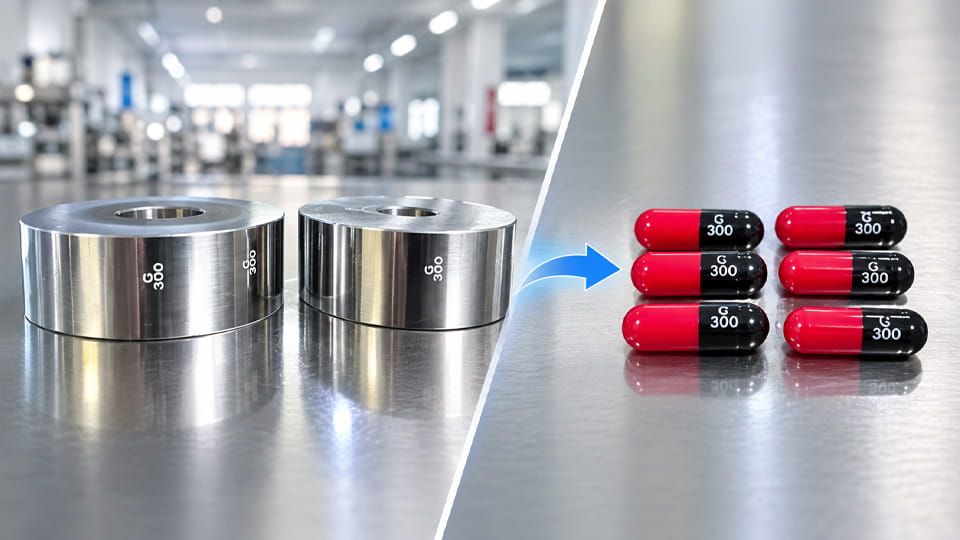
When designing a new capsule product, vragen:
A clear inspection acceptance criteria is cruciaal. Decide ahead how many capsules to test under vision, what reject level triggers maintenance, and how to correlate a rejected capsule to the batch record. Effective specifications not only ensure compliance but also guide equipment choice (Bijvoorbeeld, requiring >99% print readability might demand a dual-camera OCR system).
Uiteindelijk, the goal is a capsule that looks right and reads right every time it leaves the factory. By carefully selecting shell materials, kleurstoffen, ink types and print methods – and by specifying rigorous inspection – manufacturers ensure their capsules meet both regulatory demands and patient safety needs.
Capsule color and printing are far more than eye candy. They are integral to safe drug identification, stability and compliance. A wisely chosen shell color and clear imprint reduce medication errors and strengthen a brand’s trust. Tegelijkertijd, the right printing process and vision inspection keep quality and regulatory checks on track.
If your production line needs robust capsule filling, polijsten, printing or inspection equipment, wij kunnen helpen. Whether it’s geautomatiseerde capsulevullers of vision-inspectiesystemen that verify each print, Jinlu Packing offers customized solutions. Neem contact met ons op to discuss how to integrate reliable capsule color, printing and quality control into your pharmaceutical manufacturing.
Capsule colors serve to distinguish products. Different colors or shades quickly signal different drugs, brands or strengths to healthcare workers and patients, helping prevent mix-ups.
The shell color itself doesn’t alter the drug chemically, but opaque or dark-colored shells can block more light and thus protect light-sensitive ingredients. Transparent capsules provide virtually no shielding. For highly photosensitive drugs, additional light-protective packaging is still recommended.
Vaak wel, because colorants like titanium dioxide in dark or opaque shells absorb or reflect UV light. Echter, the exact protection depends on the colorant and shell thickness. Some dark shells may still allow certain wavelengths through. Always test under actual light conditions per ICH Q1B guidelines.
Transparent capsules (no opacifier) let you see the filling inside and allow light transmission. Opaque capsules contain opacifying agents (bijv. TiO₂) making them solid-colored. Opaque shells shield the content from light and hide the fill. Translucent is in between – tinted but not fully blocking light.
Capsules can be marked by inkjet (spraying edible ink drops), offset/pad printing (using inked plates or pads), or laser marking (using a focused beam to burn/etch a code). Each method has pros/cons: inkjet and pad allow multicolor and logos, while lasers require no ink or surface prep.
Imprinted information usually includes a product code, which identifies the drug and strength. It can also include letters/numbers for marketing codes or batch ID. Manufacturer logos or short names may also appear. Everything printed on the capsule must be FDA-approved (edible) ink or dye.
Ja. Both HPMC (vegetarisch) and gelatin shells can be printed. Gelatin may need degreasing before printing to help ink adhesion. HPMC shells usually work with standard pharmaceutical inks, but ink formulation might differ slightly. Always verify the ink/shell compatibility.
Blurred prints can result from poor ink drying (Bijvoorbeeld, inadequate UV curing in inkjet), vuile apparatuur (clogged nozzles), wrong viscosity, or movement of the capsule during printing. Environmental factors like humidity can also affect ink adhesion. Proper machine calibration and maintenance help prevent smears.
They use automated machine vision systems. High-speed cameras scan each capsule, using OCR/OCV software to check that characters are present and correct. The system catches missing or smeared prints, faded letters, or misaligned text. Vision inspection also flags other shell defects (scheuren, foreign matter) and rejects any capsules outside specs.
It depends on your product and line speed. Laser marking is great for permanent, single-color codes without ink handling. Inkjet is flexible for multiple colors or variable codes. Pad/offset printing is reliable for complex logos or high-contrast multi-color designs. Consider capsule material, print content, throughput requirements and maintenance when choosing.
Referenties:
1.IMPRINTING OF SOLID ORAL DOSAGE FORM DRUG PRODUCTS FOR HUMAN USE —— eCFR – 21 CFR-onderdeel 206
2.Photostability testing of new active substances and medicinal products —— Ik Q1B
3.Summary of Color Additives for Use in the United States in Foods, Geneesmiddelen, Cosmetica, and Medical Devices —— FDA
4.Imprinting on empty hard gelatin capsule shells containing titanium dioxide by application of the UV laser printing technique —— PubMed
5.Photostability of Indomethacin in Model Gelatin Capsules : Effects of Film Thickness and Concentration of Titanium Dioxide on the Coloration and Photolytic Degradation —— J-STAGE
6.Effect of Colour and Surface Properties of Solid Pharmaceutical Dosage Forms on Light Reflection in Solar Spectral Range —— PubMed Centraal