
In the world of commercial apiculture and food manufacturing, honey is often referred to as “liquid gold”—not just for its amber hue, but for its complex physical behavior that challenges even the most seasoned operations manager. If you have ever stood on a production floor watching a batch of thick Manuka honey struggle to move through a standard pump, or dealt with the fallout of leaky seals on a shipment of retail sachets, you know that honey is more than just a sweet commodity. It is a biological product with a personality shaped by moisture, 온도, and floral origin.
As a procurement engineer or production manager, your goal is simple: maintain the integrity of that liquid gold while maximizing your throughput and minimizing waste. This guide is designed for industry professionals who are ready to move beyond “기준” bottling and dive into the high-efficiency world of automated honey packaging solutions. 당신이 찾고 있는지 여부 honey stick packaging machine to enter the on-the-go market or a robust Premade Pouch Packaging Machine for bulk retail, this comprehensive report covers the physics, 기계, and the economic strategies required to dominate the market in 2026 그리고 그 이상.
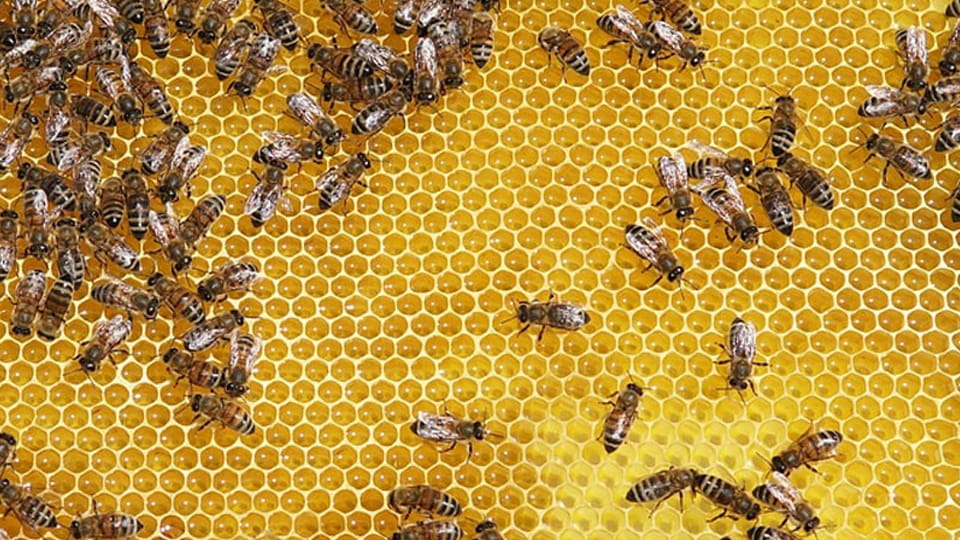
At its most basic level, honey packaging is the process of taking a filtered, homogeneous honey supply and dispensing it into a primary container that is then sealed, labeled, and prepared for distribution. 하지만, in the modern competitive landscape, packaging is far more than a simple containment strategy. It is the bridge between the apiary and the consumer’s pantry, and it serves three critical functions: 보호, 보존, 그리고 프레젠테이션.
적절한 honey packaging must act as a barrier against moisture and oxygen. Because honey is highly hygroscopic, it will absorb water from the air if not sealed perfectly, leading to fermentation and spoilage. Beyond physics, the packaging is your primary brand ambassador. A crystal-clear glass jar or a sleek honey stick pack communicates quality and convenience, directly influencing the “premium” perception that allows for higher margins.
In a commercial setting, this process is automated through a honey packaging line, which integrates several stages:
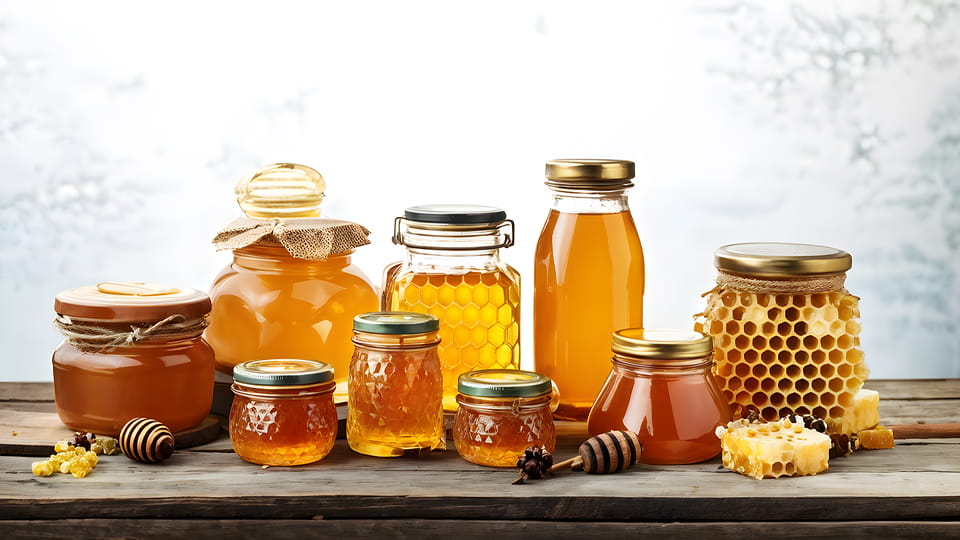
Honey is classified as a non-Newtonian fluid in some varieties (like Heather or Manuka) and Newtonian in others (like Clover or Acacia), but regardless of its classification, it presents three major hurdles for any food packaging machinery supplier.
High Viscosity and Flow Resistance
The thickness of honey is its most defining trait. Its resistance to flow, or viscosity, is determined primarily by its water content and temperature. A mere 1% difference in moisture can have a massive impact on how the honey moves through a honey filling machine.
Because of this density, standard gravity-based fillers are useless. High-viscosity honey exerts significant pressure on the seals and pumps of a machine. Attempting to use lightweight, flexible materials without a machine that can handle high-pressure throughput will inevitably lead to seal failure and product loss. This is why precision-engineered piston fillers 또는 rotary lobe pumps are the industry standard for packing honey.
Temperature Sensitivity
If you heat honey too much, you destroy its soul. High temperatures (above 45-50°C) lead to the formation of Hydroxymethylfurfural (HMF), a chemical marker that indicates a loss of quality and freshness. 하지만, you must warm honey to roughly 30°C to 40°C to make it flow smoothly enough for high-speed automated lines. Achieving this balance requires a honey packaging process that utilizes gentle, large-surface heat exchange rather than direct high-heat sources.
The Crystallization Problem
All natural honey will eventually crystallize as glucose molecules come out of the supersaturated solution. While this is a natural state, it makes the honey impossible to package as a liquid. Industrial plants must use “micro-crystal melting” techniques or flash pasteurization to ensure the honey remains liquid on the shelf for as long as possible.
| 요인 | 도전 | Solution Requirement |
|---|---|---|
| Viscosity | Resistance to flow, high pressure on seals |
Servo-controlled piston pumps |
| 흡습성 | Absorption of atmospheric moisture |
Airtight induction seals / High-barrier films |
| 온도 | Damage to enzymes and flavor (HMF rise) |
Precision thermal jackets on hoppers |
| Crystallization | Solidification in pipes and nozzles |
Heated nozzles and agitation systems |
충전물 기계: Filling is the heart of any honey packaging line. 거기 있습니다 several filler types suited to honey’s thickness:
Premade Pouch Packaging Machines: For pouch formats, 에이 premade pouch (doypack) 기계 automates everything. Pre-made pouches are stacked and fed into the machine, which opens each pouch (often with opening bars), holds it open, then fills the specified amount of honey. Sensors and servo systems ensure the right volume (often ±0.4% accuracy). 충전 후, a heat sealer closes the pouch (with or without a spout). These machines often integrate checkweighers or counters, and they meet stringent standards (CGMP, CE, FDA, EMA) for food production. Jinlu’s pouch machines, 예를 들어, handle stand-up and spouted bags with high precision and sanitation, using plunger pumps or vacuum feeders for sticky liquids.
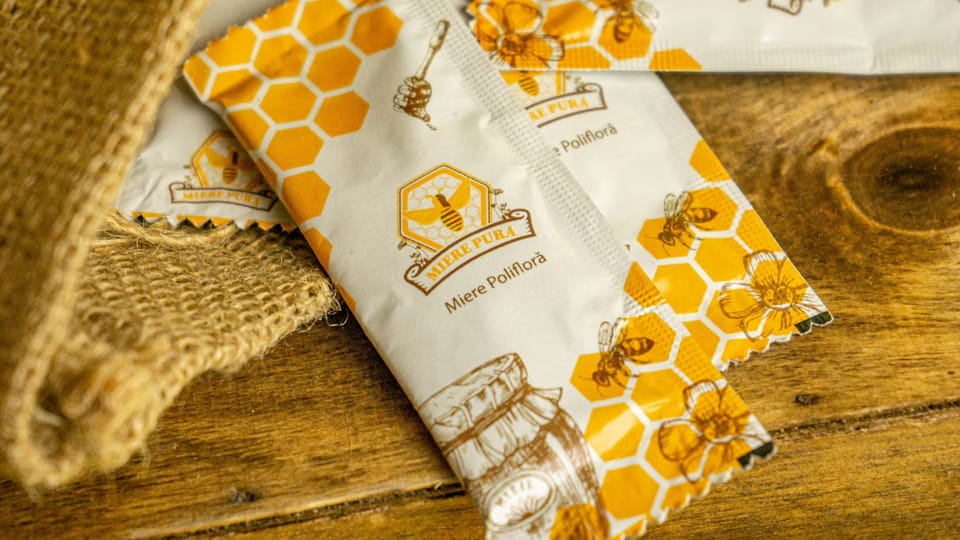
Stick Pack (향낭) 기계: 수직형 채우기 씰 (Vffs) machines make stick packs. A roll of flat film is unwound and fed through the machine. The film is formed into a tube or a series of pockets, honey is pumped in from a hopper, then the machine seals and cuts the sachets at the right length. Because honey is viscous, these machines use precision pumps and temperature-controlled seal bars. Jinlu’s JL-VP series is a good example: it uses servo motors and PID temperature controls so each stick is filled accurately and heat-sealed perfectly. 그런 스틱 팩 기계 can run multiple lanes in parallel to boost output.

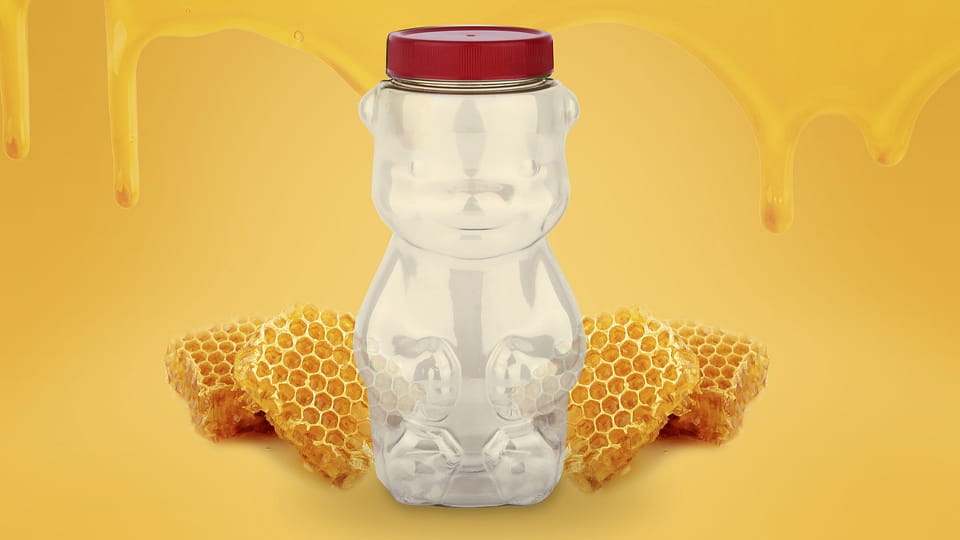
Jar/Bottle Filling Lines: Bottling lines for jars and bottles combine several machines. 일반적으로, empty jars are oriented upright and conveyed to a filling station (piston or overflow filler) where they are filled precisely with honey. Then they move on conveyors to a capping machine. Capping machines automatically screw or press caps onto the containers – available in manual, semi-auto or fully automatic versions. Proper capping prevents leaks and contamination. After capping, an optional induction sealing machine can apply a foil seal under the cap. Induction sealing uses an electromagnetic field to heat a foil liner, bonding it to the container rim. This creates a tamper-evident, airtight seal that extends shelf life and reassures customers.
라벨링 & 포장: 마지막으로, 에이 라벨링 머신 applies branded labels to jars, bottles or pouches as they pass by on a conveyor. Clear labeling is crucial for product information and shelf appeal. In larger operations, filled and labeled products may go into a 포장 기계, which wraps multiple packages into boxes or cartons for shipment. Cartoners handle everything from folding box blanks to tucking flaps, ensuring boxes are securely packed for the marketplace.

전반적인, a complete honey packaging line might include 컨베이어, 필러, 모자, 실러, labelers and packers. 예를 들어, after filling and capping, jars move down the line where an automatic labeler applies front and back labels. Modern machines are made of food‑grade stainless steel and often have easy‑clean designs to meet hygiene standards. By mixing and matching these machines, manufacturers create a custom line – from single-jar labs to high-speed industrial bottlers.
A typical honey packaging workflow involves these steps:
Each of these steps can be semi or fully automated. 예를 들어, a fully automated monoblock filling system can fill, cap and label a jar in one machine cell. The exact process will depend on your scale and package type.
[jl_youtube src=”https://www.youtube.com/embed/R8aV9kpYx8U”]
Choosing the best packaging and equipment means balancing your product’s needs with production goals. 주요 요인은 다음과 같습니다:
요컨대, match your honey’s properties and business goals to the right tech. If you produce a viscous artisanal honey at low volume, a semi-auto jar filler might be ideal. If you need thousands of stick-packs per hour, invest in a robust multi-lane stick pack machine. Aligning filler type to viscosity and automation to volume is the key to efficiency.
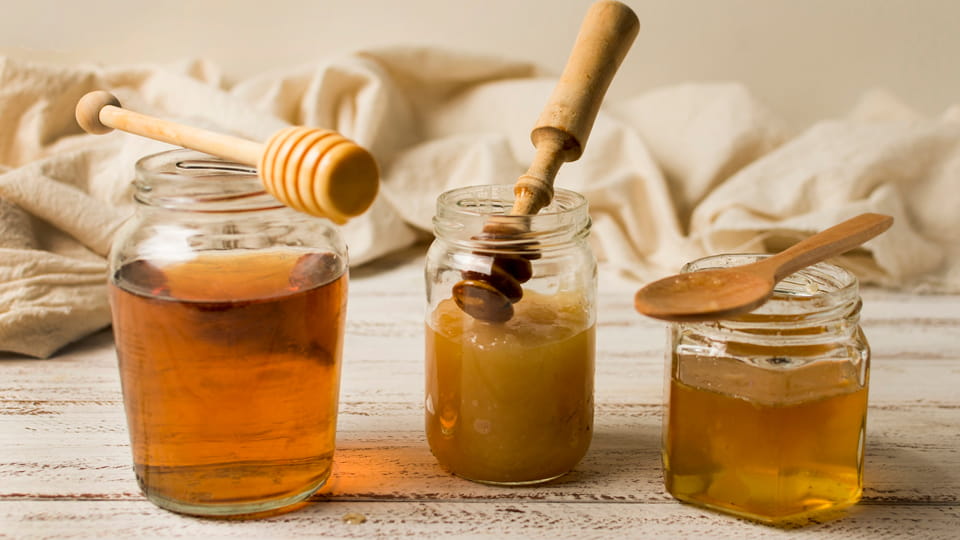
Honey packaging isn’t one-size-fits-all. Whether you use jars, 병, pouches or stick sachets, the packaging type and machinery must suit your product, brand and scale. Clear glass or plastic jars show off honey beautifully, while pouches and stick packs offer portability. Modern filling machines – piston fillers, form-fill-seal stick machines, premade-pouch machines, cappers and labelers – automate the process with high speed and accuracy. By considering honey viscosity, package format, certification and budget, you can choose a system that maximizes quality and efficiency.
Ready to package your honey for success? Jinlu 포장에 문의 또는 trusted equipment supplier to discuss your needs. Their experts can recommend the ideal honey packaging solution – from a tailored filling line to a full automated packing line – to help your sweet product stand out on the shelf.
Honey packaging refers to the process of filling, 밀봉, and presenting honey in containers such as bottles, 향 주머니, or pouches for storage, 운송, and sale. It plays a critical role in preserving product quality, preventing contamination, and enhancing shelf appeal. Proper packaging also helps maintain honey’s natural moisture balance and prevents fermentation.
The most widely used honey packaging formats include:
• Glass jars (premium retail)
• Plastic bottles (cost-effective mass market)
• 향낭 및 스틱 팩 (single-serve)
• Spout pouches (유연한 포장)
• Bulk drums (industrial use)
Each format serves different market needs, from retail branding to foodservice convenience.
A honey stick pack is a narrow, single-use tube filled with a pre-measured amount of honey. It is commonly used in:
• Cafés and hotels
• Airlines and catering
• Health and energy products
These packs are portable, 위생, and ideal for on-the-go consumption.
Typical honey packaging machines include:
• Honey filling machines (for jars and bottles)
• Stick pack packaging machines (multi-lane, 고속)
• Sachet packing machines (3-side or 4-side seal)
• Premade pouch packaging machines
• Cartoning machines (2차 포장)
Machine selection depends mainly on packaging format and production capacity.
A standard honey packaging process includes:
1.Container or film feeding
2.Accurate filling (using piston or pump systems)
3.밀봉 (heat sealing or capping)
4.Coding and labeling
5.2차 포장
Modern automated lines integrate all these steps to improve efficiency and hygiene.
Honey is a high-viscosity liquid, which means it flows slowly and can become sticky or inconsistent depending on temperature. Specialized equipment ensures:
• Accurate dosing
• Smooth flow without clogging
• Clean, drip-free filling
Many systems also include heating or insulated tanks to maintain optimal flow conditions.
• Sachet pack: Flat, small packets (5–15g), economical and widely used
• Stick pack: Slim, tube-like design for single servings
• Pouch (spout or stand-up): Larger capacity, resealable, premium look
Each option balances cost, 편의, and branding differently.
일반적인 재료는 다음과 같습니다:
• Glass (high barrier, premium)
• PET or HDPE plastic (가벼운 중량, 비용 효율적입니다)
• Laminated films (for sachets and pouches)
Food-grade materials are essential to ensure safety and prevent contamination or flavor changes.
You should evaluate:
• Packaging format (병, 향낭, 작은 주머니)
• Production speed (수동, 반자동, 완전 자동)
• Filling accuracy requirements
• Budget and ROI
The packaging type is usually the most important factor when selecting equipment.
Automated honey packaging systems offer:
• Consistent filling accuracy
• Higher production efficiency
• 인건비 절감
• Improved hygiene and compliance
They are essential for scaling production and meeting export or regulatory standards.
참고자료:
1.Honey Packaging Material Safety Standard (Food-Grade Requirements) – ethiostandards.org.
2.업계 지침: Proper Labeling of Honey and Honey Products - 우리를. 식품의약품안전청.
3.Honey Directive (2001/110/EC) – European Commission.
4.Global Honey Definition & Processing Scope – Food and Agriculture Organization of the United Nations.
5.The impact of packaging design on the perceived quality of honey by Brazilian consumers – 사이언스다이렉트.