
If you’re leading packaging operations, managing procurement, or working in the pharmaceutical or food sectors, tu sais que machines d'emballage is the engine of your business. The right choice is critical for scalability.
When it comes to flexibility, qualité, et l'appel des consommateurs, few solutions offer the comprehensive advantages of the Machine d'emballage de poche prémade.
This guide is designed as your expert consultation, detailing what these systems are, how to calculate the true Total Cost of Ownership (TCO), why stainless steel selection matters in regulated environments, and the crucial questions you must ask before making a purchase.
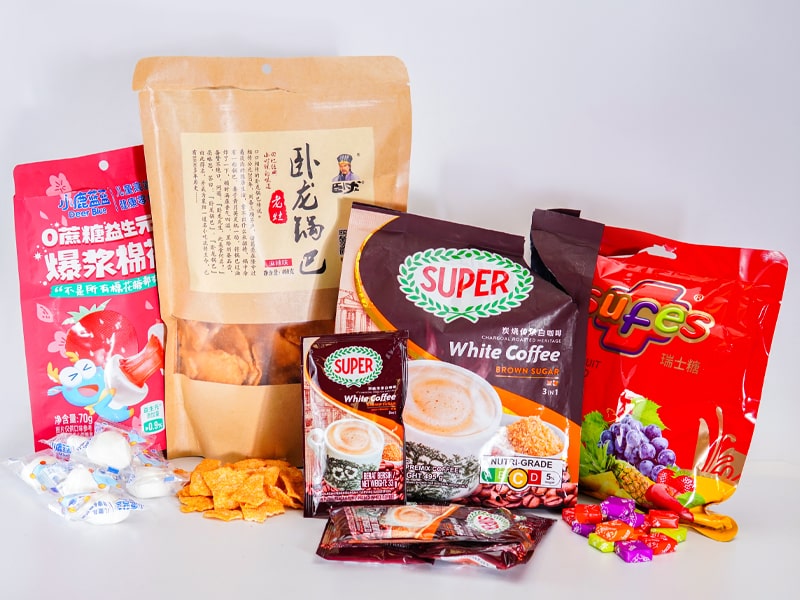
A premade pouch packing machine is an automatic packaging system designed to handle, remplir, and seal flexible pouches that have been manufactured and pre-formed off-line. This is the defining feature that differentiates it from Formulaire-Remplir-Sceller (FFS) systèmes, which create the bag from a roll of film as it runs.
These systems are configured using sophisticated technology to securely enclose diverse products—from pharmaceutical and chemical goods to food and cosmetics—into flexible containers. Due to this function, they are often referred to interchangeably as a premade pouch packaging machine, un premade pouch fill and seal machine, un premade pouch filling machine, or simply a premade bag packing machine.
The primary value of a premade pouch machine is providing a safe, cohérent, and hygienic environment for flawless packaging, essential for products that require high sterility or difficult handling.
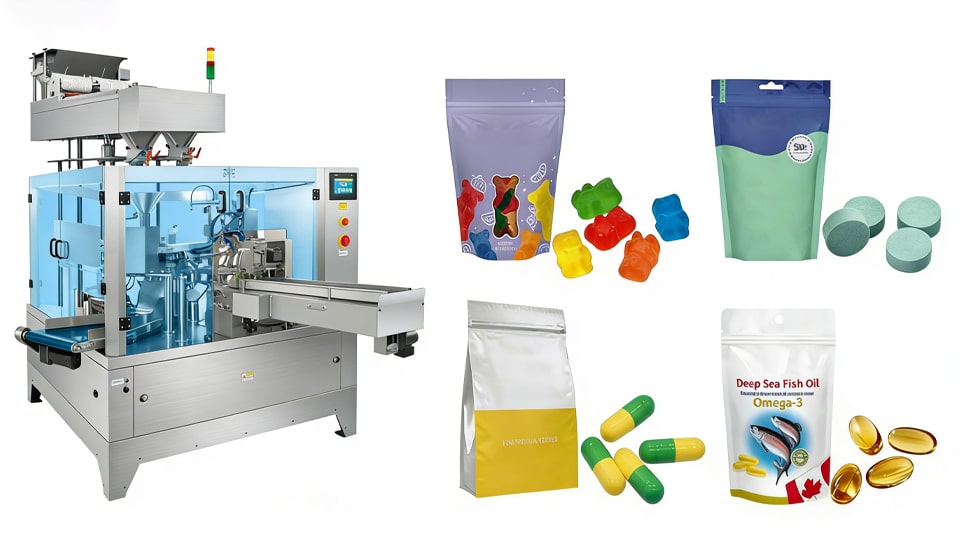
Modern consumer demand requires convenience and strong shelf presence. Premade pouch systems handle a vast range of high-value pouch formats, including Stand-Up Pouches (SUP), Doy bags, 3-sided seal, flat bags, à soufflet, quad, and zippered bags.
Surtout, modern equipment must also be compatible with evolving material demands, including laminated films, paper-based containers, and sustainable recyclable materials. A machine capable of handling these diverse materials allows manufacturers to pivot quickly to meet new regulatory mandates or ESG (Environnemental, Social, and Governance) pressures without expensive capital reinvestment.
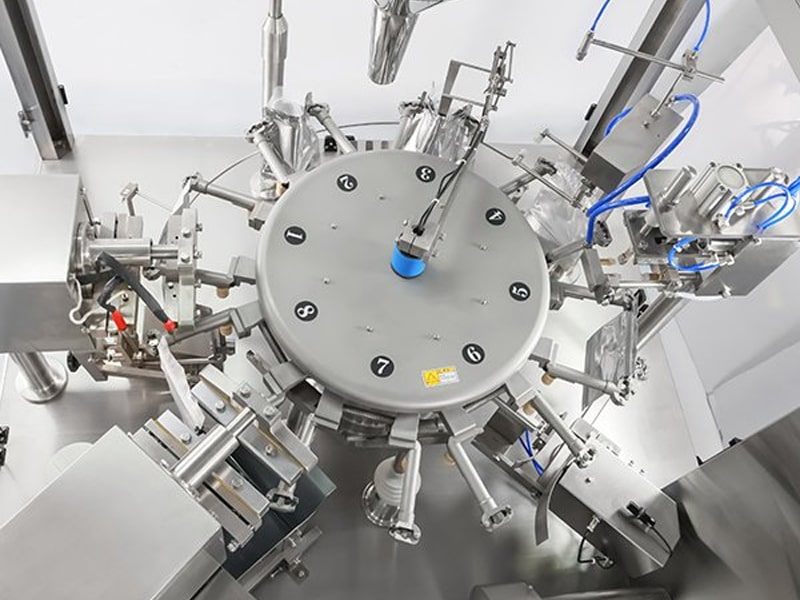
The operational flow of a typical rotary premade pouch fill and seal machine is a highly efficient, multi-station process designed for stability and efficiency. The prefabricated pouches move around a central rotary indexer through distinct, essential steps:
The machine’s versatility relies heavily on its integration with the correct dosing system. Whether packaging powders (auger fillers), solids (multi-head weighers), ou liquides (pompes à liquide), the premade pouch filling machine must be paired with the appropriate technology. The bag shaker is key to preventing powder dust or liquid residue from contaminating the sealing area, which directly minimizes quality control failures.
[jl_youtube src=”https://www.youtube.com/embed/w6SY05JS7S4″]
For major procurement decisions, the Total Cost of Ownership (TCO) is far more important than the initial Capital Expenditure (Investissements). When comparing the premade pouch packing machine against the Vertical Form-Fill-Seal (Vff) system, buyers must weigh operational flexibility against raw speed.
While VFFS systems are faster (60 à 120+ sacs par minute), they typically require long changeover times (15 à 30 minutes) when switching film rolls and bag sizes.
The premade pouch system generally operates at moderate speeds (30 à 60 sacs par minute) but offers significantly faster, recipe-driven changeovers, often taking only 5 à 10 minutes.
Although prefabricated bags have a higher unit cost than raw film stock, the reduced downtime from rapid changeovers often makes the premade system financially superior for companies with high SKU diversity or frequent, short production runs—common in specialized food and pharmaceutical packaging.
| Fonctionnalité | Premade Pouch System | VFFS System (Vertical Form-Fill-Seal) |
| Pouch Cost | Plus haut (Prefabricated, aesthetically premium) | Inférieur (Film roll cost) |
| Typical Speed | Modéré (30–60 bags/minute) | Haut (60–120+ bags/minute) |
| Changeover Time | Very Fast (5–10 minutes, recipe-driven) | Modéré (15–30 minutes, more mechanical adjustments) |
| Ideal Application | High margin, complex format, high SKU diversity | High volume, low margin, commodity goods |
Operational Costs (OpEx) are defined by efficiency. Without precision dosing, the average product giveaway can reach 2.5%, translating to substantial annual financial losses for high-volume producers. Investing in a high-precision multi-head weigher can offer an ROI in as little as two to three months purely through raw material savings.
Another major hidden cost is compressed air. Older or lower-cost machinery relies heavily on pneumatic components, which are significant energy consumers. This leads directly to the discussion of modern drive technology.
The shift from pneumatic or mechanical drives to servo motor technology is the single biggest factor in achieving high packaging line efficiency and precision.
While mechanical systems offer sturdy construction and lower CapEx, they lack the flexibility and speed required by modern packaging lines running over 50–60 bags per minute.
Servo-driven systems offer dramatically greater control over movements, crucial for maintaining accuracy. They allow all settings (jaw position, film tension) to be adjusted on the fly and stored as digital recipes on the Human-Machine Interface (IHM). This recipe-based control eliminates mechanical adjustments, resulting in extremely fast changeovers.
Despite the higher initial cost, servo-driven machines yield significant long-term TCO savings through lower energy consumption and superior reliability.
En outre, servo motors provide independent control over each machine axis, enabling the HMI to deliver real-time maintenance feedback. This proactive diagnostic capability allows operators to address small issues before they escalate into costly mechanical failures and unscheduled downtime. In regulated environments like pharmaceutical manufacturing, this superior consistency and repeatability are essential for process validation under Good Manufacturing Practices (GMP).
Procurement engineers must rigorously evaluate five key factors before finalizing the purchase of a premade pouch filling machine:
Application-specific factors are also critical:
The packaging of medicinal products requires stringent adherence to regulatory requirements, most notably Good Manufacturing Practices (GMP).
Pharmaceutical packaging lines must be designed to minimize contamination risks, adhering to GMP standards and international standards like ISO 15378:2017. Regulations require that the facility design, principes de fonctionnement, and environmental conditions prevent cross-contamination. Modern markets also mandate serialization, requiring machinery capable of integrating systems to ensure traceability and combat counterfeit drugs.
For high-hygiene environments, particularly in pharmaceutical, chimique, and specialized food processing where equipment is routinely exposed to corrosive chemical cleaners, the choice of stainless steel construction is fundamental.
While SS304 is acceptable for many general food-grade applications, SS316 stainless steel is mandatory for environments requiring strict cleanliness and frequent exposure to corrosive substances. SS316 includes molybdenum in its composition. This element provides significantly greater overall corrosion resistance and notably higher resistance to pitting and crevice corrosion, especially when exposed to chloride-rich cleaning solutions common in cleanrooms (Par exemple, Spor-Klenz®).
Choosing SS304 to cut the initial CapEx is a false economy; its lower resistance will lead to accelerated pitting and corrosion, resulting in bio-fouling risks, higher maintenance costs, and critical regulatory non-compliance. The SS316 investment is thus a long-term necessity for durability and compliance.
| Fonctionnalité | SS304 (Standard Food Grade) | SS316 (Pharmaceutical Grade) |
| Key Composition | Chromium & Nickel | Chromium, Nickel, Molybdenum |
| Résistance à la corrosion | Bien (General use) | Excellent (Higher resistance to pitting and crevice corrosion) |
| Pharma/Cleanroom Use | Adequate for basic processes | Required for high-hygiene, aggressive environments, and CIP/SIP lines |
To maintain maximum Overall Equipment Effectiveness (OEE), even the most robust machinery requires expert troubleshooting and preventative maintenance.
| Error | Cause principale | Expert Troubleshooting Action |
| Defective Sealing | Improper temperature or sealing bar contamination/damage. | Modify sealing temperature to required level; clean bars thoroughly; replace damaged seals. |
| Inaccurate Material Filling | Incorrect machine settings relative to product density; worn load cells. | Recalibrate machine settings based on product density; examine and correct damaged parts/load cells. |
| Pouch Feeding/Opening Issues | Dirty sensors, vacuum pad failure, or incorrect timing. | Clean sensors; adjust pouch picking time; modify vacuum pressure or replace broken vacuum pad. |
The premade pouch packing machine is a strategic investment offering unparalleled flexibility, high aesthetic value, and robust hygienic capability. The key decision for procurement engineers and operations managers rests on a meticulous TCO analysis, prioritizing long-term OpEx savings over low initial CapEx.
By choosing systems equipped with advanced features—such as servo-driven control for high-speed precision, SS316 construction for regulatory compliance, and CIP/SIP compatibility for sensitive products—businesses can future-proof their operations, maximizing efficiency and compliance in a rapidly evolving market.
As industry experts observe, premade pouch machines deliver unparalleled efficiency and flexibility. Par exemple, Emballage JinLu’s own model handles up to 60 bags/min with ±0.5% accuracy, ensuring each pouch is filled reliably. Whether for a small run or a high-speed line, these machines help businesses package their products faster, nettoyeur, and more cost-effectively than manual methods. By understanding how they work and what to look for, you can choose a premade pouch packing system that meets your production goals and helps your products shine on the shelf.
A premade pouch packing machine is an automatic system designed specifically to handle, remplir, and seal flexible pouches that have been manufactured and formed previously (pre-formed bags). It is often called a premade pouch fill and seal machine.
The key difference lies in the bags: Premade pouch systems use prefabricated bags, leading to faster changeovers (5–10 minutes) and greater format flexibility, but generally run at moderate speeds (30–60 bags/minute). VFFS systems create bags from a film roll, are generally faster (60–120+ bags/minute), but require longer changeovers.
SS316 contains molybdenum, which gives it superior corrosion resistance, especially to pitting and crevice corrosion caused by harsh chloride-rich cleaning solutions common in pharmaceutical cleanrooms. SS304 lacks this protection.
Servo-driven systems offer dramatically greater control and precision, lower energy consumption, and enable fast, recipe-driven changeovers by eliminating mechanical adjustments, which is crucial for high-speed or high-SKU lines.
The five essential questions are: 1) What pouch formats and materials must be handled? 2) What volume and product type dictate the configuration? 3) What long-term goals exist for automation and scaling? 4) What type of packaging line integration is required? 5) How flexible should the machine be for future packaging changes?
Critical application factors include the need for vacuum sealing for freshness, specialized handling for allergen separation, and compatibility with Clean-in-Place (CIP) or Sterilization-in-Place (SIROTER) systems for liquid or sterile products.
Product giveaway, which can average 2.5% without precision, can be reduced by investing in high-precision dosing systems like multi-head weighers and ensuring machine settings are accurately calibrated to the product’s specific density.
Defective sealing is typically caused by improper temperature settings on the sealing bars or by contamination (poussière, debris, product residue) on the sealing surfaces.
GMP requires that packaging lines minimize contamination risks. This means the facility design and equipment must be clean, hygiénique, and specifically controlled to prevent contamination and cross-contamination, ensuring consistency and traceability.
The main steps include Bag Loading, Impression, Pouch Opening, Remplissage, Scellage, Refroidissement, et enfin, Discharge of the finished product.
Références:
1. Primary packaging materials for medicinal products – Particular requirements for the application of ISO 9001:2015, with reference to good manufacturing practice (GMP) (ISO 15378:2017) – iTeh Standards
2.Vertical form fill sealing machine – Wikipédia
3.STAINLESS STEEL IN THE PHARMACEUTICAL, FOOD AND BEVERAGES INDUSTRIES
4.F1886/F1886M-Test Method for Determining Integrity of Seals for Flexible Packaging by Visual Inspection-ASTM

