
Les comprimés effervescents sont simplement des pilules buvables qui pétillent et se dissolvent lorsqu'elles sont plongées dans l'eau.. En pratique, ils ont envie d'ajouter une vitamine pétillante ou un comprimé analgésique dans un verre – vous le remuez, regarde les bulles, et bois la solution. Ces tablettes ont été initialement développées dans les années 1950 et ont connu un regain de popularité alors que les consommateurs recherchent des fonctionnalités pratiques., suppléments et médicaments à action rapide. Par exemple, La vitamine C à forte dose se présente souvent sous forme de comprimé effervescent, pour que vous puissiez profiter d'une boisson vitaminée piquante au lieu d'avaler de grosses pilules. Parce que les comprimés effervescents se dissolvent complètement, les principes actifs sont déjà en solution avant de les boire. Cela signifie une absorption rapide et souvent un début d'action plus rapide que l'ingestion d'un comprimé solide.. Et soyons honnêtes : pour beaucoup de gens qui sirotent une boisson aromatisée, une boisson gazeuse est tout simplement plus agréable que d'avaler un comprimé sec.

Un comprimé effervescent fonctionne par une simple réaction acido-basique. Dans chaque comprimé se trouve un mélange d’acide comestible et de carbonate (alcali) sel. Les acides courants sont l'acide citrique ou l'acide tartrique, et les bases communes sont le bicarbonate de sodium (bicarbonate de soude) ou du carbonate de sodium. L'ingrédient actif (Par exemple, Vitamine C, aspirine, ou un supplément minéral) est mélangé à ces agents effervescents. Quand l'eau est ajoutée, l'acide et le carbonate réagissent vigoureusement, libérant du dioxyde de carbone (CO₂) et dissoudre le comprimé dans l'eau. Le résultat est pétillant, boisson effervescente contenant le médicament ou le nutriment dissous.
Le comprimé contient également des excipients pour le lier, édulcorants pour le goût, et des arômes pour rendre la boisson agréable. Contrairement aux pilules ordinaires, les formules effervescentes évitent tout liant insoluble dans l'eau (comme le stéarate de magnésium), parce que ceux-ci laisseraient des résidus et ruineraient la clarté de la boisson. Les liants typiques des comprimés effervescents sont des polymères solubles dans l'eau comme le polyéthylène glycol. (CHEVILLE) ou PvP, et les lubrifiants sont choisis pour leur solubilité (par exemple. benzoate de sodium). Saveurs de fruits, notes d'agrumes ou de baies, et édulcorants (saccharose, aspartame, etc.) sont ajoutés pour masquer tout goût amer des ingrédients actifs.
| Type d'ingrédient | Exemples | Rôle dans la tablette |
| Acide Organique | Acide citrique, acide tartrique | Réagit avec le carbonate pour libérer du CO₂; ajoute une saveur aigre à la boisson. |
| Sel alcalin | Bicarbonate de soude, carbonate de sodium | Réagit avec l'acide pour produire du pétillant; fournit également des ions sodium. |
| Ingrédient actif | Vitamine C (acide ascorbique), drogues, suppléments | Le médicament ou le nutriment délivré (se dissout complètement dans l'eau). |
| Liant | CHEVILLE 4000, JcJ, sorbitol | Maintient la tablette ensemble pendant la compression; doit se dissoudre proprement. |
| Lubrifiant | Benzoate de sodium, CHEVILLE, acide adipique | Empêche de coller dans la presse à comprimés; doit être soluble dans l'eau. |
| Édulcorant/arôme | Saccharose, sucralose, arômes naturels de fruits | Améliore le goût et la sensation en bouche de la boisson gazeuse. |
| Anti-agglomérant (facultatif) | Dioxyde de silicium, carbonate de magnésium | Maintient la fluidité des poudres pendant la fabrication (également un éliminateur d'humidité). |
| Conditionnement | Tube ou blister scellé avec déshydratant | Protège les comprimés de l'humidité et de l'air après la production. |

Fabriquer des comprimés effervescents est plus complexe que fabriquer des pilules ordinaires, parce que l'humidité doit être absolument minimale à chaque étape. Même une infime humidité peut déclencher prématurément la réaction acido-basique. Pour cette raison, la production a souvent lieu dans un endroit sec, pièce à humidité contrôlée (généralement 10 à 25 % d'humidité relative à des températures fraîches). Les poudres brutes sont manipulées dans des systèmes fermés: Par exemple, le matériau peut être chargé dans des broyeurs ou des mélangeurs à l'aide d'IBC scellés (conteneur pour vrac intermédiaire) quai sous air sec. Tous les équipements et navires sont soigneusement séchés, et de l'azote sec ou de l'air filtré est utilisé pour empêcher l'humidité d'entrer. Ces précautions particulières distinguent la production effervescente des lignes de comprimés standards.
Les principales étapes de fabrication sont les suivantes:
Chaque étape utilise des machines spécialisées: Par exemple, après avoir mélangé les poudres, un presse à comprimés (également appelé machine de compression de comprimés) compresse la tablette, puis une machine d'emballage de comprimés comme un tube filler ou emballeur de bandes termine le processus. Les machines d'emballage sont souvent dotées de capots de sécurité et d'intégrations pour maintenir l'hygiène et la sécheresse.. En bref, la production de comprimés effervescents nécessite des contrôles plus stricts que les comprimés standards, mais avec le bon équipement et le bon environnement, cela peut être réalisé à grande échelle.
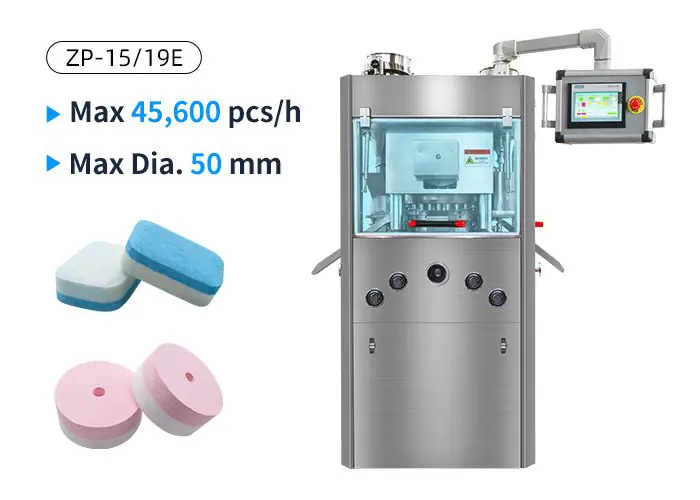
Les comprimés effervescents offrent plusieurs avantages qui expliquent leur popularité dans les suppléments et les produits pharmaceutiques:

Bien sûr, les comprimés effervescents présentent également des inconvénients que les fabricants et les utilisateurs doivent prendre en compte:
Malgré ces défis, une ingénierie et un contrôle qualité appropriés les surmontent. De nombreux produits à succès (vitamines, antiacides, analgésiques, remèdes contre le rhume) sont vendus sous forme de comprimés effervescents.

Les comprimés effervescents servent un large éventail de marchés. Ils sont courants dans les produits pharmaceutiques (par exemple. Alka-Seltzer antiacide/analgésique), nutraceutiques/suppléments (vitamines, minéraux, sels d'hydratation), et même de la nourriture & zones de boissons (par exemple. comprimés à saveur de cocktail, même si c'est une niche). Au cours des dernières années, le marché mondial des produits effervescents a connu une croissance rapide. Un rapport de l'industrie évalue le marché mondial des comprimés effervescents à environ 5,3 milliards de dollars américains. 2022, avec des projections devant dépasser $8.7 milliards par 2030. Cette croissance est tirée par la demande de commodité des consommateurs, portabilité, et suppléments prêts à l'emploi.
Les principaux ingrédients actifs de ce marché comprennent les vitamines C et B. (pour l'immunité et l'énergie), calcium et magnésium (pour la santé des os), zinc et électrolytes (pour l'immunité et l'hydratation), et même des extraits botaniques pour divers bienfaits pour la santé. Pour les fabricants de produits pharmaceutiques et les ingénieurs packaging, cela signifie une demande croissante d’équipements effervescents: à savoir des presses à comprimés conçues pour les gros comprimés, granulateurs à lit fluidisé ou compacteurs à rouleaux pour la granulation sensible à l'humidité, et des machines spécialisées de remplissage de tubes ou de conditionnement sous blister pouvant gérer des lignes effervescentes. Des entreprises comme Emballage Jinlu se spécialiser dans la fourniture de tels équipements – par exemple, des lignes de remplissage de tubes effervescents à haut débit qui comptent, joint, et étiquetez les comprimés dans des tubes en aluminium, ou des systèmes en bandes qui enferment chaque comprimé dans un endroit sec, blister hermétique.
Dans l'ensemble, les comprimés effervescents allient une science pharmaceutique intéressante à des avantages attrayants pour le consommateur. En comprenant la chimie, processus, et les tendances du marché décrites ci-dessus, les fabricants et les acheteurs de l'industrie peuvent faire des choix éclairés concernant l'utilisation de cette forme posologique dynamique.
Un comprimé effervescent est une forme posologique solide qui se dissout dans l'eau, créer une solution pétillante contenant l'ingrédient actif. Le pétillement provient d'une réaction chimique entre un acide comestible et un sel carbonate lorsque de l'eau est ajoutée.
Les comprimés effervescents réagissent avec l'eau par une réaction acido-basique (généralement entre l'acide citrique et le bicarbonate de sodium), libérant du dioxyde de carbone et provoquant un effet pétillant.
Ils sont couramment utilisés pour les vitamines (Par exemple, Vitamine C), suppléments minéraux, analgésiques, et les médicaments qui bénéficient d'une dissolution et d'une absorption plus rapides.
Oui. Parce que les principes actifs sont déjà dissous dans l’eau avant ingestion, les comprimés effervescents sont généralement absorbés plus rapidement que les comprimés conventionnels, conduisant à un effet plus rapide.
Ils contiennent généralement un acide effervescent (comme l'acide citrique), une base carbonatée (comme le bicarbonate de sodium), l'ingrédient actif (comme la vitamine C), classeurs, édulcorants, et agents aromatisants.
Ils sont faciles à avaler, peut améliorer l'absorption, masquer les goûts désagréables, augmenter la consommation de liquide, et sont souvent préférés par les personnes qui ont des difficultés à avaler des pilules.
Oui. Les comprimés effervescents doivent être conservés à l'abri de l'humidité., emballages hermétiques car ils sont très sensibles à l'humidité et peuvent réagir prématurément s'ils sont exposés à l'humidité.
Leur prise quotidienne dépend du principe actif et des besoins de santé individuels.; suivez toujours les instructions du produit ou consultez un professionnel de la santé, en particulier pour les vitamines ou les médicaments à forte dose.
Pas toujours. Personnes souffrant d’hypertension artérielle, problèmes rénaux, ou qui suivent un régime pauvre en sodium doivent faire preuve de prudence en raison de la teneur élevée en sodium de nombreux effervescents.. Les femmes enceintes et les enfants doivent consulter un médecin avant utilisation.
Avaler un comprimé effervescent sans le dissoudre au préalable peut provoquer une gêne, excès de gaz, et irritation puisque la réaction pétillante peut survenir dans la gorge ou l'estomac. Cette pratique n'est pas recommandée. (Déduit des principes effervescents généraux)
Références:
1. Wikipédia – Comprimé effervescent
2.ScienceDirect – Comprimé effervescent (Produits pharmaceutiques / Chapitre Remington)
3.Approche pharmaceutique – Fabrication de comprimés effervescents
4.Revue – Concept, Fabrication et caractérisation de comprimés effervescents

