
ফার্মাসিউটিক্যাল ম্যানুফ্যাকচারিং এ, ক tablet binder is an inert excipient that holds the tablet’s powders together. সহজ কথায়, it makes loose powder become a solid, compact tablet. Binders bind individual powder particles into a “cohesive, solid mass” so a tablet can be formed. অনুশীলনে, binders are the unseen force that gives tablets their shape and strength. The primary role of tablet binders is to make powders and granules adhere during compression, yielding tablets with adequate mechanical strength and integrity. অন্য কথায়, without the right binder, you’d end up with a pile of powder instead of a finished pill.
For anyone working with ট্যাবলেট প্রেস মেশিন, binders are crucial. They ensure each stroke of the press produces a uniform tablet. আসলে, Binders hold active pharmaceutical ingredients (এপিআই) and excipients in a tablet together, giving tablets the mechanical strength needed for mass production, handling, and shipping. একইভাবে, Binders let tablets endure handling, packaging and storage by keeping ingredients bonded together. সংক্ষেপে, tablet binders are essential glue (figuratively speaking) inside a tablet. They keep all ingredients together from the hopper of a tablet press to the patient’s hands. A review in the Journal of Chemical Health Risks even describes binders as the agents that “strengthen the inter-particulate bond power within the tablet,” ensuring solid dosage forms maintain their shape until use.
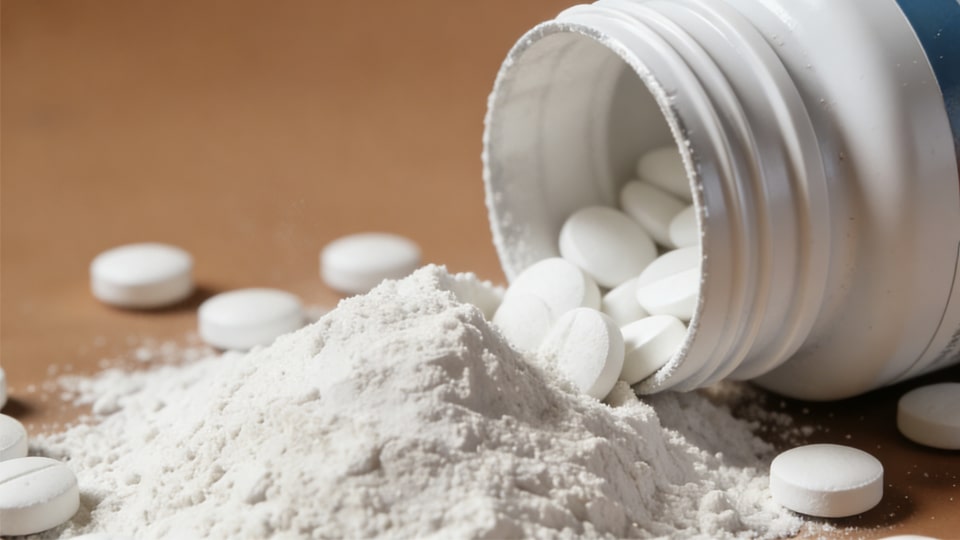
Tablet binders come in different categories depending on how the tablet is made. ব্যাপকভাবে, আছে direct-compression binders, wet granulation binders, এবং dry granulation binders.
In a typical pharma line (especially in high-speed ট্যাবলেট প্রেস মেশিন), direct-compression binders are popular because they let you skip extra wetting/drying steps. (উদাহরণস্বরূপ, In wet granulation the binder acts like glue inside each granule.)
Here are some widely used binder materials and their roles:
These are just a few examples. The binder you pick depends on your formulation (active drug, বিচ্ছিন্ন, flavor, ইত্যাদি) and process (direct vs granulation).
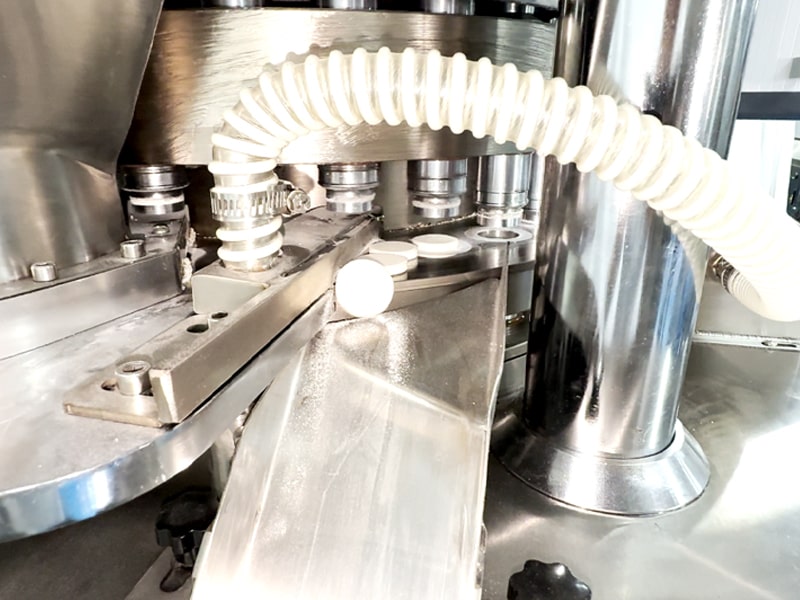
The image below shows a high-speed rotary tablet press at work, compressing powder into tablets. Binders play a vital role in this machine. In a tablet press (single or rotary), the powder mix is fed into dies by gravity and force. A good binder ensures the powder flows into the die uniformly and sticks together when the punches compress it. Binders like MCC make the powder formulation more cohesive and uniform. ব্যবহারিক দিক থেকে, this means each press cycle yields a full-strength tablet with consistent weight and density. Binder particles deform or break and create bonds under pressure, locking the tablet together.
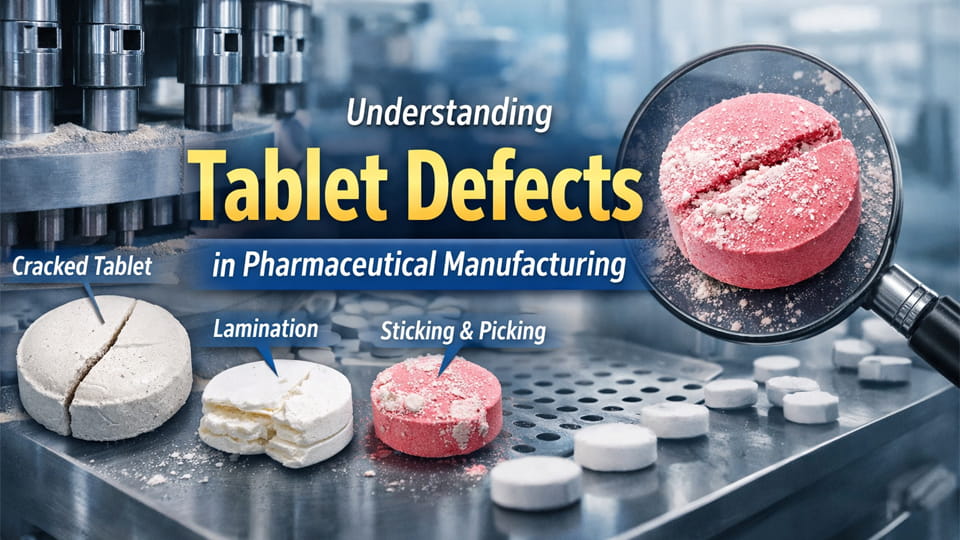
If the binder is poor or missing, tablets may have flaws. Using the wrong binder (or no binder) can cause poor flow, tablets that break or crumble, or machines slowing down because of sticking and picking. অন্য কথায়, without the right binder the hopper and feeder may clog or feed unevenly, leading to capping or uneven tablets. A study of tablet production notes that choosing an appropriate binder is part of pre-production planning. For packaging engineers, this means the binder affects how the tablet press runs. Using a binder that improves powder flow (like MCC) পারে reduce machine stoppages and improve productivity. বিপরীতে, a sticky or unsuitable binder might gum up the machinery or produce friable tablets. When everything lines up – the right binder, the right machine – you get robust tablets and a smooth production run.
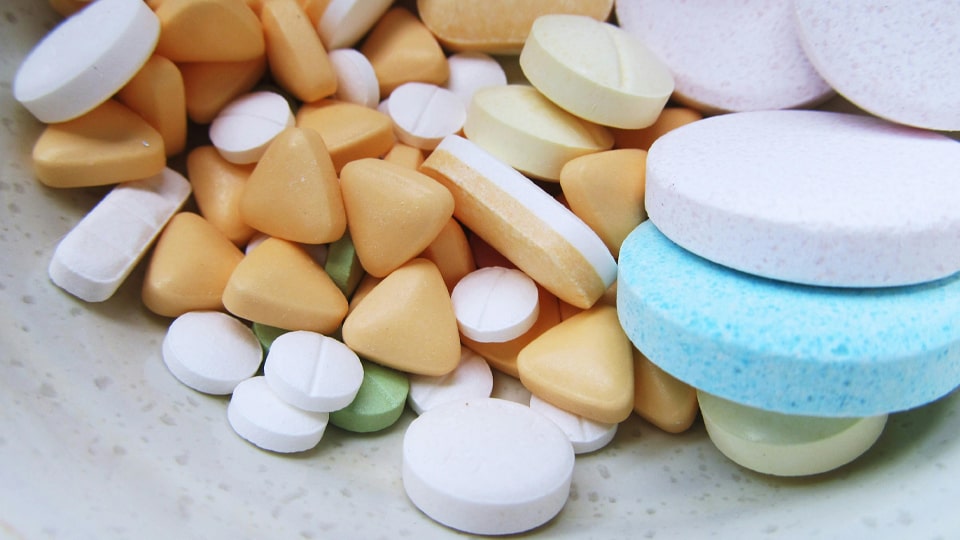
Picking a binder is not one-size-fits-all. পরিবর্তে, you match the binder to the drug, the tablet’s goal, and the equipment. Here are some key factors to consider:
ওষুধের বৈশিষ্ট্য: Consider the API’s solubility, stability and hygroscopicity. For moisture-sensitive drugs, a moisture-resistant binder like MCC is advised. If the drug is water-loving or degrades in humidity, you might avoid water-based binders.
The Journal of Chemical Health Risks review emphasizes that choosing the right binder is essential to preserving tablet integrity. অনুশীলনে, formulators often test a few candidates during R&ডি. Modern trends also include multi-functional binders (ones that combine binding with disintegration or taste-masking) and natural binders for sustainability. শেষ পর্যন্ত, the right binder makes production efficient: it streamlines tablet formation, avoids defects, and meets quality targets.
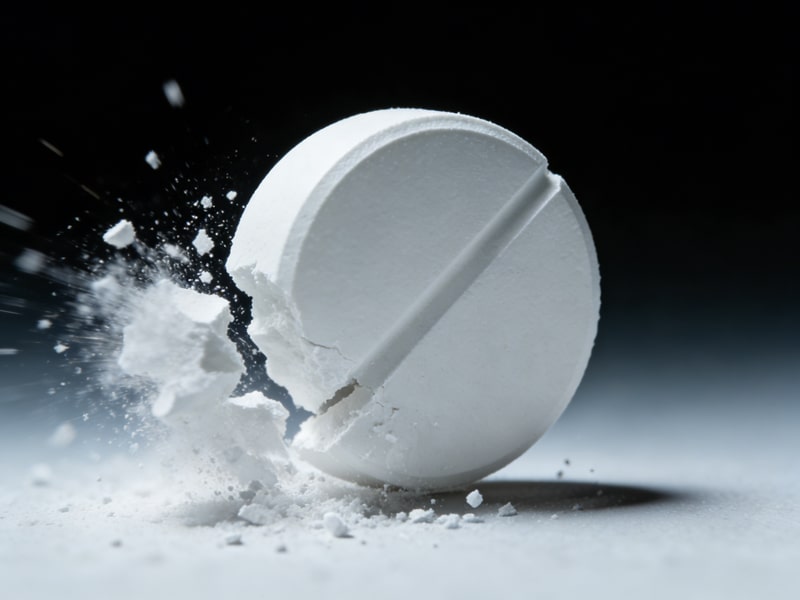
While the main job of a binder is to hold the tablet together, they often add bonus benefits. উদাহরণস্বরূপ, disintegration control: some binders will help the tablet break apart at the right time. অন্যরা, like mannitol, double as sweeteners to improve mouthfeel. Certain binders can even promote tablet disintegration once swallowed, affecting how quickly the drug is released. And they can impact how a tablet feels on the tongue – using mannitol as a binder adds a cool, sweet sensation, and saccharose (table sugar) dissolves quickly for a smooth feel.
Compressibility is another key aspect. A binder like MCC not only sticks particles but also deforms under pressure to make very uniform, hard tablets. Binders help create the right texture and strength. উদাহরণস্বরূপ, Microcrystalline Cellulose gives structural integrity to tablets and makes them “consistently hard”. উপরন্তু, fillers like dicalcium phosphate add weight and hardness, reducing capping.
অবশেষে, innovative binders are being developed. There are “multifunctional binders” (sometimes nicknamed “rock stars”) that do binding এবং বিভাজন, and naturally-derived binders (algal or plant-based) for greener formulas. Some binders even include flavors to mask bad tastes. All these advances mean binders are no longer just passive glue – they’re active participants in tablet performance.
In the world of tablet manufacturing, a tablet binder isn’t just another ingredient — it’s one of the core reasons tablets hold together and perform reliably. Binders act like cohesive agents that help powders and granules form strong, uniform tablets when compressed in a tablet press machine or ট্যাবলেট মেশিন. They ensure tablets maintain their shape, achieve consistent weight and strength, and withstand handling from production to packaging and use.
Choosing the right binder matters. The choice affects tablet integrity, flowability, যান্ত্রিক শক্তি, and even drug release profiles — all of which are essential for high-quality pharmaceuticals. Whether you’re working with traditional binders like MCC and starches or advanced polymers like PVP and HPMC, matching the binder to formulation goals and equipment capabilities makes manufacturing smoother and more reliable.
For manufacturers and engineers working with জিনলু প্যাকিং’s tablet production equipment, understanding binders and how they interact with your machines helps you optimize your product quality and production efficiency. A well-chosen binder plus the right tablet press setup can significantly reduce defects and increase throughput — ultimately leading to better products and happier customers.
A tablet binder is an inactive ingredient (excipient) added during tablet manufacturing to help powder particles stick together and form a solid tablet. It enhances cohesiveness and ensures the tablet maintains its shape during compression and handling.
Binders are used to improve powder cohesiveness and compressibility. They help the tablet resist breaking or crumbling during manufacturing, প্যাকেজিং, পরিবহন, এবং ব্যবহার করুন.
Common binder types include natural binders (যেমন, স্টার্চ, gums), synthetic binders (যেমন, পিভিপি, polyethylene glycol), and semi-synthetic binders (যেমন, এইচপিএমসি, HPC). Each type offers different binding properties and is chosen based on formulation needs.
Binders improve cohesion between particles so that during compression in a tablet press machine, the powder blend forms a strong, compact tablet. They can work through wet granulation, শুকনো দানাদার, or direct compression processes.
While binders help powders stick together and form tablets, disintegrants help tablets break apart quickly when ingested so the active ingredient can be released. In formulation design, binders and disintegrants often work together but serve opposite functions.
হ্যাঁ. Too little binder may cause weak tablets that break easily, while too much binder can slow disintegration or affect drug release. The right binder concentration depends on the tablet size, সূত্র, and desired release profile.
হ্যাঁ. Some binders influence how fast a tablet breaks apart and how quickly the active pharmaceutical ingredient (API) is released. উদাহরণস্বরূপ, certain polymers can slow disintegration to create controlled-release tablets.
হ্যাঁ. Binders like microcrystalline cellulose (MCC) and pregelatinized starch are commonly used in direct compression because they improve powder flow and compressibility, making them ideal for high-speed tablet press machines.
Important factors include the solubility of the API, আর্দ্রতা সংবেদনশীলতা, desired release profile, ট্যাবলেট কঠোরতা, and compatibility with other excipients. These influence both tablet performance and manufacturability.
হ্যাঁ. Besides cohesion, binders influence tablet strength, powder flow in tablet machines, disintegration timing, and sometimes taste or mouthfeel in chewable tablets.
তথ্যসূত্র:
1. A review on tablet binders as a pharmaceutical excipient – World Journal of Biology Pharmacy and Health Sciences
2.Tablet Binders as an Excipient in Pharmaceutical Formulation – Journal of Chemical Health Risks
3.Research on the influences of binders on high shear wet granulation and tablet quality - সায়েন্স ডাইরেক্ট