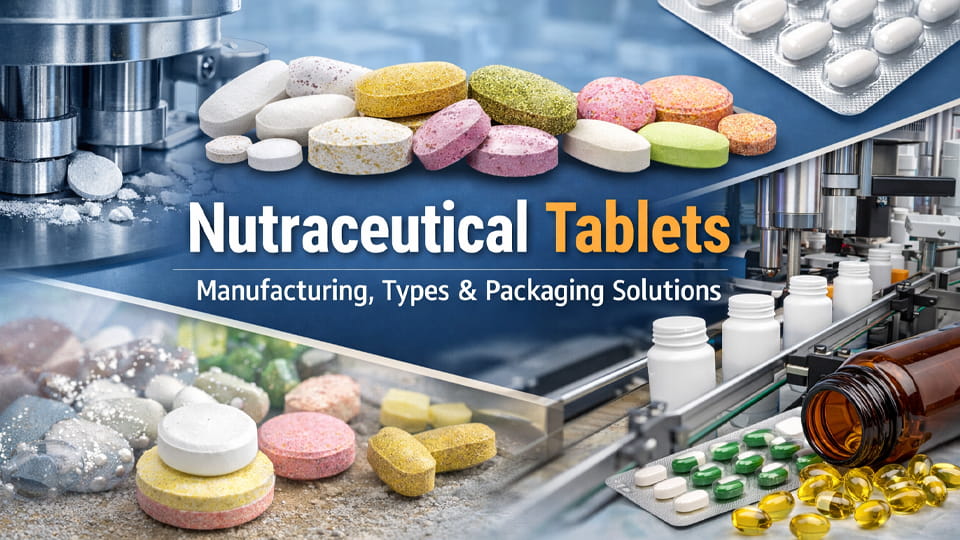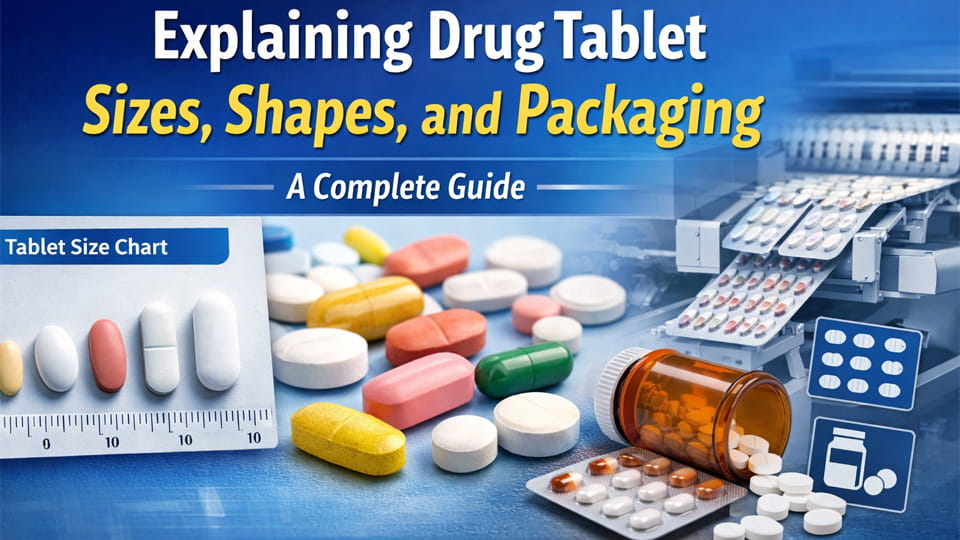

ভূমিকা: A blister pack is a pre-formed plastic packaging widely used in pharmaceuticals to protect and dispense pills, ক্যাপসুল, or tablets. It typically consists of a thermoformed (or cold-formed) plastic cavity sealed against a backing layer (usually aluminum foil or a laminated film). Each cavity holds a single dose, creating an isolated “unit dose” compartment that keeps medication fresh and tamper-proof. উদাহরণস্বরূপ, blister packs first gained prominence in the 1960s for packaging contraceptive tablets, demonstrating their effectiveness. Blisters are valued because they combine product visibility and protection with convenience: patients can see each pill and remove one dose at a time, while remaining doses stay sealed and hygienic.
 চিত্র: ট্যাবলেট ধারণকারী ফোস্কা প্যাক. Each pill is individually sealed between a pre-formed plastic cavity and a foil backing, offering visibility and protection.
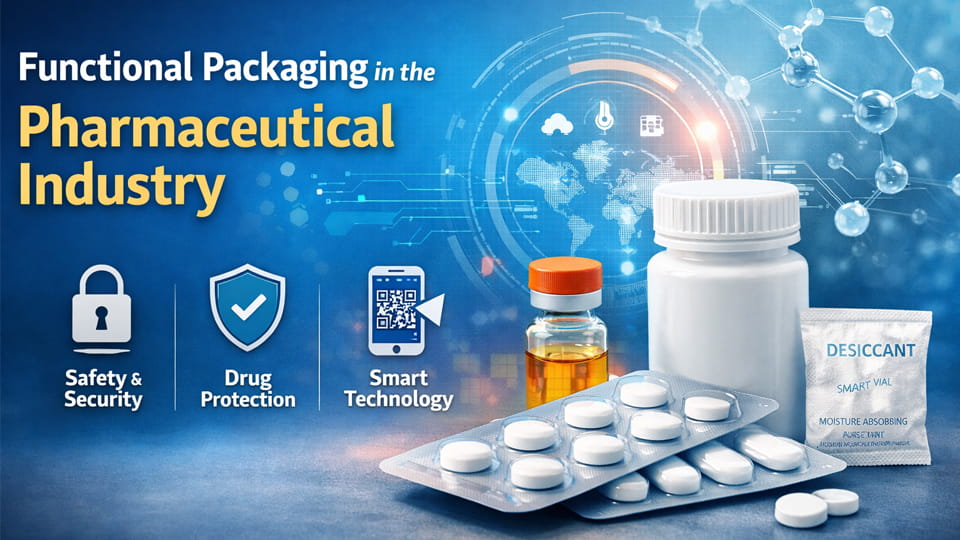
Blister packs ensure that each dose remains isolated from moisture, বায়ু, এবং টেম্পারিং. They are used globally because they combine convenience, patient safety, এবং স্থিতিশীলতা. Patients benefit from the unit-dose format—often with printed day-of-week labels—to follow regimens accurately. এদিকে, pharmacies and manufacturers value blisters for their cost-effectiveness and shelf appeal. উদাহরণস্বরূপ, rigid medical blister trays are sometimes used for packing devices and kits (though these differ from tablet blisters). সংক্ষেপে, ফোস্কা প্যাকেজিং bridges pharmaceutical science and practical design: it protects each dose while making handling and dosing easier for consumers and clinicians.
Blister packs offer key benefits for drug products:
These features explain why blister packs (other related articles:ফার্মাসিউটিক্যাল পণ্য: ব্লিস্টার প্যাকেজিং বনাম বোতল) remain the go-to format for tablets and capsules in healthcare packaging.
Blister packs are manufactured on specialized machines that form cavities, fill them with product, and then seal a backing material on top. There are two main forming methods:

চিত্র: A high-speed blister packaging machine (যেমন. Jinlu’s DPP-270 series) গঠন করতে ব্যবহৃত, পূরণ, and seal blisters. Many machines can package over 11,000 individual blisters per hour.
The choice of method depends on the drug’s needs. Thermoformed PVC/Alu blisters are most common for routine pharmaceuticals. They are transparent and economical, suitable for tablets and capsules whose sensitivity is low to moderate. Cold-form Alu-Alu packs, বিপরীতে, are used for extremely moisture-sensitive or high-value drugs (like biologics or certain vitamins). অনুশীলনে, many manufacturers use a mix: high-barrier Alu-Alu for the most sensitive products and PVC-Alu for mass-market lines.
Blister packs can be categorized by their materials and structure. কী ধরনের অন্তর্ভুক্ত:


The table below compares these main blister types:
| প্রকার | উপকরণ & প্রক্রিয়া | সুরক্ষা | দৃশ্যমানতা | সাধারণ ব্যবহার |
| সর্বকালের (কোল্ড-ফর্ম) | Aluminum laminate (যেমন. OPA/Al/PVC) ঠান্ডা-গঠিত; Al foil seal | Best – nearly impermeable to moisture, অক্সিজেন, এবং হালকা | অস্বচ্ছ (no view) | Moisture-sensitive/high-value drugs (জীববিজ্ঞান, specialty pills) |
| PVC/Alu (Thermoform) | Thermoformed PVC (or PVC/PVDC) শীট; foil-backed | Moderate – good visibility; PVC only (improved with PVDC) | স্বচ্ছ | Standard tablets/capsules; daily-dose packs |
| PVC/PVDC/Alu (High Barrier) | Multi-layer PVC/PVDC film thermoformed; foil-backed | High – significantly better moisture/oxygen resistance than PVC alone | স্বচ্ছ | Sensitive generics needing extended stability |
| Alu-PVC-Alu (Hybrid) | Aluminum/PVC/Al laminate cold-formed; foil-backed | Very high – similar moisture/oxygen barrier as Alu-Alu | Partly visible (partially opaque) | Mid-range drugs needing both barrier and some viewing |
| Clamshell/Tray (Rigid) | Rigid PVC or PET forming a hinged container (no foil seal) | Low – protects from handling but not sealed for moisture | স্বচ্ছ | Medical devices, large consumer items (non-pill meds) |
This overview shows why blister packs are so versatile: by varying plastic films, foil layers, and cavity designs, manufacturers tailor the package to each drug’s stability needs.
Blister packs are made on high-speed production lines that integrate forming, ভরাট, এবং সিলিং. In a typical line, a roll of forming film (plastic or aluminum) is fed into a forming station (thermoform or cold-form) to create cavities. Tablets or capsules are then dispensed into each pocket by vibratory feeders or pick-and-place heads. পরবর্তী, an aluminum foil (or laminated plastic) backing is unwound and aligned over the filled cavities. This backing is printed with batch and expiry information (using in-line coders) and then heat-sealed onto the blister sheet under pressure. সিল করার পরে, the blister cards are cut and fed to the next stage.
These machines run extremely fast. উদাহরণস্বরূপ, some blister machines can package over 11,000 individual blisters per hour. Pharmaceutical packaging machine manufacturer Jinlupacking notes that the “precision, গতি, and automation features” of modern machines are crucial for meeting high-volume pharmaceutical demands. In-line vision systems continuously inspect fill levels and seal quality, rejecting any faulty packages automatically. উপরন্তু, pack integrity is verified by leakage tests (যেমন. vacuum-dye immersion) to detect even tiny seal breaches. The end result is a high throughput of uniform, reliably sealed blister cards, ready for final cartoning.
Because these machines handle everything from forming to labeling, they play a key role in product safety. They are designed to meet pharmaceutical cleanliness and quality standards, often operating in controlled environments. Manufacturers also integrate serialization and testing to comply with regulations. আসলে, blister packaging is subject to strict regulatory control: materials that contact drugs must meet pharmacopoeial purity and GMP standards. Blister lines typically have in-line printing so that each pack carries batch numbers, মেয়াদোত্তীর্ণ তারিখ, and dose instructions directly on the foil. These measures (plus built-in tamper evidence) help ensure that blister-packed medications are safe, authentic, and fully compliant with global regulations.
চিত্র: A blister packaging machine in action. The machine heats and forms cavities in the plastic or foil, পণ্য দিয়ে তাদের পূরণ করে, and seals the foil lid. Automation ensures thousands of uniform doses are packed per hour.
The blister industry continues to evolve. উদাহরণস্বরূপ, cold-seal blisters use pressure-sensitive adhesive instead of heat, which is beneficial for heat-sensitive drugs. Manufacturers also add patient-friendly features: child-resistant push-through foils, peelable lidding films, or calendar blisters with day-of-week printing. In packaging design, high-barrier films continue to improve; some companies use alternatives to PVC (যেমন. polypropylene or PCTFE) for extra stability. Specialty materials like Tyvek or coated paper allow blister cards to be easily peeled or more recyclable.
Sustainability is a growing focus. Some “clamshell” designs use recyclable PET plastic and cardboard laminates. All-aluminum blisters are fully recyclable (every component is metal), whereas mixed PVC/foil packs are harder to recycle. In future, plant-based polymers or fully biodegradable laminates may come into play. Emerging trends even explore “smart blisters”: উদাহরণস্বরূপ, prototype cards with embedded electronics or printed sensors that could remind patients to take a pill or confirm a dose. Such innovations are still largely experimental, but they highlight how blister packs can integrate new technologies.
Because pharmaceutical products are distributed worldwide, blister designs must also meet diverse needs. Packs destined for tropical climates may use extra moisture barriers; child-resistant requirements vary by country. This global adaptability – combined with the core advantages of blisters – keeps this format at the forefront of drug packaging.
In pharmaceutical packaging, quality and regulation drive every design choice. Blister pack materials must comply with strict medical standards (আইএসও 15378) and GMP requirements. Production lines include rigorous checks: as noted, each pack receives printed identifiers (batch code, মেয়াদ) ট্রেসেবিলিটির জন্য, and sealed blisters undergo dye or vacuum tests to catch leaks. Tamper-evident designs (যেমন. foil pouches that are obvious once opened) are mandated for safety. All these controls, together with validated material data (moisture transmission rates, ইত্যাদি), ensure that blister-packed drugs remain safe, স্থিতিশীল, and compliant through their shelf life.
Blister packs remain an indispensable solution for ফার্মাসিউটিক্যাল প্যাকেজিং. They combine product protection, ডোজ সঠিকতা, patient safety, and manufacturing efficiency in one format. By choosing the appropriate blister type (উদাহরণস্বরূপ, PVC/Alu versus Alu-Alu) and using modern ফোস্কা মেশিন, drug makers ensure medications stay stable and tamper-proof from factory to patient. Blister packaging epitomizes the intersection of scientific rigor and practical design in pharma. With ongoing improvements in materials, machine automation, and even digital features, the blister pack continues to set the standard for delivering medication safely and effectively to patients. আপাতত, it stands as a testament to how effective packaging design can protect patient health.
A blister pack is a unit-dose packaging format widely used in the pharmaceutical industry. It typically consists of a pre-formed cavity made from plastic (or an aluminium laminate), holding a single tablet or capsule, which is sealed against a backing layer (often aluminium foil or a laminated film). This design helps protect the medication from moisture and contamination and simplifies handling and dosing.
The main types include:
• Alu-Alu (cold-form) ফোস্কা প্যাক
• PVC/Alu (thermoformed) ফোস্কা প্যাক
• PVC/PVDC/Alu (high-barrier thermoformed) ফোস্কা প্যাক
• Alu-PVC-Alu (hybrid laminate) ফোস্কা প্যাক
• Rigid clamshell or tray-style blister formats for special devices
Each type varies in material, protection level, visibility (transparent vs opaque), এবং ব্যয়.
In thermoforming, a plastic film (for example PVC or PVC/PVDC) is heated, formed into cavities, filled with product and then sealed with a foil backing. Cold forming uses an aluminium laminate film that is pressed (উত্তাপ ছাড়া) into a mould and then sealed—providing superior barrier protection but resulting in opaque packaging. The choice between them depends on the drug’s sensitivity to moisture, অক্সিজেন বা আলো.
A blister packing machine (also called a blister machine) automates forming, filling and sealing of blister packs at high speed while maintaining quality and consistency. It ensures accurate dosing, সঠিক সিলিং, in-line printing (ব্যাচ নম্বর, মেয়াদ), inspection and compliance with regulatory standards. This leads to efficient high-volume production of safe, টেম্পার-সুস্পষ্ট প্যাকেজিং.
You should choose Alu-Alu (cold-form) when the drug product is highly sensitive to moisture, oxygen or light and requires the highest barrier protection—such as biologics or long-shelf-life tablets. If the product is less sensitive and visibility of the contents is desired, a PVC/Alu thermoformed pack may be sufficient and more cost-effective.
সুবিধা: transparent (allows visual inspection of the tablet/capsule), lower cost, fast production.
অসুবিধা: moderate barrier protection (less than Alu-Alu), may require additional coatings (such as PVDC) for enhanced protection, less suited for very sensitive products.
হ্যাঁ. Blister packs can be designed with printed days-of-week or dose numbering to help patient compliance, push-through foils for easy removal of pills, peelable lidding films, and child-resistant or senior-friendly features. These design enhancements help improve safety, adherence and usability.
Sustainability is becoming increasingly important. Some blister formats now use recyclable materials (for example all-aluminium systems or PET/foil trays), fewer layers, or plant-based polymers. Manufacturers are also designing blister machines and films to reduce energy usage and waste. These developments help meet regulatory demands and environmental goals globally.
Pharmaceutical blister packaging lines must comply with GMP (ভাল উত্পাদন অনুশীলন) and materials must meet pharmacopoeial and regulatory standards. Quality control includes seal integrity tests (খালি, dye penetration), vision-based inspection of fill and seal, in-line printing of batch and expiry codes for traceability, and validation of barrier performance of the packaging materials. These measures ensure safety, authenticity and reliability of the packaged drug.
A blister packing machine is equipment that forms cavities in a sheet or film, fills them with tablets or capsules, seals a backing (foil or laminate), cuts the blister cards and conveys them for cartoning. Modern high-speed machines can process thousands—often over 10,000—individual blisters per hour depending on complexity, size and packaging style. This high throughput supports large-scale pharmaceutical manufacturing.
তথ্যসূত্র:
1."A review on characterization and recyclability of pharmaceutical blisters” — Yaren İ, Gökelma M, Cleaner Waste Systems, 2023.
2."Evaluation of Newly Designed Blister Packs for Easier Handling to Older Adults” — PMC (PMC8800866) 2020.
3."ফার্মাসিউটিক্যাল প্যাকেজিং উপকরণ এবং ঔষধ নিরাপত্তা: একটি মিনি-রিভিউ” — নিরাপত্তা, 2025.
4.“Waste Pharmaceutical Blister Packages as a Source of Secondary Raw Materials” — JOM / Springer, 2021.