
Стик-пак против саше: Полное руководство по ключевым различиям
Узнайте о ключевых различиях между стик-паковкой и упаковкой-саше.. Узнайте об их дизайне, производство

Vegetable capsules are plant‐based two‐piece capsule shells used to encapsulate powders, гранулы, or liquids in pharmaceuticals and supplements. In technical terms, they are non‐gelatin capsules – typically made from vegetable cellulose or cellulose derivatives – that entirely avoid animal‐derived ingredients. The industry’s standard vegetable capsule is made of HPMC (hydroxypropyl methylcellulose), a plant‐fiber cellulose derivative. HPMC capsules are completely vegetarian and satisfy vegan, kosher, and halal requirements. Other vegetable materials (such as pullulan, tapioca starch, or alginate) are also used, but HPMC remains dominant. Например, tapioca‐based capsules (from cassava starch) have emerged as an easily digestible, all‐natural alternative. Общий, vegetable capsules provide a plant‐friendly packaging option that aligns with the growing demand for sustainable, “clean label” pharmaceuticals.

Vegetable capsules are essentially empty vegan capsules. They include any capsule shell not made from animal gelatin. Industry sources explain that “vegetable capsules widely refer to any supplement capsules that are not made with gelatin,” most commonly manufactured from wood pulp cellulose or cotton cellulose. Другими словами, the capsule shell is derived from plant polymers rather than animal collagen. HPMC (hydroxypropyl methylcellulose) is the most common material: it’s a chemically modified cellulose that yields transparent, robust capsule shells. Other plant polymers can also form vegetable capsules. Например, пуллулан (a fungal starch polymer) and alginates (from seaweed) have been used, although these are less common due to cost or processing issues. В итоге, vegetable capsules are “hard capsule shells…completely vegetarian” alternatives to gelatin, made from cellulose or starch so they avoid any ethical or dietary concerns.

Vegetable capsules come in several technical varieties, distinguished by their base material. Key types include:
Each of these vegetable capsule types is fully plant-based, so they are all vegan, non-GMO, and free of animal allergens. Manufacturers choose among them based on factors like dissolution speed, mechanical strength, и стоимость. (A summary comparison is provided in the table below.)
Для фармацевтических производителей, vegetable capsules offer several compelling benefits over traditional gelatin shells:
В итоге, vegetable capsules combine consumer-friendly attributes with technical robustness: they meet high ethical standards while delivering pharmaceutical stability and manufacturing flexibility.
When formulating and packaging capsules, B2B manufacturers should note a few technical factors specific to vegetable (HPMC) shells:
Общий, vegetable capsules “encapsulate a wide range of supplements… catering to diverse needs,” and integrate seamlessly with standard hard-capsule processes. For packaging (волдырь, бутылка, или strip packaging), they behave similarly to Желатиновые капсулы—although their lower moisture means blister foils, коробки, and desiccants should be chosen to maintain the ~30–60% relative humidity that these capsules prefer.
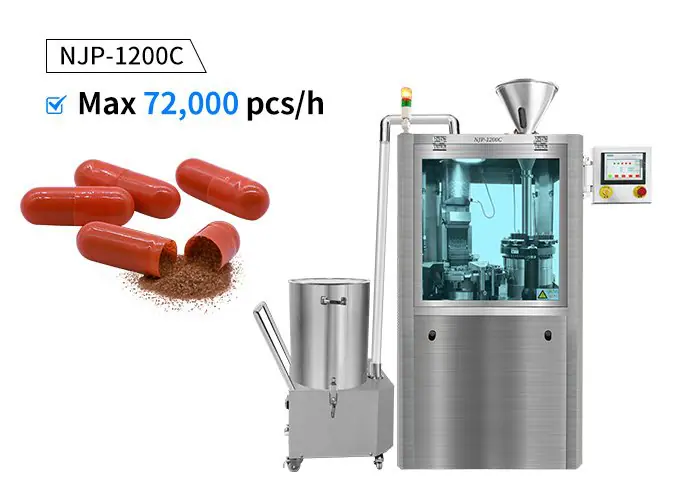
Vegetable capsules are generally stable, but they must be stored under controlled conditions. Like all cellulose‐based materials, they are hygroscopic: they can absorb moisture from the air. In high humidity, vegetable capsules may soften, swell, or stick together; in very dry air, they can become brittle and prone to cracking. To maintain stability, warehouses often keep relative humidity around 30–60% RH. At this range, HPMC capsules retain their shape without excess moisture uptake.
Temperature control is also important. Vegetable capsules should be stored in a cool, stable environment (typically 15–25 °C). Excessive heat can accelerate slow chemical reactions or cause the capsule shell to yellow. Light exposure is another factor: UV or strong sunlight can degrade the polymer. На практике, capsules are stored in opaque containers or cartons to protect them from light. (Some manufacturers even add coloring or opacity to the shells themselves for UV protection.)
Another consideration is oxygen. Pure HPMC has a slightly porous structure, so it is more oxygen‐permeable than gelatin. For highly oxygen-sensitive contents (oxidizable drugs or oils), packaging such as aluminum-foil blister packs or oxygen-scavenging inner liners may be used. Studies have found that including antioxidants in the capsule fill or using tight aluminum seals can prevent oxidation when using HPMC shells.
Напротив, gelatin capsules hold moisture which can actually inhibit oxygen ingress, but they suffer from moisture‐related stability issues (например. cross-linking over time) that vegetable capsules avoid. В сумме, to maximize the shelf life of vegetable-capsule products, manufacturers should keep humidity, температура, and light in check and consider moisture barriers for sensitive formulations.

The table below contrasts plant-based (vegetable) capsules with traditional Желатиновые капсулы. This highlights the technical reasons a manufacturer might choose one over the other:
| Property | Овощные капсулы (HPMC/Pullulan) | Желатиновые капсулы (Animal) |
|---|---|---|
| Raw Material | Plant-derived (cellulose polymers such as HPMC) | Animal collagen (bovine/porcine gelatin) |
| Diet Compliance | Vegan/vegetarian, kosher, halal (no animal ingredients) | Non-vegetarian; may conflict with kosher/halal requirements |
| Содержание влаги | Низкий (≈2–6% typical) | Высокий (≈12–16% required) |
| Hygroscopicity | Низкий (minimal water uptake) | Высокий (absorbs moisture readily) |
| Storage Stability | Very stable at broad conditions (сухой, холодный) | Sensitive; can become brittle or sticky if moisture is out of 12–16% range |
| Dissolution Rate | Generally slower (especially older formulations) | Faster (dissolves quickly in gastric fluids) |
| Срок годности | Often longer (low moisture reduces spoilage) | Potential for cross-linking/aging, reducing shelf life |
| Oxygen Permeability | Выше (capsules are more permeable; consider foil packaging) | Ниже (denser gelatin provides some barrier) |
| Расходы | Higher raw material cost (newer technology, patents) | Lower cost (established supply chain) |
| Allergen/Risk | No animal allergen; no TSE/BSE risk | Possible animal allergen; risk of BSE if poorly sourced |
As the table shows, vegetable capsules excel in meeting dietary laws and providing stability, at the expense of a somewhat slower dissolution and higher material cost. В практическом плане, both capsule types have comparable safety profiles, but vegetable capsules “have advantages that favor the use of nongelatin capsules,” such as low moisture and broad stability.
Vegetable capsules (plant-based cellulose capsules) are rapidly becoming a standard for modern pharmaceutical and nutraceutical manufacturing. They offer proven benefits: compatibility with existing capsule-filling systems, enhanced product stability, and alignment with ethical and regulatory requirements. Manufacturers should understand the material properties – such as low moisture content and storage needs – to fully leverage these advantages. By adopting vegetable capsules, companies can meet consumer demands for clean, plant-based products while maintaining high-quality control and productivity on their packaging lines.
A vegetable capsule is a two-piece capsule shell made from plant-derived polymers (commonly hydroxypropyl methylcellulose, HPMC), rather than animal-derived gelatin. It constitutes a fully vegetarian/vegan capsule suitable for encapsulating powders, granules or certain liquids in pharmaceuticals and nutraceuticals.
The most common material is HPMC (hydroxypropyl methylcellulose), derived from plant cellulose (например. wood pulp or cotton linter). Some manufacturers also use other plant- or starch-based polymers (например. пуллулан, tapioca starch) for specific capsule variants.
Compared with gelatin capsules (animal-derived), vegetable capsules: • Are plant-based and thus suitable for vegetarians/vegans, halal, kosher, non-GMO, allergen-free diets. • Contain much lower moisture (typically ~3–7%, против. gelatin’s ~13–15%), leading to improved stability under varying humidity/temperature. • Are more resistant to storage stress (less cross-linking, less brittleness or stickiness), making them preferable for moisture- or heat-sensitive formulations. • Provide “clean-label”, chemical-free shell (neutral taste/odor, no animal proteins) which is attractive in certain markets.
Да. Because they are derived from plant cellulose (non-animal), vegetable capsules are free from common animal allergens, do not contain animal proteins, and generally do not require additives or preservatives. This makes them appropriate for clean-label, гипоаллергенный, vegan/vegetarian, kosher, or halal formulations.
Да. High-quality HPMC vegetable capsules are compatible with high-speed automatic encapsulation machines. Their external dimensions and mechanical properties are engineered to closely match those of gelatin capsules, allowing manufacturers to switch with minimal modification.
Да. Because vegetable capsules have low intrinsic moisture and lower hygroscopicity than gelatin capsules, they are better suited to formulations with moisture-sensitive or hygroscopic APIs. They remain dimensionally stable and less prone to shell deformation or degradation under variable humidity.
Vegetable capsules (especially HPMC) are more tolerant of a broader humidity and temperature range than gelatin capsules. They do not become brittle in low humidity or sticky in high humidity as easily; they maintain structural integrity over a wide span of environmental conditions, which simplifies storage and logistics, especially for global distribution.
Compared with gelatin capsules, vegetable capsules tend to have slightly higher raw-material cost (plant cellulose derivatives vs. widely available gelatin). Также, depending on formulation and desired release profile, dissolution or disintegration rate may be marginally different; in some cases gelatin may dissolve faster, though modern HPMC vegetable capsules are often engineered for acceptable dissolution.
Да. HPMC (used in vegetable capsules) is a widely accepted pharmaceutical-grade excipient. Regulatory and pharmacopeial standards allow HPMC-based capsules as valid non-gelatin alternatives to gelatin capsules. Their inert material properties and stability make them acceptable for both pharmaceuticals and dietary supplements.
Vegetable capsules are particularly recommended for:
• Products requiring vegan/vegetarian, halal, kosher or allergen-free compliance.
• Moisture-sensitive or hygroscopic APIs (например. herbal powders, hygroscopic minerals, moisture-sensitive extracts).
• Products destined for varied climate zones or global distribution, where stability under varying humidity/temperature is important.
• Clean-label or “natural” positioning for nutraceuticals and dietary supplements.
Ссылки:
1.Moisture sorption and desorption properties of gelatin, HPMC and pullulan hard capsules — pubmed.ncbi.nlm.nih.gov
2.Сomparative Evaluation of Gelatin and HPMC Inhalation Capsule Shells Exposed to Simulated Humidity Conditions — MDPI
3.Capsule Evolution: Hydroxypropyl Methylcellulose (HPMC) and Vegetable Capsules — AnxinCel®
Узнайте о ключевых различиях между стик-паковкой и упаковкой-саше.. Узнайте об их дизайне, производство

Откройте для себя V-блендер (V-образный смеситель), универсальная машина для смешивания сухих порошков. В этом руководстве объясняется, как

Узнайте, что такое таблетка с пленочным покрытием., почему это используется, и как происходит процесс нанесения пленки
Узнайте, как мягкие капсулы (мягкие желатиновые капсулы) сделаны от начала до конца. Это простое руководство
