
O indústria farmacêutica is undergoing a quiet revolution. Traditional batch production is giving way to continuous production systems that run day and night, seamlessly moving material from start to finish. In a continuous setup, processes occur one after another without interruption. This means raw ingredients flow in and finished dosage forms flow out on a single, unbroken line. The promise of continuous manufacturing is huge: rendimento mais rápido, more consistent quality, and significantly less downtime than batch methods.
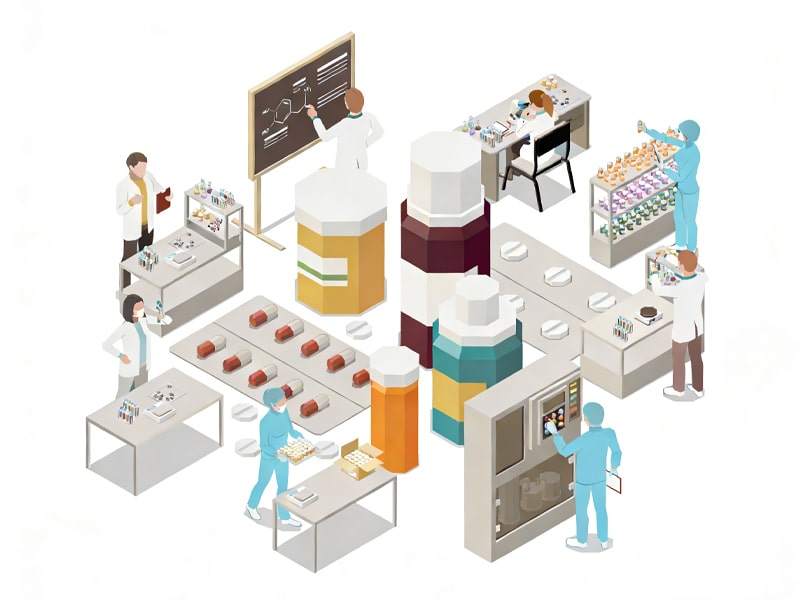
Continuous manufacturing (sometimes called continuous processing) is a production method where raw materials flow continuously through a series of connected unit operations. Unlike batch mode – which processes a fixed quantity of material in steps, pausing between stages – a continuous line never stops. One industry guide defines it as a process where material “flows through a series of steps without pause to manufacture a large quantity of products with few variations”. Essencialmente, a continuous production system combines misturadores, reatores, secadores, Pressões de tablets, máquinas de embalagem, etc., into one integrated sequence. Because the line never stops, output keeps flowing as long as raw material is fed in. This often means 24/7 operation with shifts of trained operators managing the line. The finished dosage is essentially manufactured in a continuous stream, rather than in separate batches.
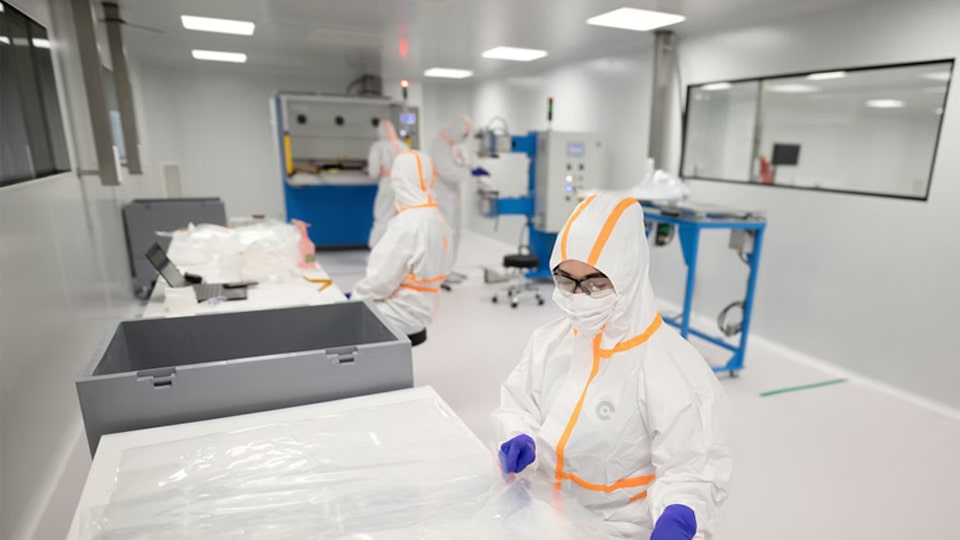
Figura: Workers in protective suits inside a pharmaceutical cleanroom, illustrating the controlled environment of modern production. Continuous production lines often operate in tightly regulated clean areas to maintain quality.
Continuous operations also change the concept of a “batch.” In a continuous plant, a batch can be defined by time or total output. Por exemplo, one batch could be “everything produced in 24 hours” instead of a fixed volume. This flexibility means a manufacturer can easily increase or decrease production simply by running the line longer or shorter. No need to scale up a larger batch; the line just keeps going for more product or pauses when done.
Several factors are driving pharmaceutical companies toward continuous manufacturing. Modern medicine demands high quality, fast delivery, and cost efficiency – all of which continuous approaches can help achieve. Os principais benefícios incluem:
Em suma, continuous manufacturing “aims to modernize the supply chain, enhance the robustness of the manufacturing process and thereby reduce product failures and enhance product quality”. Early adopters report faster time-to-market and higher equipment utilization. It’s a powerful modernization of the plant floor that keeps production flowing.
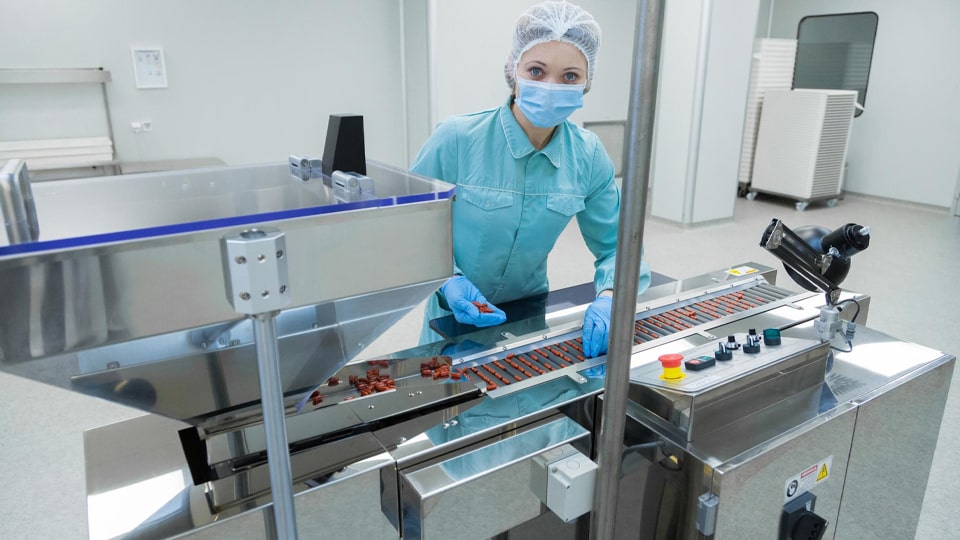
Figura: Operators working in a pharmaceutical production area. Modern continuous production lines can interconnect processes (misturando, granulação, enchimento, etc.) for seamless manufacturing.
Global regulators recognize continuous production as a key innovation. They are issuing new guidance to support it. Por exemplo, the FDA finalized its ICH Q13 guidance on continuous manufacturing in March 2023. This official document “provides clarification on continuous manufacturing (CM) concepts” and details scientific and regulatory considerations specific to continuous drug production. Da mesma maneira, the European Medicines Agency (Ema) co-authored ICH Q13 (finalized in 2022) and has embraced these guidelines.
The World Health Organization (QUEM) has also drafted a guideline to set a global framework. WHO’s document clearly defines continuous production, highlights its efficiency and quality advantages, and lays out good practices like real-time monitoring and dynamic validation. It also emphasizes flexible implementation: the WHO guidance stresses the need for broadly adaptable recommendations that countries with different resources can apply.
Resumidamente, agencies around the world are moving together to legitimize continuous approaches. (So far, adoption has been modest – only about seven pharmaceutical products made via continuous processes were approved worldwide between 2015 e 2022 – but that is changing rapidly as technology and guidance improve.) The message is clear: continuous manufacturing is no longer just experimental. It is at the heart of next-generation pharma production planning.
Transitioning to continuous manufacturing requires investment and planning. Important considerations include:
Despite these hurdles, many in the industry view continuous as an essential evolution. Recent supply chain disruptions have shown the value of flexible, high-throughput manufacturing. The recommended approach is to start small (E.G.. pilot runs) and build expertise over time.
Imagine a continuous tablet line in a modern plant. Powder is mixed in a hopper, granulado, and dried, all in one continuous flow. The granules feed directly to a tablet press without pause. Each tablet then travels on a conveyor to coating or inspection stations in real time. Finalmente, tablets go straight to packaging – blister packs or bottles – without human handling. In such a setup, modern equipment keeps pace. Por exemplo, high-speed cartoning machines can pack up to 450 caixas por minuto, matching the flow of tablets coming off the line.
In a fully integrated continuous line, as soon as a tablet exits the press it might be weighed by a sensor; if it’s off-spec, the machine can adjust parameters immediately or divert that piece. This real-time feedback prevents large rejects. Major companies (E.G.. Johnson & Johnson, Pfizer, Novartis, and many generics) are already piloting integrated continuous plants for oral solids. The common theme is end-to-end automation with minimal manual transfer. The more equipment you chain together, the more pronounced the benefits.
If you manage a manufacturing facility, consider how to evolve your plant. Here are some steps and tips:
Many plants initially run hybrid setups (some batch steps, some continuous). Ao longo do tempo, successful factories expand their continuous segments. The key is to begin planning now. By taking these steps, your facility can be among the leaders ready for “next-generation” pharma manufacturing.
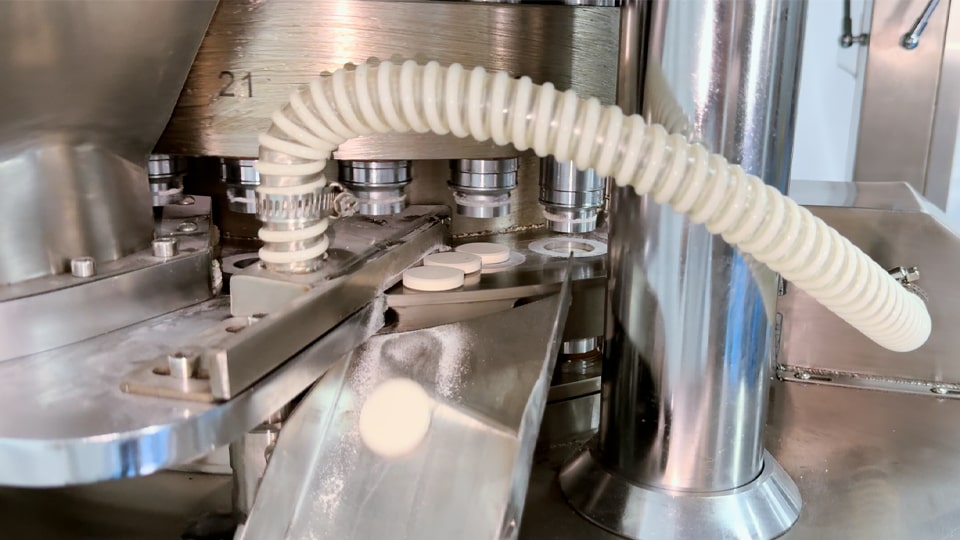
Figura: Tablets flowing from a continuous tablet press hopper. In continuous manufacturing, each unit follows directly to the next operation, minimizing downtime and maintaining flow.
Continuous production is at the heart of next-generation pharmaceutical manufacturing. Its advantages – higher throughput, superior consistency, and greater agility – align perfectly with industry needs. Adopting continuous manufacturing requires investment and planning, but forward-looking plants are already reaping the rewards. If your facility can bring together continuous mixers, granuladores, Pressões de tablets, and packaging machines into one flow, you’ll be poised to meet future pharma challenges. The time to start is now: begin exploring continuous solutions so your factory is ready for tomorrow’s opportunities.

Figura: A packaged pharmaceutical product. Continuous production lines aim to feed directly into packaging (bottling, blistering, embalagem) without interruption, keeping output steady and efficient.
Continuous production, also called continuous manufacturing or continuous processing, refers to a production method where raw materials are fed into the system and processed continuously without interruption. It contrasts with traditional batch production, which processes fixed quantities in separate stages with pauses between steps. Continuous production aims for high throughput, steady operations, and fewer quality fluctuations.
In batch manufacturing, production occurs in discrete sets (batches), with stops between stages. Continuous manufacturing links unit operations (misturando, granulação, pressionando, embalagem, etc.) into a seamless, uninterrupted sequence. This leads to less downtime, menos intervenções manuais, and more consistent output quality.
Key benefits include higher productivity, reduced production costs, improved product consistency and quality, decreased waste, and shorter time-to-market. Continuous manufacturing systems also allow real-time quality monitoring and adjustments, leading to fewer rejects and greater operational efficiency.
Regulators such as the FDA, Ema, and ICH are supporting continuous manufacturing because it aligns with modern quality principles such as Quality by Design (QbD) and Process Analytical Technology (PAT). Official guidelines like ICH Q13 provide a regulatory framework for adoption and evaluation of continuous processes.
Sim. Because continuous lines operate without stopping between steps, they significantly reduce downtime and energy use per unit of output. This can lower labor and utility costs, shrink facility footprint, and improve overall equipment productivity over batch systems.
Oral solid dose forms like tablets and capsules are currently the most mature applications for continuous manufacturing. No entanto, continuous processes are also being explored in biopharmaceuticals and biologics, including monoclonal antibodies and cell therapies.
Challenges include high initial investment in new equipment, sophisticated automation and control systems, extensive operator training, complex product changeovers, and detailed validation for regulatory compliance. Solid planning and phased implementation help address these challenges.
Continuous production often integrates PAT tools and inline sensors that monitor critical attributes in real time. These tools allow immediate adjustments and ensure consistent quality throughout the process rather than relying only on end-of-line testing.
Sim. Modern continuous systems can be modular and scalable, allowing smaller facilities to adopt them without huge capital expenditure. Modular designs also make implementation faster and more flexible for localized production.
A factory should assess which products are suitable, plan incremental pilot stages, upgrade automation and PAT systems, train staff, update quality and validation strategies, and collaborate with equipment suppliers experienced in continuous lines. Starting with a pilot project helps build expertise before scaling up.
Referências:
1.Q13 Continuous Manufacturing of Drug Substances and Drug Products – U.S.Food and Drug Administration
2.Continuous manufacturing in pharma: Risks, rewards and getting started – pharmamanufacturing.com
3.Continuous pharmaceutical manufacturing and its contemporary regulatory insights – SPRINGER NATURE
4.Continuous Manufacturing of Recombinant Drugs: Comprehensive Analysis – SPRINGER NATURE