If you work in packaging, pharmaceuticals, 음식, or cosmetics — or you’re a procurement engineer or machinery specialist — you’ve probably heard the term sachet. But what exactly is a sachet, and why do so many manufacturers and brands still rely on it? 이 기사에서는, we’ll walk you through what is a sachet, how it’s used across industries, the advantages it offers, and how modern sachet filling/packing machines streamline production. The goal is to help you decide when sachet packaging makes sense for your product line.
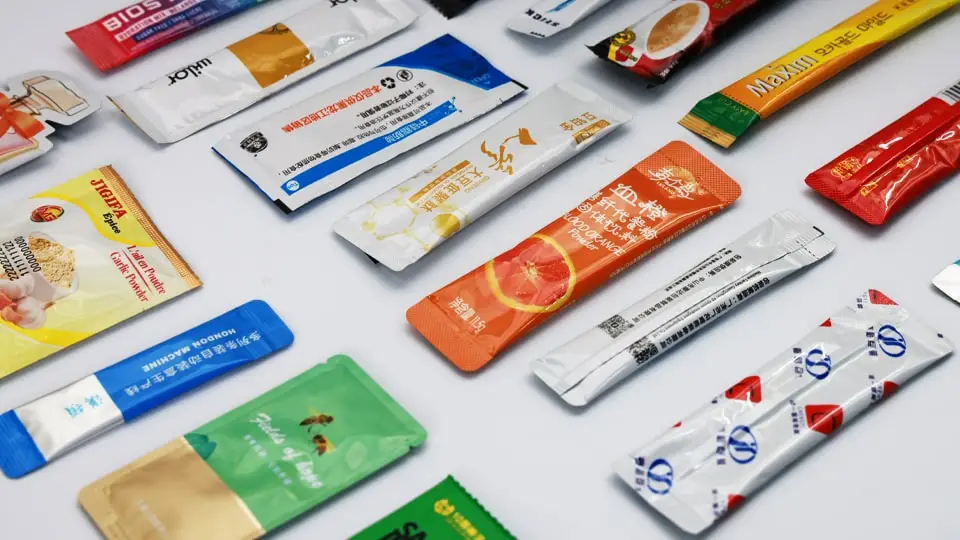
에이 향낭 is a small, sealed pouch used to hold a single portion of product. Commonly made of multi-layer film (플라스틱, 박, or paper), a sachet is folded and sealed on three or four sides to create a tiny package. The name comes from the French word 향낭 meaning “small bag”. Sachets are lightweight and portable, shielding their contents from air and moisture. Think of the ketchup packet next to your fries or the sugar portion for your coffee – those are sachets. You’ll find sachets in foods (spices, 조미료, 인스턴트 코피), personal care (샴푸, 크림, wipes), and pharmaceuticals (single-dose medications or ointments). By providing a hygienic, single-use serving, sachet packs make it easy to transport and use products on the go.
Sachets come in several styles to suit different products and uses. Common formats include:

Each style is engineered for certain contents. 예를 들어, 평평한 sachets maximize printed area for branding, while pillow sachets handle extra liquid volume. Modern packaging lines can adjust the machine settings to produce any of these sachet types efficiently.
Sachets offer several advantages that make them a smart choice for many products and markets:
요약, sachets balance functionality and convenience. They let you give customers exactly what they need – and nothing more – in a durable little package.
Sachets are often compared to stick packs because both are small flexible packets, but they have key differences:

예를 들어, if you need to portion a viscous liquid or jam, a gusseted or flat sachet is usually the better choice. But if your product is a dry powder and you want maximum throughput, a stick pack may win on efficiency. 실제로, many manufacturers offer machines that can do both by swapping films or settings.
Sachets are used across many industries:
Every time you see a tiny single-dose pack, it’s likely a sachet. Their convenience makes them popular for sample marketing and for products where single-use is important for hygiene or dosing.
Producing sachets at scale requires specialized machinery. 현대의 sachet packaging machines (often a type of form-fill-seal machine) automate the entire process:
By combining these systems, a sachet packaging line can handle virtually any product. 예를 들어, a vertical sachet machine might use a pump filler for ketchup or a screw filler for powdered milk – it’s all integrated.
[jl_youtube src=”https://www.youtube.com/embed/BT5R-r2Ean4″]
At JinLu Packing, we manufacture high-speed sachet packing machines designed for pharmaceutical and food industries. 예를 들어, 우리의 JL-VP series vertical form-fill-seal machines use servo motors and PLC controls to achieve precise and efficient operation. These multi-lane sachet packing machines can run up to 40 bags per lane per minute with an accuracy of ±0.02 g. They handle powders, 과립, 액체, and gels with interchangeable feeding units. Operators can adjust bag length, sealing temperature, and timing at the push of a button. Features like flat cutting or tear-notches are all built-in for easy opening. 요컨대, a modern sachet machine like ours automates the entire packaging flow, ensuring consistent quality for every sachet.

One major challenge with sachets is environmental impact. Traditional sachets use multi-layer laminates (예를 들어. PET/Aluminum/PE) that are excellent at preserving contents but are difficult to recycle. Once used, these packets often end up in landfills because the layers can’t be separated easily. Awareness of this issue is growing in the packaging industry.
To address it, manufacturers are innovating in eco-friendly sachets: – Mono-Material Sachets: These are made entirely from one recyclable plastic (like all-PE or all-PP). They aim to combine the needed barrier properties with recyclability. Research is re-engineering these plastics to match the protection of laminates. – Biodegradable/Compostable Materials: Some sachets now use plant-based films (such as PLA or PVOH). These can break down under industrial composting conditions. They offer a greener option for short-term use items. – Material Reduction: Simply making sachets smaller or using thinner film also helps. Moving some products to formats like stick packs (which use less film) is another approach.
The future of sachet packaging will likely blend convenience with sustainability. Watch for recyclable sachets 그리고 smart packaging designs. 동시에, advanced machines are being developed to handle these new materials without slowing production.
Sachets may seem simple, but they’re a powerful packaging solution. They deliver precise, portable portions across industries – from ketchup and coffee to creams and pills. Understanding “what is a sachet” helps suppliers and manufacturers choose the right packaging format. 현대의 sachet packaging machines (like JinLu’s) make it easy to produce these packets at high speed with consistent quality.
By combining engineering expertise and quality materials, sachets continue to enable convenient and safe single-use products. Whether you need to package medicine doses or trial-size cosmetics, sachet packs offer flexibility and efficiency. To learn more about implementing sachet packaging in your production line, explore the advanced solutions from JinLu Packing – your partner in sachet machine technology.
A sachet is a small, sealed flexible pouch (made of film, 박, or laminate) designed to hold a small, single-serve portion of product. It is typically sealed on three or four sides, forming a compact, lightweight package that protects contents from air, 수분, 그리고 오염.
Sachets are highly versatile. They can package powders (예를 들어. 인스턴트 코피, spices), 과립 (예를 들어. 설탕, supplement beads), 액체 (예를 들어. 소스, 샴푸, 로션), gels or creams (예를 들어. 연고, cosmetic creams), and sometimes small solid items. This makes them suitable for industries such as food & beverage, cosmetics/personal care, pharmaceuticals/healthcare, household chemicals, and even some industrial applications.
주요 혜택은 다음과 같습니다: portability and convenience (가벼운 중량, easy to carry), precise portion control (single-serve or fixed dose), extended shelf life (due to barrier films protecting against air, 수분, 그리고 빛), 비용 효율성 (less material and lower shipping/storage costs compared to rigid packaging), and flexibility for various product types (가루, 액체, 크림, 등.).
Common sachet formats include 3-side sealed sachets, 4-side sealed sachets (flat or pillow-style), and sometimes back-seal or center-seal variants. The choice depends on product type, desired appearance, sealing integrity, and industry requirements (예를 들어. 음식, 화장품, pharmaceuticals).
A sachet packaging machine (often a form-fill-seal machine) typically works in a continuous process: a roll of flexible film is fed into the machine → the film is formed into pouches → the product (가루, 액체, 과립, 등.) is filled into each pouch → the pouch is sealed and cut to produce individual sachets. This automation enables high-speed, 일관된, hygienic production.
Depending on the product being packed: powder/granules use auger fillers or vibratory feeders; free-flowing liquids use piston or pump fillers; viscous liquids, 젤, or creams may need specialized nozzles or viscous-product fillers. Many modern sachet machines allow switching filling mechanisms to accommodate different materials.
예. Sachet packaging machines (especially vertical form-fill-seal types) are widely used for large-scale production because they automate forming, 충전재, sealing and cutting — delivering consistent output, reducing labor, and increasing throughput.
Some limitations include environmental concerns (many sachets are made with multi-layer laminates that are hard to recycle), limited volume per unit (not ideal for large-volume needs), and potential waste (single-use sachets add to packaging waste) — especially if not using recyclable/biodegradable films.
Consider your product type (가루, 액체, 젤라틴, 과립), required output speed (small batch vs. mass production), film/material type (laminate, barrier film, 등.), flexibility for multiple SKUs (if you handle different products), 밀봉 & hygiene requirements (especially for food or pharma), and overall cost vs benefit (machine investment, film cost, 생산 효율성).
Sachets are used far beyond food and cosmetics. They are common in pharmaceuticals, household chemicals (세제, cleaners), agricultural products (fertilizers, seeds), industrial materials (약, 윤활제), and other specialized sectors. Their versatility and format flexibility make them useful for many kinds of products that require portioned, sealed packaging.
자동 정제 카운터 기계의 필수 이점을 발견하십시오. 성취하다 99.99% 정확성, GMP 보장