
- Macchine
- Competenza
- Risorse
- Certificati
- Di
- Contatto
- Macchine
- Competenza
- Risorse
- Certificati
- Di
- Contatto
Capsule (pill shells) come in many shapes and colors, but the shell material can be very different. In the pharmaceutical and nutraceutical industries, capsule di gelatina (made from animal collagen) E HPMC capsules (vegetarian plant-based) are the two most common empty shell types. Each has pros and cons. Per esempio, industry forecasts show that combined global sales of gelatin and vegetarian capsule shells will more than double from about $2.96 billion in 2024 A $6.38 miliardi di 2034, reflecting booming demand for supplements and medicines. In termini pratici, choosing between a gelatin capsule and an HPMC (vegetariano) capsule affects product stability, costo, and customer appeal. In questa guida, we’ll break down how they differ in material, performance, e utilizzare, in plain language suitable for buyers and engineers.
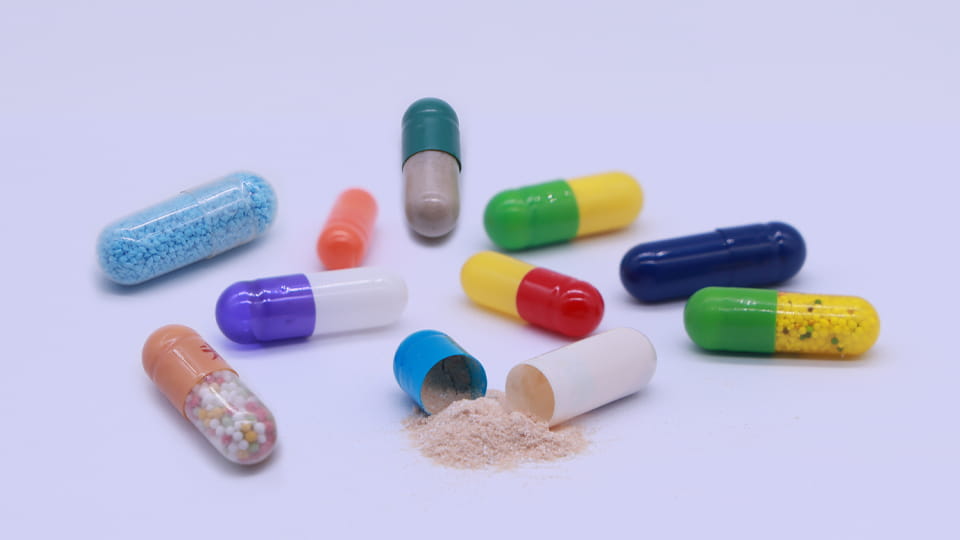
Gelatin capsules are the classic, time-tested choice. They are made from animal collagen (usually from bovine or porcine sources). Gelatin is a completely natural protein, generally recognized as safe (GRAS) by regulators. Because gelatin is widely used, the technology for making gelatin shells is mature and relatively inexpensive. Per esempio, gelatin capsules cost roughly 30% less to produce than other types. They also dissolve quickly: a gelatin shell will melt in stomach acid within minutes, ensuring the drug or supplement inside releases rapidly. Many medicines rely on this immediate release. Gelatin shells are also very versatile – they can be made in almost any color or size, and flavors or coatings can be added to mask unpleasant tastes. Come osserva un blog di settore, gelatin capsules are the “most common type of capsule used in the pharmaceutical industry,” prized for their flexibility.
There are two main styles of gelatin capsules: hard gelatin capsules (two-piece shells for powders/pills) E soft gelatin capsules or softgels (one-piece shells filled with liquid or oil). Hard-gel capsules are typical “pill capsules” that you open, riempire, and close – they handle dry or solid ingredients. Capsule morbide (made of gelatin with a plasticizer like glycerine) enclose liquid formulations (per esempio. olio di pesce, estratti di erbe). Softgels are popular because studies show they can improve bioavailability of oily or poorly soluble ingredients. Insomma, if your product is an oil or liquid that needs quick uptake, a gelatin softgel often works best. (You’ll often hear “gelatin softgel capsules” or “soft gelatin capsules” in manufacturing – these all refer to the liquid-filled gelatin shells.)
Aside from composition and use-cases, gelatin capsules have some downsides. They contain animal protein, so they aren’t suitable for strict vegetarians/vegans (or any consumers avoiding pork/beef) unless certified. They also hold more moisture (about 12–15% water) and can become brittle if stored in very dry or very humid conditions. In very humid climates, gelatin shells might warp or stick. Inoltre, gelatin may cross-link over time with certain ingredients (like aldehydes or tannins), which can slow dissolution. On the positive side, gelatin is allergen-free for most people (no gluten, latticini, ecc.) and doesn’t contain GMOs. Its long history means regulators and manufacturers are extremely familiar with it, and it’s approved worldwide.
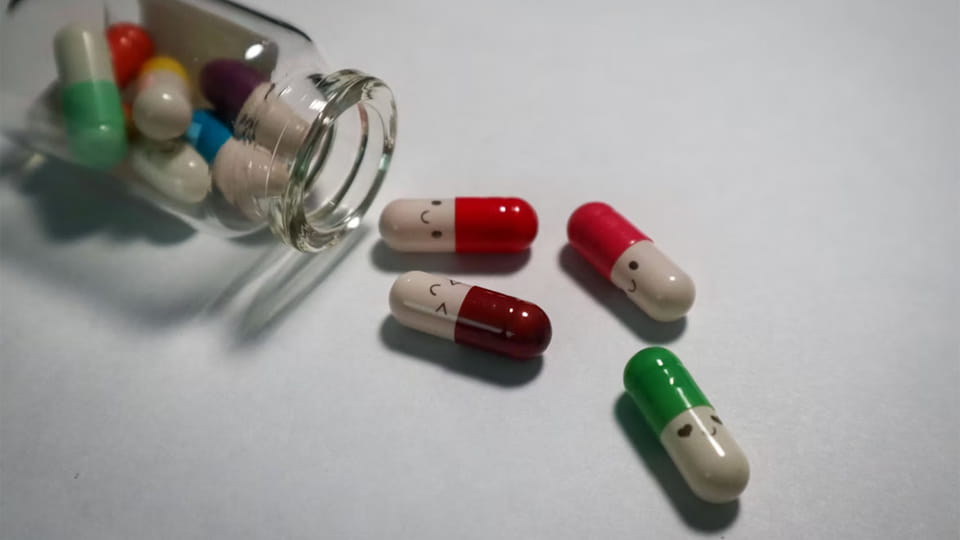
Al contrario, HPMC capsules (also called vegetarian or hypromellose capsules) are made from plant-derived cellulose. HPMC stands for hydroxypropyl methylcellulose, a chemically modified cellulose polymer. It’s a 100% plant-based material (often from pine trees or cotton) so HPMC capsules are completely vegan-friendly. They contain no animal ingredients, no GMOs, and no common allergens, making them ideal for consumers on vegan, vegetariano, Kosher or Halal diets. Infatti, all HPMC capsules are automatically Halal/Kosher certified (unlike gelatin, which only is if specially sourced). This makes HPMC popular in markets where “clean label” and ethical sourcing matter.
In terms of feel and performance, HPMC shells are similar to hard-gelatin shells but with some key differences. They typically have a very low moisture content (around 4–6%), which means they resist humidity and won’t easily warp or stick. HPMC capsules are thus much more stable in hot or humid environments. Per esempio, researchers note that HPMC shells “resist stringent heat and humidity”, and maintain the potency of moisture-sensitive ingredients. Because of this stability, HPMC is widely used for hygroscopic formulations (like probiotics, vitamine, enzimi) and oils that would degrade in a wet gelatin shell. Industry tests show HPMC capsules do a better job protecting live bacteria and sensitive actives in harsh conditions.
Another technical point is how the shell dissolves: HPMC capsules dissolve slightly slower than gelatin ones. This isn’t a huge issue for most products, but it means HPMC is often chosen when a delayed or controlled release is acceptable (or even desired). Many manufacturers even add special coatings to HPMC capsules to make them enteric (acid-resistant) for intestinal release. In pratica, if you fill an HPMC capsule with a standard supplement powder, it will dissolve almost as quickly as a gelatin capsule – just usually a few minutes later.
Complessivamente, HPMC capsules offer a modern alternative: a plant-based pill capsule that meets today’s dietary and clean-label trends. Users find them easy to swallow, and they pose no risk of animal-borne contamination (no BSE/mad cow concerns). Il compromesso è il costo: HPMC is more expensive to produce (cellulose processing costs), and manufacturing conditions are more demanding. (HPMC solutions require very precise mixing and drying equipment.) But for many nutraceutical companies, the extra cost is worth it to market “natural” or “vegetarian” products.
Here’s a side-by-side look at the biggest contrasts between gelatin capsules (duro o morbido) and vegetarian HPMC capsules:
| Caratteristica | Capsule di gelatina | HPMC (Vegetariano) Capsule |
|---|---|---|
| Materiale di origine | Collagene animale (beef or pork). Bovine gelatin can be Kosher/Halal; pork gelatin is not. | Plant-derived cellulose (hypromellose). Fully vegan/vegetarian. |
| Capsule Form | Comes in difficile (two-piece shell) E softgel (pezzo unico) forme. Softgels are only made with gelatin. | Comes only in difficile (due pezzi) modulo; used for powders/solids. |
| Dietary Suitability | Not vegetarian/vegan (animal protein). Can meet Halal/Kosher only if using beef gelatin. | Vegan/vegetarian by design. Naturally Halal, Kosher, gluten-free, allergen-free. |
| Contenuto di umidità | Contains ~13–15% moisture. Shells become brittle if <10% or sticky if >65% RH. | Contains ~4–6% moisture. Remains pliable even down to 1% umidità; tolerates 35–70% RH easily. |
| Stabilità & Magazzinaggio | Stable under controlled conditions. Sensitive to extreme humidity: gelatin shells can stick in heat or crack in dryness. Generally store at 15–25°C, 35–65% RH for ~5-year shelf life. | Highly stable. HPMC shells resist humidity swings and low humidity (no sticking or static). Store up to 15–30°C and 35–70% RH for ~5-year shelf life. |
| Disintegration | Dissolves quickly in stomach acid (fast release). Nota: gelatin can sometimes cross-link (with aldehydes/vitamins) and slow release. | Resistant to gastric acid (more neutral), so they can be used for delayed-release or enteric formulas. Engineered to dissolve reliably in intestines when needed. |
| Additives Needed | Protein nature requires preservatives and careful sterilization (ethylene oxide) during production. | No added preservatives needed in manufacturing. Sterilization is simpler. |
| Production Cost | Costo inferiore (mature, high-volume process). | Costo più elevato (newer, lower-volume process). |
| Special Uses | Preferred for traditional and cost-sensitive products; required for softgel oils. | Preferred for vegan/halal products, moisture-sensitive or hygroscopic ingredients. |
Each of these points has real-world impact. Per esempio, capsule suppliers point out that gelatin capsules dissolve faster, making them ideal for quick-release drugs. Nel frattempo, HPMC’s low moisture makes it ideal for products like probiotics or omega oils that lose potency with humidity. In sintesi, gelatin tends to prioritize cost and tradition, while HPMC emphasizes stability and market trends.
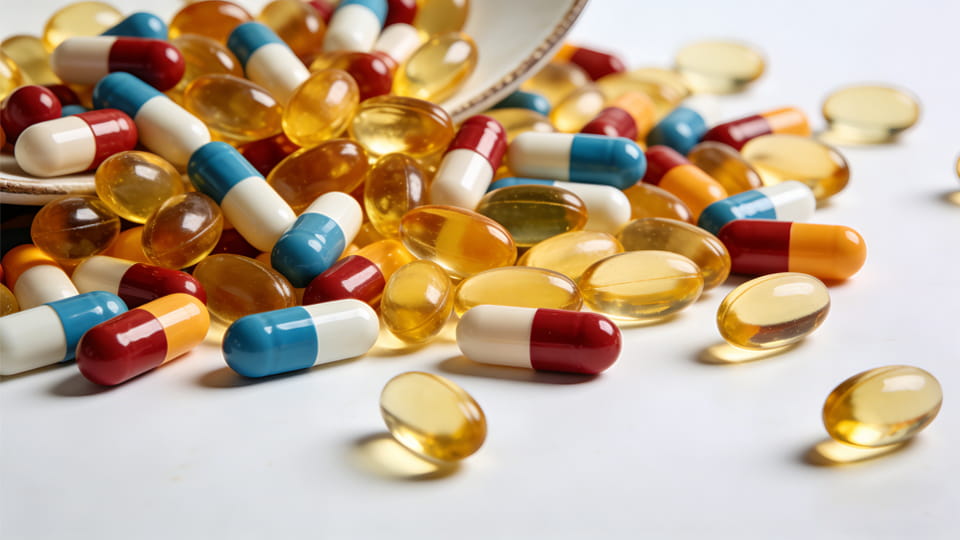
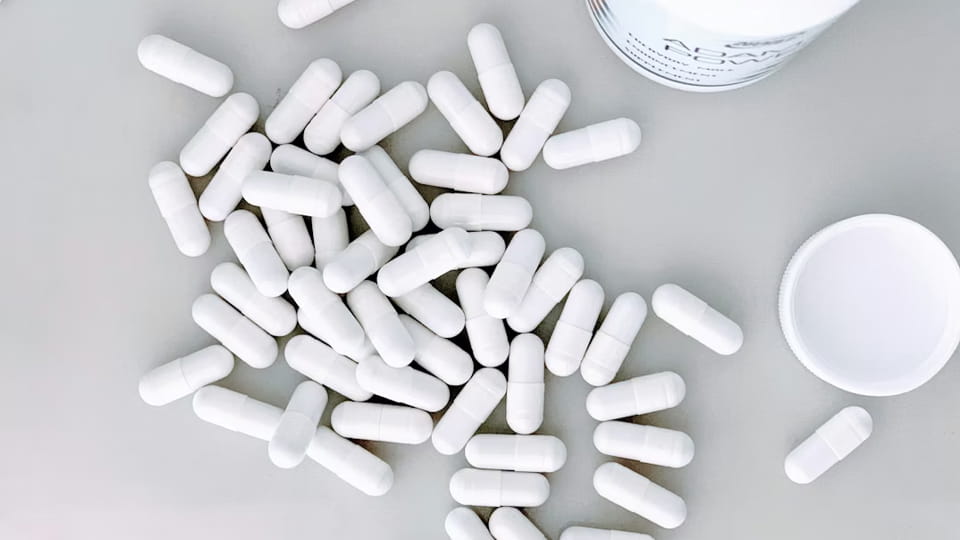
The photograph above shows hundreds of empty pill capsules ready for filling. Although these are red-and-white capsules (likely gelatin-based), note that HPMC capsules look almost identical in shape. Visivamente, you can’t tell a gelatin shell from an HPMC shell – both come in white, clear, or colored shells. The photo underscores why material knowledge is key: two capsules that look the same may behave very differently in production and use.
The “right” capsule depends on your product and market:
In sintesi, capsule di gelatina (dal collagene animale) are the established, cost-effective standard that dissolve quickly in the stomach. HPMC capsules (capsule vegetariane) are the newer, plant-based alternative prized for stability and dietary freedom. The main differences lie in source material, dietary compatibility, moisture stability, e tasso di dissoluzione. Gelatin is cheaper and ideal for fast-release formulations, while HPMC is hypoallergenic and better for moisture-sensitive or vegan products.
For an industry buyer or engineer, the takeaway is to match the capsule to the product: use gelatin when you need economy and speed, use HPMC when you need a “clean-label” or moisture-protective shell. Both capsule types are widely supported by regulatory agencies, so from a compliance standpoint either is fine as long as you declare the ingredients properly.
Whether you’re working with gelatin capsules, capsule di gelatina molle, o HPMC (vegetariano) capsule, choosing the right filling equipment makes all the difference in efficiency, precisione, and product quality.
A Imballaggio Jinlu, we specialize in high-precision macchine per il riempimento di capsule designed for a wide range of formulations — from powders and pellets to sensitive nutraceutical blends. Our machines are engineered for stable performance, funzionamento facile, and seamless switching between capsule types, helping you achieve higher throughput with minimal downtime.Explore our capsule filling solutions today and take your production capabilities to the next level.
TL;DR: Gelatin = animal-based, cheaper, fast-dissolve. HPMC = plant-based, stabile, slightly slower-dissolve. Choose gelatin for traditional immediate-release pills or softgels; choose HPMC for vegan, Halal/Kosher, or moisture-sensitive products.
A gelatin capsule is made from animal-derived collagen, di solito bovino o suino. Al contrario, an HPMC capsule (hydroxypropyl methylcellulose capsule) is made from plant cellulose, making it vegetarian and vegan friendly. The materials affect factors like dissolution rate, moisture stability, and dietary suitability.
NO. Gelatin capsules are derived from animal sources and are not inherently vegetarian or vegan. Some can be Halal or Kosher if specially certified, but they still originate from animal collagen.
Manufacturers may choose HPMC capsules because they are plant-based (suitable for vegan/vegetarian markets), have lower moisture content, resist humidity better, and are less prone to cross-linking than gelatin capsules.
SÌ. Gelatin capsules generally dissolve more quickly in stomach acid for fast release, while HPMC capsules dissolve slightly slower—a property that can be beneficial for controlled or delayed release formulations.
SÌ. HPMC capsules have lower moisture content and better resistance to humidity, making them more suitable for moisture-sensitive actives such as probiotics or certain vitamins.
SÌ. HPMC capsules are vegetarian, vegano, and typically acceptable under Halal and Kosher dietary guidelines because they do not contain animal derivatives.
Gelatin capsules tend to be cheaper due to mature production technology and abundant raw materials, while HPMC capsules generally cost more because of plant-based processing.
SÌ. Modern capsule fillers can process both hard gelatin and HPMC capsules with minor adjustments to parameters like humidity and temperature, making switching between materials practical in production lines.
SÌ. HPMC capsules resist heat and humidity better and maintain structural integrity under varied storage conditions. Gelatin capsules can absorb moisture and are more sensitive to environmental changes.
Gelatin capsules contain animal proteins; though most people tolerate them well, they may not be suitable for individuals with specific dietary restrictions or allergies related to animal products.
Riferimenti:
1.Comparative Evaluation of Gelatin and HPMC Inhalation Capsule Shells Exposed to Simulated Humidity Conditions — MDPI
2.Proprietà di assorbimento e desorbimento dell'umidità della gelatina, Capsule rigide HPMC e pullulan — ScienceDirect
3.Beyond the Capsule: HPMC vs Gelatin and the Innovation Shaping Supplement Manufacturing – famehealthlabs.com
4.Advantages of HPMC capsules over gelatin capsules – hgcaps.com