Pembentukan Dingin vs Thermoforming: Kemasan lepuh medis mana yang Tepat untuk Farmasi?
Pembentukan Dingin vs Thermoforming: Kemasan lepuh medis mana yang Tepat untuk Farmasi?
Agustus 26, 2026
Tidak ada komentar
Produk farmasi sering kali dikemas dalam kemasan melepuh untuk perlindungan dosis unit dan daya tarik simpan. Dalam kemasan melepuh, dua metode pembentukan utama adalah Thermoforming Dan pembentukan dingin. Thermoforming memanaskan jaringan plastik (seperti PVC atau PET) sampai lentur lalu divakum atau dipres ke dalam cetakan. Pembentukan dingin, sebaliknya, menggunakan stamping bertekanan tinggi pada laminasi berbahan dasar aluminium multi-lapis pada suhu kamar. Setiap metode menggunakan bahan yang berbeda dan memberikan hasil yang sangat berbeda: lepuh thermoformed transparan dan berbiaya lebih rendah, saat dingin terbentuk (Alu-Alu) lepuh tidak tembus cahaya tetapi menawarkan perlindungan penghalang yang jauh lebih tinggi. Panduan ini menguraikan cara kerjanya, perbedaan utama (penghalang, biaya, kecepatan, dll.), dan cara memilih metode dan mesin yang tepat untuk produk Anda.
Apa itu Thermoforming?
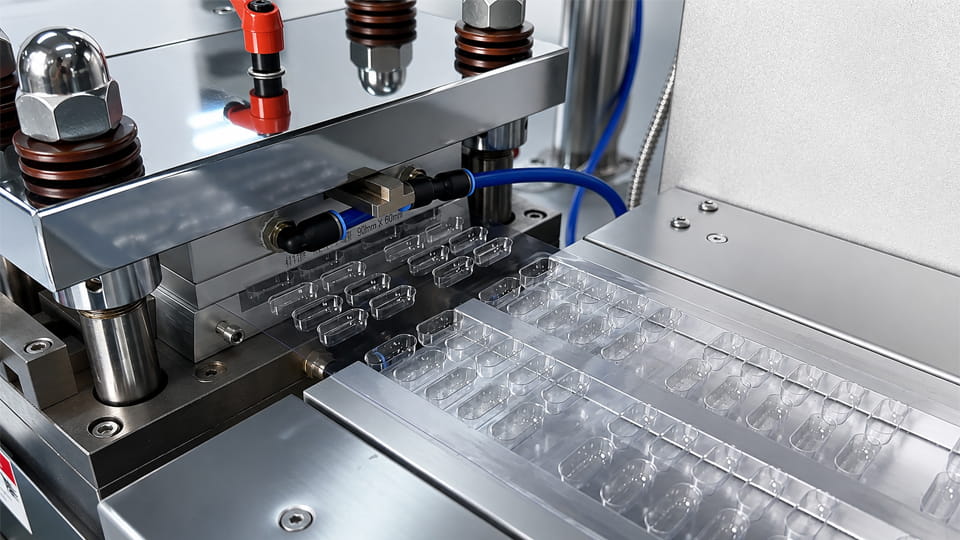
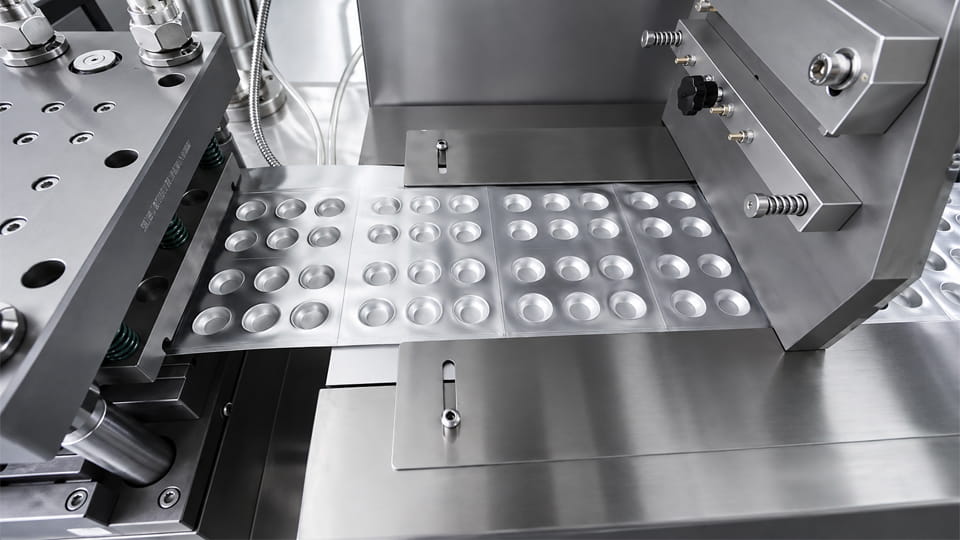
Thermoforming kemasan melepuh memanaskan lembaran plastik hingga melunak dan kemudian membentuknya menjadi rongga-rongga dengan cara vakum atau tekanan. Unit yang dikontrol suhu (seringkali 150–180°C) memanaskan PVC atau film termoplastik lainnya, yang kemudian dibentuk di atas cetakan. Setelah film mendingin, rongga yang terbentuk diisi dengan produk dan ditutup dengan kertas timah atau penutup kertas.
Proses ini sangat mudah beradaptasi: film pembentuk umum termasuk PVC, PELIHARAAN, hal, atau ko-polimer, terkadang dengan lapisan penghalang (PVDC, COC, PCTFE, dll.). Thermoforming menawarkan fleksibilitas desain yang tinggi – bentuk lepuh bisa dalam atau rumit (menggunakan bantuan plug) tanpa mengubah bahan dasarnya. Ini juga hemat biaya untuk pengoperasian dalam jumlah besar: film termoplastik tidak mahal dan mesin bekerja dengan kecepatan tinggi. Keuntungan utamanya adalah keterjangkauan dan keluaran – seperti yang dicatat oleh salah satu sumber, “keuntungan utama PVC adalah biaya rendah dan kemudahan thermoforming”.
Keuntungan Thermoforming
Biaya bahan lebih rendah: Film plastik (bahkan dengan lapisan penghalang) jauh lebih murah dibandingkan foil logam berlapis-lapis. Hal ini membuat biaya per unit lebih rendah untuk produksi besar.
Kecepatan lebih tinggi: Mesin thermoforming biasanya berputar lebih cepat. Misalnya, garis lepuh thermoforming modern dapat berjalan dengan baik 150 paket/mnt, lebih tinggi dari kecepatan bentuk dingin pada umumnya.
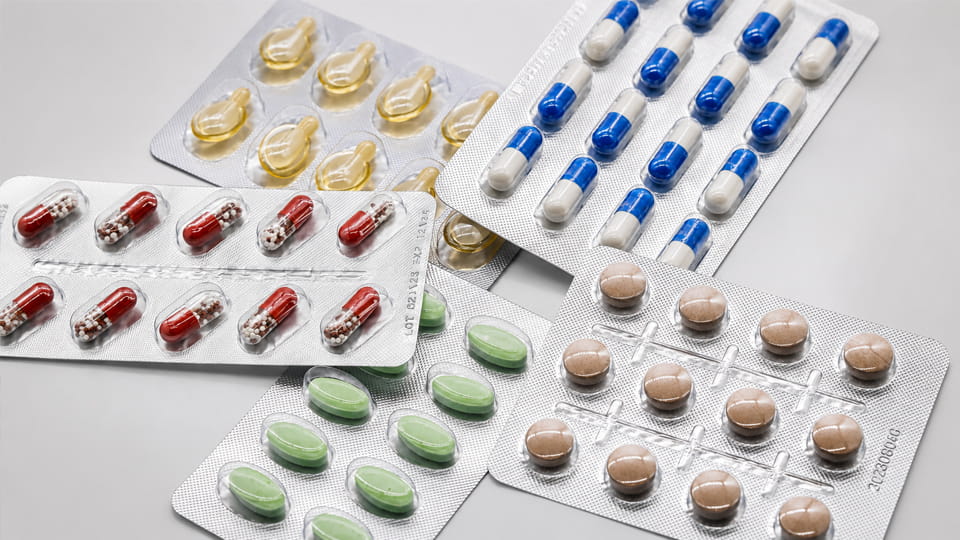
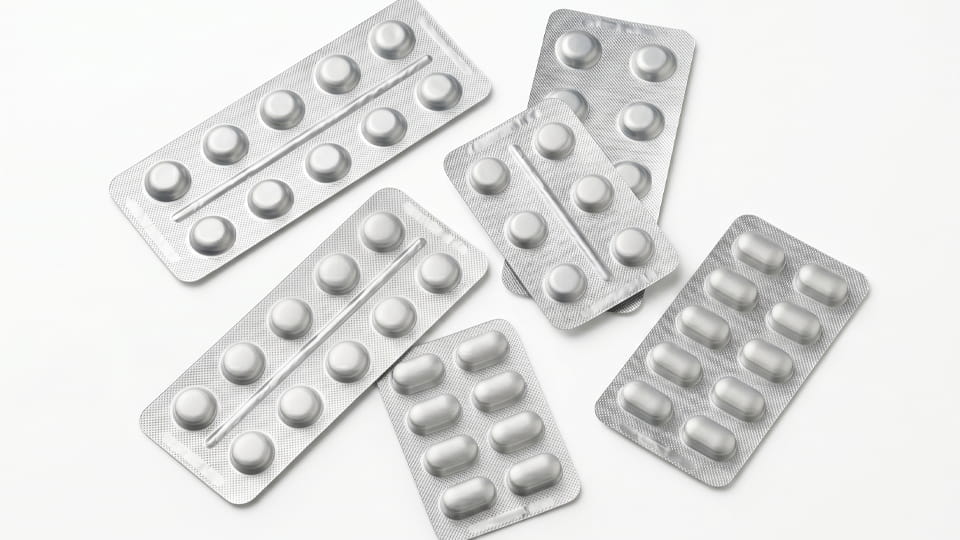
Visibilitas produk: Paket PVC/PET bening memungkinkan pengguna melihat pil atau tablet di dalamnya. Transparansi ini bagus untuk daya tarik konsumen (misalnya. vitamin eceran) dan untuk inspeksi visual.
Fleksibilitas desain: Bentuk rongga yang rumit atau tarikan dalam dapat diperoleh dengan film yang dipanaskan (sering dibantu dengan vakum atau bantuan colokan). Ini juga terintegrasi dengan mudah dengan proses pengisian cepat dan penyegelan berkecepatan tinggi.
Keterbatasan Thermoforming
Perlindungan penghalang: Film PVC polos hanya menawarkan a sedang penghalang kelembaban dan oksigen. PVC yang tidak dilapisi memiliki tingkat transmisi uap air yang tinggi (misalnya. ~3g/m²·hari pada 90% RH). Untuk meningkatkan umur simpan, paket termo harus menggunakan film multi-lapis yang mahal (misalnya. PVC/PVDC atau laminasi PVC/PCTFE) atau film yang lebih tebal. Meski begitu, penghalang biasanya tetap berada di bawah apa yang dicapai aluminium foil.
Sensitivitas cahaya: Film bening memungkinkan sinar UV dan cahaya tampak masuk. Itu berarti kemasan melepuh thermoformed bukan ideal untuk obat-obatan yang sensitif terhadap cahaya – obat ini hampir tidak memberikan perlindungan terhadap sinar UV kecuali Anda menambahkan bahan tambahan pemblokir UV.
Umur simpan terbatas: Untuk API yang sangat sensitif terhadap kelembapan atau reaktif, paket thermoformed (bahkan dengan pelapis) sering memberikan stabilitas yang lebih pendek. Catatan Wikipedia: “kerugiannya [dari PVC] adalah penghalang yang buruk terhadap masuknya uap air dan oksigen”.
Biaya perkakas yang kaku: Sedangkan mesin umumnya lebih murah, thermoforming penarikan dalam mungkin memerlukan cetakan presisi dan cetakan bantuan sumbat, menambah biaya perkakas.
Apa Itu Pembentukan Dingin?
Pembentukan dingin (sering dipanggil Alu-Alu kemasan lecet) menggunakan film berbasis aluminium multi-layer sebagai web pembentuk. Laminasi bentuk dingin yang khas adalah PVC/Aluminium/Poliamida, dengan lapisan aluminium di bagian luar. Dalam proses ini, filmnya adalah bukan dipanaskan. Alih-alih, pukulan bertekanan tinggi yang kuat mencap foil ke dalam rongga pada suhu kamar. Aluminium meregang tetapi berubah bentuk secara plastis, dan itu menahan bentuk rongga setelah stempel dilepas. Setiap rongga yang terisi kemudian ditutup (sering kali dengan penutup kertas berbahan aluminium atau foil).
Karena pembentukan dingin tidak memanaskan material, itu menghindari tekanan termal pada obat-obatan sensitif. Hasilnya adalah lepuh yang buram sepenuhnya (tidak melihat isinya) tetapi menyediakan bagus sekali penghalang. Aluminium foil menghentikan hampir semua kelembapan, oksigen, dan cahaya dari mencapai obat, yang dapat sangat memperpanjang umur simpan.
Keuntungan Pembentukan Dingin
Penghalang unggul: Lapisan aluminium membuat lepuh hampir kedap air. Seperti yang dicatat Wikipedia: “Keuntungan utama dari lepuh foil bentuk dingin adalah penggunaan aluminium memberikan penghalang yang hampir sempurna terhadap air dan oksigen, memungkinkan perpanjangan tanggal kedaluwarsa produk”. Inilah sebabnya mengapa lepuh Alu-Alu digunakan untuk higroskopis, sensitif terhadap oksigen, atau obat-obatan yang sensitif terhadap cahaya.
Perlindungan kelembaban dan cahaya: Lepuh yang terbentuk dingin menjaga kelembapan, oksigen Dan padam. Misalnya, foil multi-lapis seluruhnya menghalangi sinar UV/tampak dan membentuk segel kedap udara di sekitar setiap dosis. Hal ini mengunci potensi obat yang cepat terdegradasi di udara lembab atau cahaya terang.
Fleksibilitas bahan: Jaring pembentuk (PVC/Alu/PA) masih memiliki sisi PVC, yang menjaga bentuk saku dan memberikan elastisitas, sedangkan aluminium memberikan perlindungan. Hal ini membuat rongga menjadi kuat dan dangkal, yang seringkali cukup untuk sebagian besar tablet dan kapsul.
Keterbatasan Pembentukan Dingin
Biaya bahan lebih tinggi: Laminasi aluminium jauh lebih mahal dibandingkan film plastik. Foil memiliki banyak lapisan (misalnya. 9–15μm Al ditambah 80–100μm lapisan lainnya) dan komposisi khusus, jadi biaya bahan baku per bungkusnya tinggi. Sebuah sumber secara khusus mencatat “biaya untuk kemasan blister bentuk dingin cenderung lebih tinggi dibandingkan thermoforming”.
Kecepatan lebih lambat: Karena proses stamping dan kebutuhan untuk menangani foil (yang tidak bisa diregangkan seperti plastik), mesin bentuk dingin bekerja pada kecepatan lebih rendah. Seperti yang ditunjukkan oleh salah satu ringkasan, lepuh foil bentuk dingin mengalami “kecepatan produksi yang lebih lambat dibandingkan dengan thermoforming”.
Tidak ada visibilitas: Kedua sisi lepuh terbuat dari aluminium (atau bagian atasnya alumunium), sehingga pengguna tidak dapat melihat produk sama sekali. Hal ini membatasi penggunaan produk yang tidak memerlukan konfirmasi visual di rak. (Ini juga berarti paket kepatuhan harus memiliki label cetak yang baik, karena Anda tidak dapat memeriksa isinya secara visual.)
Keausan mesin: Alat dan cetakan pembentuk dingin membutuhkan beban yang berat, jadi mesin harus sangat kuat. Punch dan counter-die harus dibuat dengan presisi dan seringkali membutuhkan baja yang lebih tebal, menambahkan pemeliharaan.
Ukuran paket lebih besar: Karena aluminium tidak dapat meregang sebanyak plastik, rongga yang terbentuk dingin biasanya lebih dangkal atau memiliki batas sekeliling yang lebih besar. Wikipedia mencatat paket Alu-Alu biasanya berakhir “ukuran kartu blister lebih besar” dan dinding saku yang tidak terlalu curam.
Pembentukan Dingin vs Thermoforming: Perbedaan utama
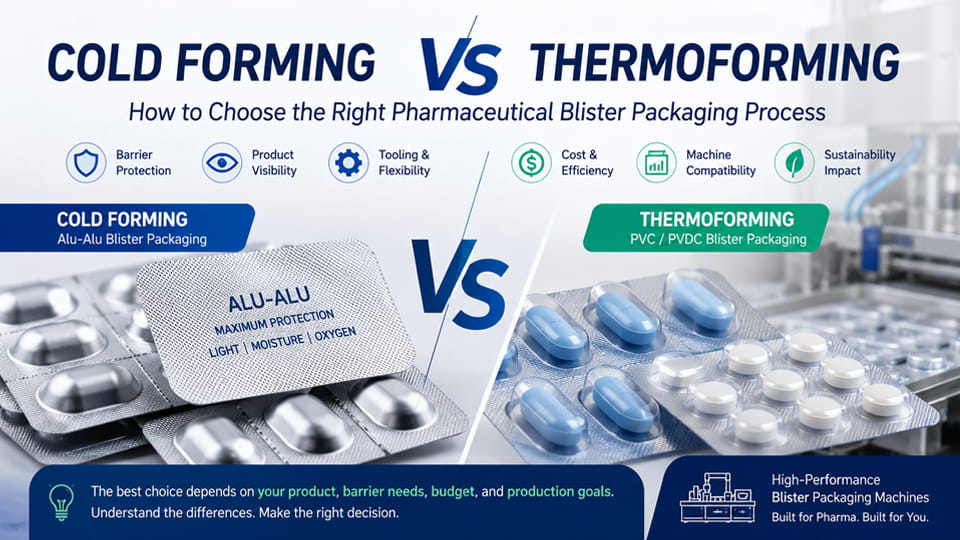
Tabel di bawah ini menyoroti perbedaan utama antara kemasan melepuh thermoforming dan cold forming:
Faktor
Thermoforming
Pembentukan dingin (Alu-Alu)
Proses pembentukan
Panaskan film plastik sampai lunak, kemudian vakum/bentuk tekanan ke dalam rongga.
Sedang (PVC sendiri bersifat permeabel; Film berlapis PVDC meningkatkan penghalang).
Luar biasa – aluminium foil hampir kedap air dan oksigen.
Perlindungan cahaya
Terbatas – plastik bening tidak memberikan penghalang UV/cahaya (kecuali pigmen ditambahkan).
Lengkap – foil buram menghalangi semua cahaya.
Visibilitas
Transparan – pelanggan dapat melihat produk.
Buram – produk tersembunyi di dalam.
Kecepatan produksi
Umumnya lebih tinggi (jalur output tinggi).
Umumnya lebih lambat (stamping mekanis membatasi kecepatan).
Bahan & biaya mesin
Lebih rendah – film plastik lebih murah, mesin lebih sederhana.
Lebih tinggi – laminasi aluminium lebih mahal, dan mesin memerlukan pengepresan yang kuat.
Kasus penggunaan yang umum
Obat OTC bervolume tinggi, vitamin, tablet standar; ketika visibilitas & masalah biaya.
kelembaban- atau obat peka cahaya (antibiotik, biologis), umur simpan yang lama diperlukan.
Masing-masing faktor di atas mencerminkan trade-off antara kedua metode tersebut. Thermoforming cenderung menggunakan bahan yang lebih murah dan bekerja lebih cepat, sedangkan pembentukan dingin menggunakan lapisan logam mahal untuk perlindungan tingkat atas.
Perbandingan Terperinci: 8 Faktor Kunci
Untuk meringkas, berikut adalah delapan faktor utama yang membedakan thermoforming dan cold forming:
Metode Pembentukan:
Thermoforming: Lembaran plastik adalah dipanaskan, kemudian dibentuk vakum/tekanan di atas cetakan.
Pembentukan dingin: Laminasi logam adalah dicap dingin dengan tekanan tinggi; aluminium memegang bentuknya.
Bahan:
Thermoforming: Menggunakan film seperti PVC, PELIHARAAN, hal (seringkali dengan lapisan penghalang PVDC/COC/COP). Misalnya, banyak garis lepuh menggunakan PVC non-plastik (RPVC) sebagai jaring pembentuk.
Pembentukan dingin: Menggunakan sebuah laminasi berbahan dasar aluminium (biasanya PVC/aluminium/nilon). “Foil bentuk dingin” ini dirancang khusus untuk pembentukan penghalang tinggi.
kelembaban & Penghalang Gas:
Thermoforming: Film PVC yang telanjang memiliki penghalang yang buruk (WVTR ~3g/m²·hari, OTR ~20mL/m²·hari). Film PVC multi-lapis (dilapisi dengan PVDC atau diekstrusi bersama dengan PCTFE/COC) dapat memperbaiki hal ini, Tetapi tidak pernah sampai setinggi kertas logam. Wikipedia mencatat kelemahan PVC adalah “penghalang yang buruk terhadap kelembapan dan oksigen”.
Pembentukan dingin:Bagus sekali. Aluminium foil menciptakan penghalang yang hampir kedap air. Seperti disebutkan, lepuh yang terbentuk dingin memberikan a “hampir penghalang penuh untuk air dan oksigen”, sangat memperpanjang kadaluarsa.
Perlindungan Cahaya:
Thermoforming: Film bening membiarkan semua cahaya masuk (kecuali Anda menggunakan film berpigmen khusus atau menambahkan bahan pemblokir UV). Inilah sebabnya mengapa lepuh PVC bening terjadi bukan direkomendasikan untuk obat peka cahaya.
Thermoforming: Biasanya lebih tinggi. Karena film plastik cepat terumpan dan siklus pembentukannya cepat, jalur ini seringkali melebihi 150–200 bungkus/menit (pada mesin putar kelas atas).
Pembentukan dingin: Umumnya lebih lambat. Pengecapan dan penanganan foil membatasi keluaran. Bahkan mesin cold-form teratas pun biasanya berada di bawah 100 bungkus/menit untuk desain Alu-Alu yang dalam.
Biaya (Bahan & Peralatan):
Thermoforming: Film mentah plastik harganya jauh lebih murah per meter linier dibandingkan foil 3 lapis. Mesin lebih sederhana (hanya pelat pemanas dan stasiun vakum), jadi biaya mesin awal umumnya lebih rendah. Sebuah sumber merangkum, “Keunggulan utama” PVC adalah biayanya yang rendah dan mudah dibentuk.
Pembentukan dingin: Lebih tinggi. Kertas khusus itu mahal, dan mesin harus lebih besar. Catatan studi “Peralatan pengemasan lepuh bentuk dingin… sangat cocok untuk produk yang sensitif terhadap kelembapan,” tapi dengan biaya premium.
Visibilitas Produk:
Thermoforming: Ya – produk terlihat melalui plastik bening. Baik untuk tampilan ritel atau pemeriksaan dosis yang mudah.
Pembentukan dingin: Tidak – sepenuhnya buram.
Aplikasi Khas:
Thermoforming: Tablet/kapsul OTC dan resep standar yang tidak memerlukan penghalang tinggi (misalnya. obat penghilang rasa sakit, vitamin). Obat-obatan massal, suplemen, atau produk apa pun yang memerlukan jalur cepat berkecepatan tinggi. Juga digunakan untuk kemasan lepuh medis peralatan yang tidak steril.
Pembentukan dingin: Obat premium atau kritis (misalnya. antibiotik, API sensitif, enzim yang dikemas vakum) dan produk apa pun yang memerlukan perlindungan maksimum terhadap kelembapan/cahaya dan umur simpan yang lama. Sering terlihat di PTP (push-through) paket untuk dosis yang sangat stabil, atau untuk produk yang didistribusikan secara global dengan iklim yang bervariasi.
Perbedaan-perbedaan ini menunjukkan hal itu Thermoforming unggul dalam kecepatan, biaya dan visibilitas, ketika pembentukan dingin unggul dalam perlindungan dan stabilitas. Dalam praktiknya, desainer mempertimbangkan faktor-faktor ini terhadap persyaratan produk.
Memilih Metode yang Tepat: Panduan bagi Pembeli Mesin Farmasi
Saat memilih antara cold forming dan thermoforming (dan yang sesuai mesin pengemas melepuh), bertanya:
Kebutuhan Stabilitas Produk: Apakah kamu API atau formulasi yang sangat sensitif terhadap kelembaban, oksigen atau cahaya? Jika Ya, terbentuk dingin (Alu-Alu) lepuh biasanya diperlukan. Jika produk Anda relatif stabil (misalnya. tablet standar), thermoforming mungkin sudah cukup.
Umur Simpan yang Diinginkan: Apakah produk memerlukan masa kadaluwarsa yang diperpanjang (18+ bulan)? Kemasan bentuk dingin dapat memperpanjang umur simpan secara signifikan karena daya tahannya yang unggul. Untuk umur simpan yang pendek (<1 tahun) produk, Paket PVC seringkali dapat diterima.
Volume dan Kecepatan Produksi: Apakah Anda memerlukan throughput yang sangat tinggi? Garis thermoforming umumnya berjalan lebih cepat, jadi cocok untuk produksi skala besar. Untuk obat-obatan yang sangat berharga dalam jumlah kecil, metode bentuk dingin yang lebih lambat mungkin dapat diterima.
Kendala Biaya: Jika anggaran ketat dan persyaratan penghalangnya moderat, thermoforming lebih ekonomis. Misalnya, Jinlupacking mencatat bahwa “biaya pembuatan kemasan blister dalam bentuk dingin cenderung lebih tinggi daripada thermoforming”. Pertimbangkan biaya material dan peralatan dalam analisis TCO Anda.
Peraturan / Kebutuhan Pasar: Beberapa pasar atau formulasi mungkin memerlukan kemasan tertentu. Misalnya, spesifikasi peraturan mungkin mewajibkan foil Alu-Alu untuk antibiotik tertentu, atau pemasaran mungkin lebih menyukai kemasan tembus pandang untuk vitamin bermerek.
Kompatibilitas Mesin: Pertimbangkan apakah Anda menginginkan satu mesin untuk kedua metode atau jalur terpisah. Beberapa mesin modern (seperti milik Jinlu Mesin Blister DPP-180PRO) dapat dikonfigurasi untuk termo mana pun- atau pembentuk dingin, tetapi banyak perusahaan menggunakan jalur khusus untuk mengoptimalkan setiap proses.
Mesin Blister DPP-180pro untuk Tablet Kapsul
Aturan praktis yang singkat: Gunakan thermoforming untuk obat-obatan standar yang mengutamakan visibilitas dan biaya kepada pelanggan; gunakan cold forming untuk kebutuhan penghalang tinggi di mana perlindungan adalah hal terpenting.
Kapan Memilih Thermoforming
Produk Anda tidak sangat kelembaban- atau sensitif terhadap cahaya (tablet OTC dasar, vitamin).
Kecepatan produksi yang tinggi dan biaya yang rendah menjadi prioritas.
Anda ingin kemasannya transparan agar produknya terlihat.
Umur simpan yang diharapkan relatif pendek atau sedang.
Anda berencana menggunakan film plastik standar (PVC, Dilapisi PVDC/PVDC, COC, dll.).
Mesin pengemas melepuh Anda disiapkan untuk stasiun pembentukan yang dipanaskan.
Kapan Memilih Pembentukan Dingin
Produk Anda adalah sangat kelembaban/sensitif oksigen atau peka cahaya (misalnya. tablet higroskopis, sterol, biologis tertentu).
Anda membutuhkan penghalang terbaik dan umur simpan terpanjang.
Anda memiliki jangka waktu yang lebih kecil atau bersedia menukar kecepatan demi perlindungan.
Anda dapat menerima kemasan buram (atau gunakan label tebal untuk membedakannya).
Anggaran memungkinkan biaya material yang lebih tinggi (laminasi alu-foil).
Mesin Anda (atau pemasok) mendukung proses bentuk dingin dengan cetakan logam yang kokoh.
Misalnya, banyak kemasan lepuh farmasi bentuk dingin yang diberi label “Alu-Alu” di kertas timah. Ini dipilih tepat pada waktunya memaksimalkan stabilitas obat adalah tujuannya.
Perbandingan Biaya
Biaya menjadi pertimbangan utama. Biaya bahan: film PVC (bahkan dengan lapisan PVDC) jauh lebih murah dibandingkan laminasi aluminium 3 lapis. Berdasarkan per unit, harga bahan kemasan thermoformed mungkin hanya beberapa sen, sedangkan paket foil Alu-Alu yang setara bisa kelipatannya. Salah satu sumber industri menegaskan hal itu “biaya untuk kemasan blister bentuk dingin cenderung lebih tinggi dibandingkan thermoforming”.
Biaya mesin dan OEE: Mesin thermoforming umumnya lebih sederhana (unit pemanas dan ruang vakum) dan seringkali lebih murah untuk dirawat. Mesin bentuk dingin membutuhkan pukulan yang berat dan terkadang pengumpanan ganda (untuk foil dalam dan luar), yang dapat meningkatkan biaya modal. Namun, jika pembentukan dingin mencegah kehilangan produk (misalnya. dari pembusukan), biaya dimuka yang lebih tinggi mungkin dapat dibenarkan. Selalu pertimbangkan total biaya kepemilikan, termasuk waktu henti, pemeliharaan, dan limbah material, bukan hanya kecepatan jalur.
Pemilihan Mesin dan Jalur Pengemasan
Pilihan Anda juga menentukan jalur pengemasan. Mesin pengemasan blister direkayasa untuk satu proses atau lainnya. A mesin melepuh thermoforming akan memiliki stasiun pemanas dan vakum; A mesin melepuh pembentuk dingin akan memiliki mesin press besar dan pengumpan foil. Beberapa mesin hybrid (sering kali dalam penelitian atau penggunaan skala rendah) dapat berganti mode, tetapi baris tertentu biasanya dioptimalkan untuk satu metode.
Misalnya, Jinlu Mesin Blister Rol DPH-270Max mampu melakukan kedua metode tersebut, tetapi sebagian besar jalur produksi akan dikhususkan. Jika Anda memilih thermoforming, pastikan Anda peralatan kemasan melepuh mendukung film pilihan Anda (ketebalan PVC, jenis pelapis) dan memiliki kontrol suhu yang cukup. Jika Anda memilih pembentukan dingin, pastikan mesin Anda dapat menangani gulungan foil Alu-Alu dan memiliki kekuatan stamping yang diperlukan.
Saat berbicara dengan pemasok, sebutkan kebutuhan produk Anda: katakanlah jika Anda memerlukan “mesin pengepakan melepuh untuk pengepakan lepuh Alu-Alu” atau “mesin pengepakan melepuh thermoforming untuk film PVC/PVDC”.
Bagaimana Memutuskan: Daftar Periksa Singkat
Evaluasi Sensitivitas Produk: Periksa apakah obat Anda memerlukan perlindungan dari kelembapan, oksigen, atau ringan. Jika setiap di antaranya sangat penting, pembentukan dingin mungkin diperlukan.
Tujuan Umur Simpan: Apakah masa kadaluwarsanya perlu diperpanjang? Untuk 2+ umur simpan tahun, penghalang Alu-Alu adalah pilihan yang paling aman.
Persyaratan Visual: Apakah Anda ingin pelanggan melihat produknya? Jika ya, mendukung thermoforming (transparan).
Volume produksi & Biaya: Untuk volume yang sangat tinggi dan sensitivitas biaya, thermoforming biasanya menang. Jika volume lebih rendah dan biaya produk tinggi, kecepatan pembentukan dingin yang lebih lambat mungkin dapat diterima.
Kemampuan Mesin: Konfirmasikan bahwa Anda mesin melepuh dapat menangani bahan yang dipilih. Banyak produsen yang dapat menyediakan kedua jenis tersebut, tetapi Anda memerlukan perkakas dan pengaturan saluran yang benar.
Jika ragu, berkonsultasi dengan ahlinya: insinyur pengemasan sering kali memodelkan stabilitas obat tertentu dalam bahan yang berbeda. Tapi heuristik yang bagus adalah itu pembentukan dingin (selamat datang) memberikan perlindungan terbaik dengan biaya lebih tinggi, dan thermoforming (plastik) memberikan visibilitas dan throughput terbaik dengan biaya lebih rendah.
Kesimpulan
Pembentukan dingin dan thermoforming masing-masing memiliki kelebihan dan kekurangan yang jelas. Thermoforming (Berbasis PVC) cepat, transparan, dan hemat biaya, menjadikannya ideal untuk banyak obat-obatan rutin. Pembentukan dingin (selamat datang) lebih lambat dan lebih mahal, tetapi memberikan kelembapan yang tidak ada duanya, perlindungan oksigen dan cahaya bernilai tinggi, obat sensitif. Dalam praktiknya, paket thermoforming digunakan untuk tablet standar, vitamin dan produk OTC, sedangkan kemasan bentuk dingin dipilih untuk obat yang sensitif terhadap kelembapan atau kadaluarsa panjang.
Akhirnya, keputusan Anda harus didorong oleh persyaratan produk. Jika penghalang utama itu penting, Anda mungkin akan memilih kemasan melepuh alu-alu pada mesin pengepakan melepuh dingin. Jika Anda membutuhkan kecepatan, visibilitas dan penghematan biaya, paket thermoform PVC pada mesin melepuh thermoforming mungkin sudah cukup.
Jangan ragu untuk melakukannya hubungi spesialis pengemasan kami untuk bimbingan. Kami dapat merekomendasikan yang benar mesin pengepakan melepuh otomatis dan proses untuk produk Anda – baik Anda memerlukan lini lepuh thermoforming berkecepatan tinggi atau bentuk dingin (selamat datang) mesin melepuh.
Tetap patuh dan hemat biaya dengan pilihan kemasan blister yang tepat!
FAQ Tentang Paket Blister Cold Forming vs Thermoforming
Apa perbedaan antara pembentukan dingin dan thermoforming?
Thermoforming menggunakan panas untuk membentuk film plastik menjadi rongga melepuh, sedangkan pembentukan dingin secara mekanis menekan laminasi berbahan dasar aluminium menjadi bentuk tanpa panas. Thermoforming biasanya lebih cepat dan lebih hemat biaya, sementara pembentukan dingin memberikan perlindungan penghalang yang lebih kuat.
Apakah pembentukan dingin lebih baik daripada thermoforming?
Belum tentu. Pembentukan dingin lebih baik untuk produk yang memerlukan perlindungan kuat dari kelembapan, oksigen, atau ringan, sedangkan thermoforming sering kali lebih disukai untuk produk yang stabil dan berbiaya tinggi, kecepatan, dan visibilitas produk adalah prioritas.
Mana yang lebih murah, pembentukan dingin atau thermoforming?
Thermoforming umumnya lebih murah. Bahan pembentuk plastik biasanya lebih murah dibandingkan laminasi berbasis aluminium yang digunakan untuk kemasan Blister Alu-Alu bentuk dingin, walaupun total biayanya juga tergantung kecepatan mesin, perkakas, dan persyaratan produksi.
Yang memberikan perlindungan kelembaban yang lebih baik?
Pembentukan dingin umumnya memberikan perlindungan kelembaban yang lebih baik. Laminasi berbahan dasar aluminium menawarkan penghalang yang sangat kuat, sehingga cocok untuk produk farmasi yang sensitif terhadap kelembaban. Persyaratan sebenarnya harus dikonfirmasi melalui stabilitas produk dan studi pengemasan.
Mana yang lebih cepat, pembentukan dingin atau thermoforming?
Thermoforming umumnya lebih cepat dibandingkan cold forming. Proses pembentukannya sangat cocok untuk produksi volume tinggi, sedangkan pembentukan dingin biasanya berjalan pada kecepatan yang lebih rendah karena laminasi aluminium memerlukan pembentukan mekanis.
Mengapa kemasan blister Alu-Alu digunakan untuk obat-obatan sensitif?
Kemasan blister Alu-Alu memberikan perlindungan yang sangat baik terhadap kelembapan, oksigen, dan cahaya. Oleh karena itu umumnya dipertimbangkan untuk produk farmasi dengan sensitivitas tinggi terhadap paparan lingkungan atau persyaratan umur simpan yang menuntut.
Apakah thermoforming cocok untuk kemasan lepuh farmasi?
Ya. Thermoforming banyak digunakan untuk tablet dan kapsul ketika produk tidak memerlukan perlindungan penghalang tingkat tertinggi. Bahan seperti PVC dan PVC/PVDC dapat memberikan tingkat perlindungan kelembaban yang berbeda tergantung pada formulasi dan spesifikasi kemasan.
Apa perbedaan antara kemasan lepuh Alu-Alu dan lepuh thermoform?
Paket blister Alu-Alu menggunakan laminasi pembentuk berbahan dasar aluminium dan tidak tembus cahaya, sedangkan lepuh thermoform biasanya menggunakan film plastik dan bisa transparan. Alu-Alu menawarkan perlindungan penghalang yang lebih kuat, sedangkan thermoforming umumnya menawarkan visibilitas yang lebih baik dan biaya yang lebih rendah.
Bisakah satu mesin pengemas melepuh menangani cold forming dan thermoforming?
Biasanya tidak tanpa desain atau konfigurasi mesin tertentu. Kedua proses tersebut memerlukan sistem pembentukan yang berbeda, perkakas, dan penanganan material. Jika kedua format diperlukan, produsen mesin harus mengonfirmasi kompatibilitas sebelum membeli.
Bagaimana cara memilih antara mesin melepuh cold forming dan thermoforming?
Mulailah dengan sensitivitas produk, umur simpan yang diperlukan, bahan kemasan, volume produksi, dan biaya sasaran. Pilih pembentukan dingin ketika perlindungan penghalang tinggi sangat penting; pilih thermoforming saat kecepatan, visibilitas, dan efisiensi biaya lebih penting.
Fu Kecil, Pendiri Jinlupacking, membawa 20 keahlian bertahun-tahun di sektor mesin farmasi. Di bawah kepemimpinannya, Jinlu telah berkembang menjadi pemasok tepercaya yang mengintegrasikan desain, produksi, dan penjualan. Petty bersemangat berbagi pengetahuan industrinya yang mendalam untuk membantu klien menavigasi kompleksitas pengemasan farmasi, memastikan mereka menerima bukan hanya peralatan, namun merupakan kemitraan layanan terpadu yang disesuaikan dengan tujuan produksi mereka.