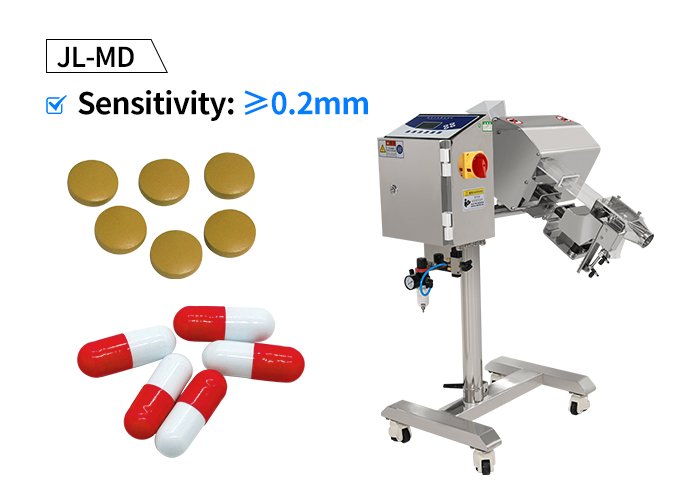
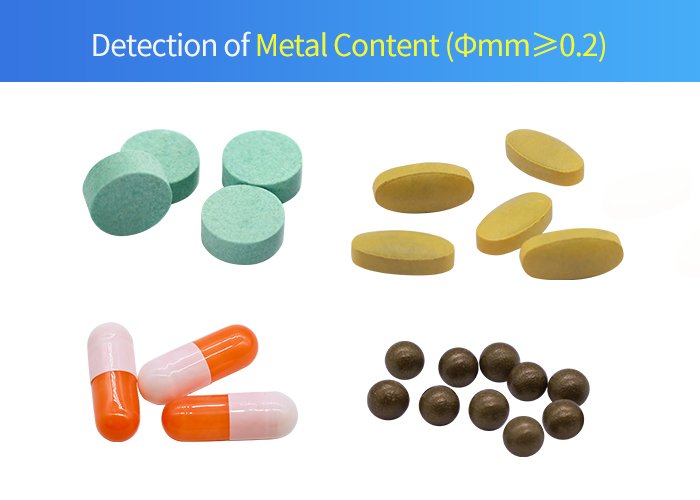
Pharmaceutical Metal Detector accurately identifies metallic impurities in pharmaceuticals, enabling highly sensitive rejection (Fe 0.2 मिमी, non-Fe 0.3mm, stainless steel 0.4mm, वगैरह।).
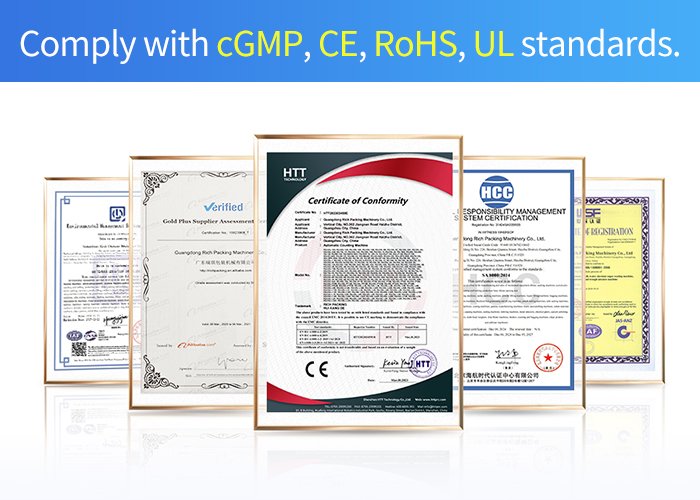
Metal Detector seamlessly integrates with rotary tablet press and capsule filling machine, तक 500,000 पीसी/एच, meeting cGMP, सीटी, and etc pharmaceutical purity requirements.


Fully enclosed anti-interference, ensuring metal detection accuracy of 0.2mm.
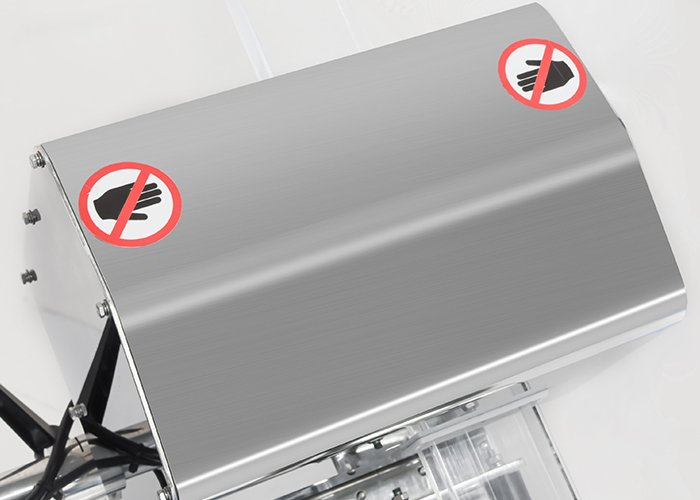
Accurately identify metal impurities in medicines and ensure they are removed.
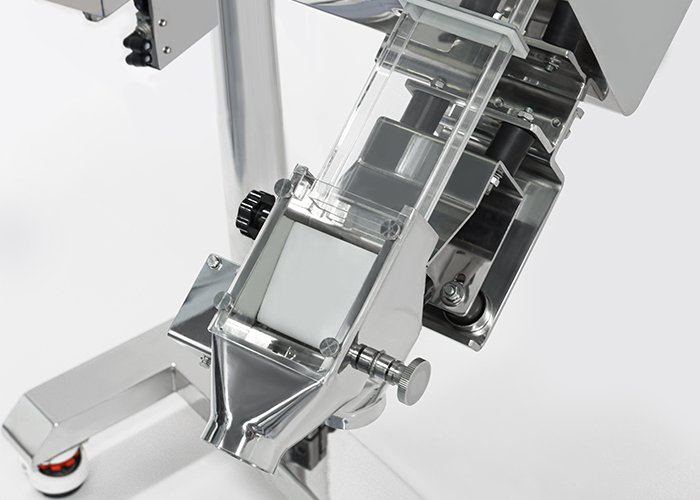
Quick lock method controls the sliding inclination and easily controls the output.
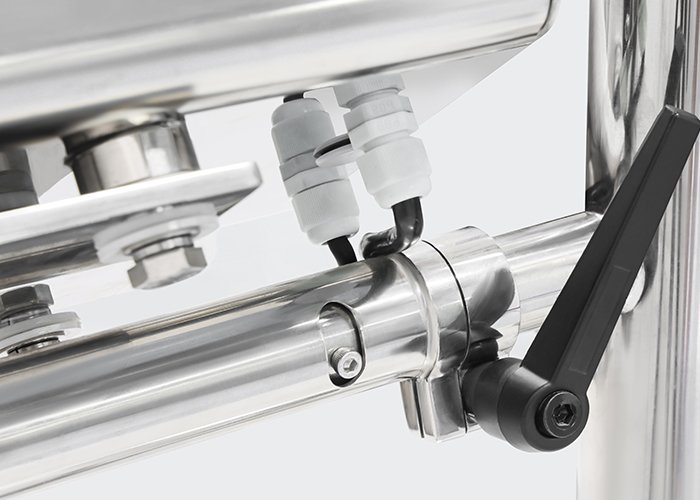
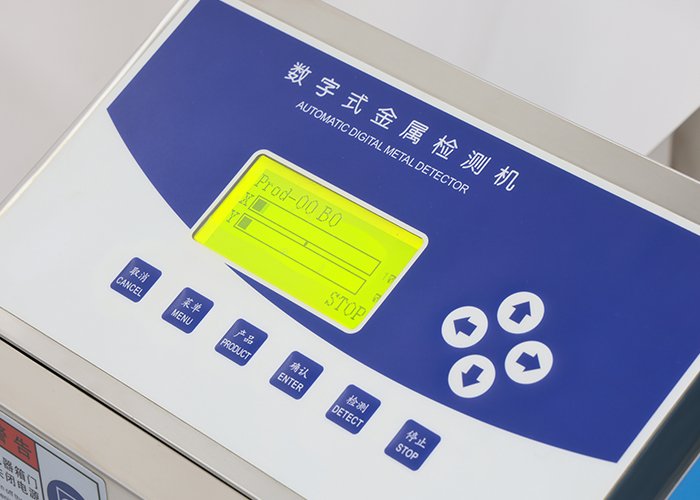
It makes the operation simpler and more convenient, and no experience is required.
गुआंगज़ौ में स्थित है, जेएल इंजीनियरिंग को एकीकृत करने वाली फार्मास्युटिकल पैकेजिंग मशीनरी का आपूर्तिकर्ता है, उत्पादन और बिक्री.
हमारी टीम फार्मास्युटिकल प्रसंस्करण विकसित करने पर ध्यान केंद्रित करती है & पैकेजिंग मशीनें जो कार्यक्षमता को जोड़ती हैं, गुणवत्ता, और लागत-प्रभावशीलता, अपने ग्राहकों को परेशानी मुक्त वन-स्टॉप सेवा प्रदान करने के अलावा.
हमारे फायदे
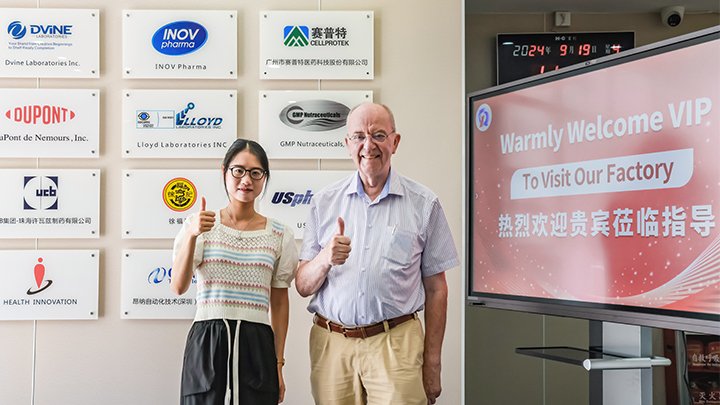

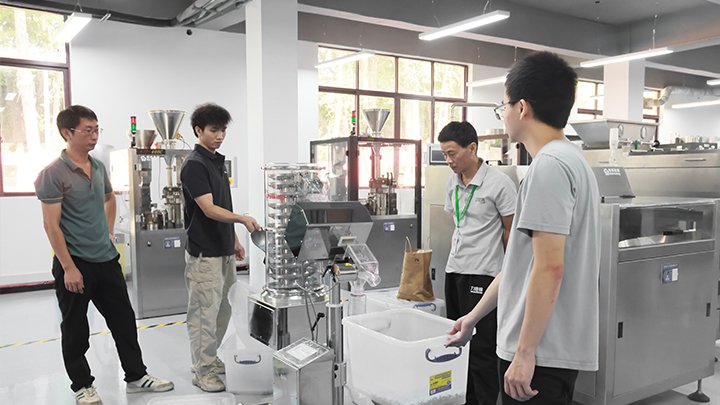
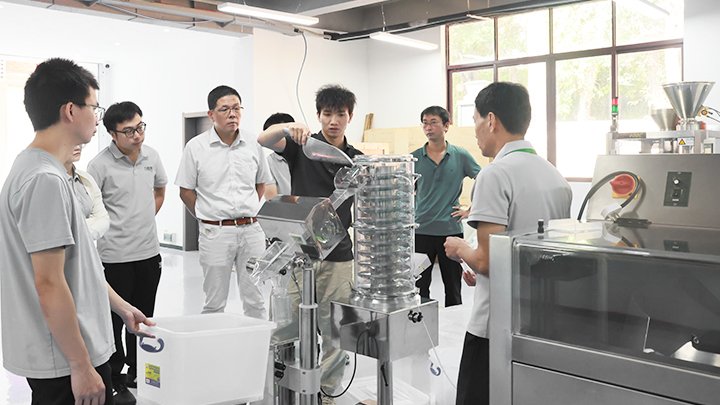
We participate in exhibitions such as CPhI, Canton Fair, वगैरह. Welcome to negotiate.
हम पूरी तरह से नमी-प्रूफ पर विचार करते हैं, rust-proof and corrosion-proof conditions of the metal detector during long-distance transportation.
Jinlupacking provides complete manuals and videos for daily use, सफाई और रखरखाव.
Automatic metal detectors are core equipment for ensuring drug safety and regulatory compliance in the production of solid oral dosage forms in the pharmaceutical industry. Based on the principle of electromagnetic induction, they accurately identify metallic impurities (such as iron, copper, स्टेनलेस स्टील, and aluminum) फार्मास्यूटिकल्स में, mitigating contamination risks throughout the entire process from raw materials to intermediates to finished products. Their application must be tailored to the production characteristics of tablets and capsules, with targeted deployment at key points. They must address both visible impurities (metal debris) and hidden contamination (tiny metal particles embedded within tablets/capsules), ultimately ensuring compliance with cGMP (गुड मैनुफैक्चरिंग प्रैक्टिस) and international pharmacopoeia requirements for drug purity.
Tablet compression is the core process for tablet production (such as standard tablets, आंत्र-लेपित गोलियाँ, and effervescent tablets). The typical process is: raw material pretreatment (crushing/screening) → mixing (एपीआई + excipients) → granulation (wet granulation/dry granulation) → drying → granulation → tableting → (कलई करना) → packaging. During this process, metal impurities primarily come from equipment wear (such as tablet press punches and mixer paddles), raw material contamination (such as wire introduced into damaged packaging bags), and environmental sources (such as rust and debris from workshop equipment). Metal detectors require precise protection against these “points where impurities are most likely to enter”:
After raw material mixing → before granulation
कच्चा माल (active pharmaceutical ingredients (शहद की मक्खी) और सहायक पदार्थ) may be contaminated with metal impurities (उदा।, the suture wire used in excipient packaging bags) during transportation and storage. Wear and tear of the impellers and inner walls of mixing equipment (double-cone mixers and three-dimensional mixers) can also generate metal debris. Testing at this stage can intercept impurities at the source, preventing them from combining with the raw materials and forming “encapsulated particles” (which are difficult to detect later).
After granulation → before tableting
The granulation process (उदा।, the agitator shaft of a wet granulator and the rollers of a dry granulator) is prone to high wear and tear, and metal debris can easily enter the granules. Hot air from the drying process (fluidized bed dryer) can also contaminate the granules if it carries rust debris from the pipes. Testing at this stage ensures the purity of the granules entering the tablet press.
Tablet pressing is the process with the highest risk of impurities. अधिक समय तक, tablet press punches can develop microscopic cracks, producing metal debris that can adhere to the tablet surface or become embedded within it. If a coating process is involved, wear and tear in the coating pan’s agitator and spray nozzles can also introduce impurities. This stage is the “pre-final inspection” line of defense for finished tablets.
Core role:
Real-time rejection of unqualified products: The online pharmaceutical metal detector can be linked with the tablet press machine. After detecting metal impurities, the pneumatic pusher automatically pushes unqualified tablets into the waste bin for saturation rejection, achieving a rejection efficiency of ≥ 99.99 % , avoiding the risk of missed detection in manual screening.
Capsule manufacturing (taking hard capsules as an example) is divided into two major stages: “capsule shell preparation” और “content filling.” The process is as follows: capsule shell preparation (gelatin/vegetable gum dissolution → dipping → drying → cutting → fitting) → content preparation (mixing/granulation) → filling → sealing → polishing → packaging. Because capsules are a composite structure of “शंख + contents,” metal impurities may be hidden in the capsule shell and contents. इसलिए, metal detectors must provide three-dimensional protection: “shell-content-finished product”:
After capsule shell preparation → before filling
During capsule shell production, the gluing needles of the gluing machine, the conveyor belts in the drying tunnel, and the cutting knives are susceptible to wear, resulting in metal debris adhering to the inner and outer walls of the shells. Metal may also be contaminated during transportation of the raw materials used in plant-based capsule shells (such as starch and hypromellose). Testing at this stage ensures that the shells themselves are free of contamination.
formula drug preparation → before filling
The preparation process of capsule contents (mostly powder or granules) is similar to that of tablet compressing materials. Wear of mixers and granulators is the main source of impurities. If the contents contain minerals (such as calcium and iron supplements), it is necessary to distinguish between “target metals” (such as iron in iron supplements) और “foreign impurities” (such as stainless steel debris) to avoid misjudgment.
the production process of pharmaceutical powder, ग्रेन्युल, and pellet कैप्सूल भरने वाली मशीनें, the filling rod and the sealing device’s pressing mold are susceptible to wear, potentially introducing metal debris into the capsules. Friction from the inner wall of the polishing process (drum polisher) can also introduce metal dust. This stage is the “final safety gate” for the finished capsules.
Core role:
Whether in tablet making or capsule production, the core value of the metal detector revolves around “सुरक्षा, अनुपालन, और दक्षता” and must meet the following technical requirements:
In pressing tablet and capsule manufacturing, metal detectors serve as “impurity gatekeepers” throughout the entire process. In tablet pressing, they focus on protecting against impurities from equipment wear in the “granule-to-tablet” process; in capsule manufacturing, they must address the three-dimensional contamination risks of “capsule shell-contents-finished product.” Their use is not only a necessary measure to ensure medication safety but also a core means for pharmaceutical companies to meet compliance requirements and mitigate production risks. With the advancement of cGMP standards, metal detectors are evolving from “single-detection” को “intelligent traceability” (उदा।, equipped with IoT modules for remote monitoring and cloud-based data storage), further improving the accuracy and efficiency of drug quality control.
प्रत्येक उत्पाद और संयंत्र की अपनी पैकेजिंग चुनौतियाँ और परिस्थितियाँ होती हैं. हम गुणवत्ता की गारंटी वाली मशीनों की सहायता के लिए यहां हैं, अनुकूलित समाधान, और सबसे अधिक परेशानी मुक्त सेवाएँ.

कॉपीराइट © 2026 JinLuPacking.सभी अधिकार सुरक्षित. शर्तें & स्थितियाँ और गोपनीयता नीति
मैत्रीपूर्ण कड़ियाँ: समृद्ध पैकिंग | कैप्सूल भरने की मशीन निर्माता