
عبوة نفطة is a common method for unit-dose pharmaceuticals (أقراص, كبسولات, suppositories) and other small products. These machines thermoform (or cold-form) plastic or aluminum into pockets and seal each dose under foil. The result is that familiar blister pack (انظر أدناه) which protects each tablet from moisture and tampering. A blister packaging machine automates this process: it forms the cavities, feeds the tablets, applies the backing foil, and punches out the finished packs. There are three main types of automated blister machines: roller (الروتاري), flat-plate (platen), و roller-plate (hybrid). Each uses a different motion and sealing method, leading to trade-offs in speed, product size, المرونة, والتكلفة. In this article we explain how each type works, compare their pros and cons, and help you pick the best blister packaging machine for your pharmaceutical production needs.

شكل: Examples of blister packs (capsules and tablets in thermoformed pockets) made by blister packaging machines. Each tablet is sealed under foil in its own cavity.
A blister pack is a unit-dose package with a cavity ("النفطة") that holds the product, backed by a flat lidding foil or card. في فارما, blisters are often made from plastic like PVC/PVDC or PET film, or from cold-form aluminum foil for higher moisture protection. أ آلة التعبئة والتغليف نفطة is the equipment that creates these packs. It consists of multiple stations that form the cavities, feed the product, seal with foil, and punch out the final blister cards.
There are two basic machine styles: platen (flat-plate) آلات, which work in an intermittent (stop-and-go) cycle, and rotary (roller) آلات, which run continuously. Modern production often uses servo-driven systems and vision inspection, but the core process is thermoforming (heating and molding film) or cold-forming (pressing aluminum foil). على سبيل المثال, Jinlupacking’s DPH and DPP series machines form cavities in PVC or aluminum and seal them under foil in one automated line. باختصار, a blister machine turns rolls of film and foil into sealed tablet/capsule packs with high efficiency and consistency.
To understand the core differences between a roller vs flat blister machine, one must first categorize the equipment by its mechanical motion and forming philosophy. في قطاع الأدوية, three primary configurations dominate the market: the roller type, the flat plate type, and the hybrid roller plate system. Each type has a different forming and sealing approach:
| نوع الآلة | Motion Logic | Forming Mechanism | آلية الختم |
| Roller Type (DPH Series) | Continuous | Vacuum/Negative Pressure on Drum | Rotating Sealing Rollers |
| Flat Plate Type (DPP Series) | Intermittent | Positive Pressure (Compressed Air) | Flat Platen (Area) ختم |
| Roller Plate (Hybrid) | Intermittent/Continuous | Flat Plate Forming | Rotating Sealing Rollers |
Each style offers trade-offs in speed, mold complexity, and package size. The table below and following sections detail their key differences. في الجوهر, roller machines favor continuous high-speed output for simple packages, flat-plate machines favor flexible large/deep cavities and frequent mold changes, and roller-plate machines aim to get the best of both worlds.
Roller blister machines (also called rotary blister machines) use cylindrical drum molds for both forming and sealing. The plastic film unwinds from a roll and wraps around a heated forming roller. Vacuum (negative pressure) pulls the heated film into the roller cavities to form the blisters, and then a rotating heat-sealing roller presses foil onto the formed cavities to seal them. This means the machine runs continuously (no stop-start), feeding material by reels.

شكل: Jinlupacking’s DPH-270Max high-speed roller blister machine (rotary continuous motion). It is servo-driven and can run 24/7, producing up to 27,000 blister plates per hour.
سمات: Roller machines generally have a simpler, low-maintenance structure and lower power draw compared to flat machines. They excel at speed: على سبيل المثال, a high-end machine may reach tens of thousands of plates (sheets) كل ساعة. The continuous motion also means more uniform sealing pressure on each cavity in theory. لكن, there are downsides. Because the forming roller is curved, the forming area is smaller and shallower, and film thickness can be uneven. في الممارسة العملية, this limits the size and depth of blisters: roller machines are ideal for small, shallow cavities and compact tablets.
Production speed: Roller machines are typically faster than flat-plate. لكن, due to vacuum forming, punching rates tend to max out around 45 cycles per minute or so (though modern models driven by servos can be faster). For reference, Jinlupacking’s DPH-270Max roller machine hits up to 27,000 لوحات/ساعة. في ملخص, use a roller (الروتاري) blister machine when you have a high-volume run of a simple, small pill that needs continuous operation and high throughput.
Flat-plate (platen) blister machines use flat mold sections for forming and sealing. The thermoformed plastic sheet is formed into cavities by pressurizing (blow molding) it into a flat die, and then each section is sealed with foil when the platens press together. Because the mold and foil platens move vertically to seal, these machines operate in an intermittent, index-by-index cycle: the film advances one station at a time, stops, الأشكال, الأختام, and then indexes again.

شكل: Jinlupacking’s DPP-270Max flat plate blister machine. This platen-type unit seals up to 11,200 plates/hour and can handle larger, deeper cavities than a roller machine.
سمات: The flat mold design gives an excellent forming area and depth. Platen machines can accommodate large, deep blisters or complex multi-cavity layouts that roller machines cannot. على سبيل المثال, if your product includes tablets of varying sizes or the blister card holds several different pills, a flat machine’s flexible plate layout is beneficial. The rigid seals also provide a very high-quality, airtight seal (area sealing under high pressure) which is great for liquids or hygroscopic drugs.
على الجانب السلبي, flat-plate machines run slower because of the stop-and-go motion. Typical punching frequencies are on the order of 30–35 cycles per minute. في الممارسة العملية, production speeds are lower: Jinlupacking’s DPP-270Max flat machine achieves 11,200 لوحات/ساعة (about half that of a comparable roller machine). Flat machines are also larger and heavier, and mold changes can be slower to perform.
Use cases: Flat platens are ideal for R&D labs, clinical batches, or diverse product runs. They allow quick mold changes (غالباً 10-15 دقائق) and low tooling cost. The excellent seal quality makes them best for deep-draw blisters (على سبيل المثال. for liquids or soft-gels) and for many different product shapes at once. في ملخص, choose a flat-plate blister machine when you need flexibility, superior sealing, and can accept a moderate throughput.
Roller-plate (sometimes called rotary-platen) machines combine elements of both roller and flat designs. Forming of the blister cavities is done on flat platens (usually with positive air pressure, like a flat machine), while sealing is done by a rotating heat-seal roller (like in a rotary machine). بعبارة أخرى, the blister sheet is formed in a flat mold, then the foil is sealed via a roller-to-plate contact that continues motion in one direction.
سمات: This hybrid approach yields very high production speeds while retaining some flexibility. Since the sealing is continuous, roller-plate machines have exceptional throughput – punching frequencies can exceed 100 cycles per minute. The forming section (flat molds) still allows reasonably large cavities, and the line contact sealing can result in very even pressure distribution on each blister. Roller-plate designs also typically use the pack material efficiently, with less scrap edge waste.

شكل: Example blister packs. Roller-plate blister machines can handle a wide range of tablet shapes and pack styles, including various sized cavities and orientations.
لكن, roller-plate machines tend to be specialized for high-volume, single-product runs. The hybrid design is optimized for speed, which means changing formats (large vs small cavities, إلخ.) can be slower than on a flat platen alone. أيضًا, extremely large or awkwardly shaped tablets (tilted, >16 مم, إلخ.) may still be impractical as mentioned by industry sources. في الممارسة العملية, roller-plate machines are best when you have a few SKUs that require very high output. They excel in mass production of pills or capsules at top speed, while still offering a bit more cavity size flexibility than a pure rotary model.
The following table summarizes the main differences between the three types of blister machines:
| ميزة | Roller (دوار) | Flat-Plate (Platen) | Roller-Plate (Hybrid) |
| Molding/Sealing Mechanism | Cylindrical rollers (continuous vac./heat) | Flat mold plates (intermittent form/seal) | Flat forming + Roller heat-seal (mixed cycle) |
| Motion | Continuous (الروتاري) | Intermittent/Index-by-index | Continuous sealing / Index forming |
| سرعة الإنتاج | عالي (على سبيل المثال. tens of thousands plates/hour) | معتدل (أبطأ, a few thousand plates/hour) | عالية جدًا (highest punching frequency ~100+/min) |
| Suitable Blister Size/Depth | صغير, shallow cavities | كبير, deep cavities | واسطة (diverse shapes, moderate depth) |
| Sealing Quality | Line sealing (good) | Area sealing (excellent) | Continuous/semi-area (very good) |
| Material Efficiency | معيار (some waste edges) | معيار (stop-start waste) | عالي (continuous yields less waste) |
| Changeover/Flexibility | محدود (heavy molds) | سريع (صغير, cheap molds) | معتدل (optimized for fixed format) |
| الأفضل ل | Mass production of simple shapes | ص&د, pilot, clinical & complex shapes | High-volume runs of tablets/capsules |
باختصار, flat-plate machines shine on versatility and seal integrity, roller machines win on raw speed for simple products, and roller-plate machines aim for maximum throughput with moderate flexibility.
Selecting the right blister machine depends on several factors:
In modern pharma plants, blister machines are rarely standalone. They integrate into fully automated lines with upstream and downstream equipment. Upstream you’ll often see feeder systems (vibratory, orbital, or custom) that orient and supply tablets or capsules to the blister machine. Jinlupacking offers tailored feeders (brush, orbital, multi-head, إلخ.) to handle different product shapes and ensure a smooth feed.
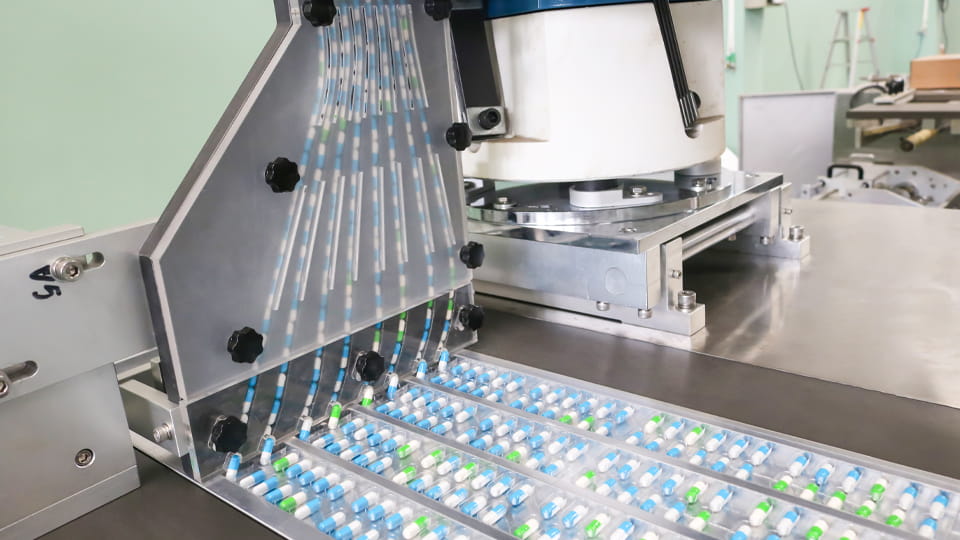
شكل: Custom feeding systems in a blister packaging line. Precise feeders (على سبيل المثال. brush or orbital feeders) ensure tablets and capsules are delivered into blisters efficiently.
المصب, blister machines usually connect to inspection, printer, and cartoning stations. على سبيل المثال, the DPP and DPH series can be paired with inkjet printers for lot coding, vision inspection cameras for missing-pill detection, and high-speed cartoners. في الحقيقة, Jinlupacking demonstrates integration of a blister machine with a cartoning system to create a “blister-to-carton” line. This setup automatically takes each finished blister pack, prints necessary data, and inserts it into cartons with product inserts. Such seamless integration boosts throughput and traceability.
Modern blister machines also offer Industry 4.0 connectivity. Leading models can interface with a plant’s ERP/MES system for real-time monitoring. على سبيل المثال, Jinlupacking’s high-speed blister machines support MES connections, logging speed, إنذار, and production counts. Sensors and smart controls allow remote monitoring of machine health and performance. في الممارسة العملية, this means a blister line can alert operators automatically if a tablet is missing or if foil tension is off, and it can feed data to a central dashboard.
في ملخص, أ blister pack machine should be viewed as part of a complete packaging ecosystem. When choosing equipment, also consider how it will link to hoppers (مغذيات), printers, عمال التعبئة والتغليف, and software. A well-integrated line reduces manual handling, speeds up production, and ensures quality.
Blister packaging is evolving rapidly. A major trend is the rise of smart, connected machines. Future blister systems will increasingly use Internet-of-Things (إنترنت الأشياء) sensors and AI. على سبيل المثال, vision systems can inspect 100% of blisters for defects in real time, while AI algorithms adjust parameters (درجة حرارة, ضغط) على الطاير. Predictive maintenance is becoming standard: sensors will monitor motor load, vibration, and component wear, predicting when a part might fail before it happens. We are already seeing blister machines with full ERP/MES integration and cloud data logging for quality compliance.
Another big trend is sustainability. Machine manufacturers are designing blister lines that minimize waste and save energy. على سبيل المثال, new cutting techniques reduce foil waste by up to 78%. High-efficiency heaters and chillers cut power use. On the materials side, expect more eco-friendly films: biodegradable plastics and recyclable laminates are in development. Blister machines will be designed to handle alternative materials while keeping the blister environment sterile.
Customization and flexibility will also grow. The demand for patient-centric packaging means blister machines will need to handle small batch runs of personalized or over-encapsulated products. Future machines may have on-the-fly reconfigurable tooling, or digital printing on blister cards for branding and traceability. Easy-open blister designs and multi-layer blister cards for combined drug dosing could become common as well.
باختصار, the blister packaging machines of tomorrow will be smarter, greener, and more adaptable. They will feature greater automation, energy-saving designs, and connectivity that ties into digital factory systems. Keeping an eye on these trends can help pharma companies stay ahead in regulatory compliance and production efficiency.
Choosing between roller, flat-plate, and roller-plate blister machines comes down to balancing speed, المرونة, and product needs. Roller (الروتاري) machines deliver the highest continuous throughput for simple pill shapes. Flat-plate machines provide the best versatility and seal quality for complex or varied blisters. Roller-plate (hybrid) machines offer extreme speed while still handling moderately sized blisters.
If you’re unsure which type is right, النظر في حجم الإنتاج الخاص بك, product range, and long-term goals. Our suggestion: start with the product – match the machine to the blister design and output required. Then weigh cost and flexibility.
Not sure which blister packaging machine fits your pharmaceutical production? Jinlupacking offers custom blister pack solutions. Our experts can help you select or design a machine (flat platen, الروتاري, or hybrid) that meets your tablet and capsule packaging needs. Contact Jinlupacking for a tailored quote and ensure your products are packed with the highest efficiency and quality.
The main difference between roller vs flat blister machine lies in their forming and sealing mechanisms. Roller blister machines typically use rotary motion for forming and sealing, making them suitable for high-speed production. Flat blister machines use a flat plate for both forming and sealing, offering better precision and deeper forming capability. Choosing between them depends on your product type, output needs, and packaging material.
Blister packaging machines work through a sequence of thermoforming, تعبئة, وختم. أولاً, the plastic or aluminum material is heated and formed into cavities using a blister forming die. Then tablets or capsules are placed into the formed pockets. أخيراً, a lidding material such as aluminum foil is sealed using a heat seal station to create secure pharmaceutical primary packaging.
لا توجد إجابة واحدة تناسب الجميع. In the debate of roller vs flat blister machine, roller machines are better for high-speed, إنتاج واسع النطاق, while flat plate blister machines are preferred for precision, deep draw applications, and aluminum-aluminum blister packaging. الخيار الأفضل يعتمد على حجم الإنتاج الخاص بك, packaging material, and product sensitivity.
A roller plate blister machine combines flat plate forming with roller sealing. This hybrid design allows stable forming accuracy while improving sealing efficiency. It is widely used in pharmaceutical blister packaging machines where both flexibility and productivity are required.
نعم, a flat plate blister machine is highly suitable for alu-alu blister packaging (cold forming foil). It provides strong forming pressure and longer forming time, making it ideal for deep draw blister packaging and moisture-sensitive pharmaceutical products.
Roller blister packaging machines offer continuous motion operation, سرعة عالية, and strong productivity. They are ideal for large pharmaceutical factories running automatic blister packing machines in mass production. لكن, they may have limitations when handling deep cavities or complex blister pack types.
For small batch production, a flat plate blister packaging machine or a flexible roller plate blister machine is usually a better choice. These machines allow easier change parts for blister machine setups, shorter setup time, and better adaptability for different product formats.
Blister packaging machines can handle a variety of materials, including PVC/PVDC blister, رقائق الألومنيوم, and cold forming foil (مرحباً). The choice of material affects machine selection in the roller vs flat blister machine decision, as some machines are better suited for thermoforming while others excel in cold forming applications.
Intermittent motion blister machines (commonly flat plate types) operate step-by-step, offering high precision and control. Continuous motion machines (usually roller types) run non-stop, providing higher speed and efficiency. This difference is a key factor in pharma blister packaging equipment comparison.
When choosing a blister machine for tablets and capsules, consider production speed, packaging material (PVC or alu-alu), cavity depth, and automation level. In the comparison of roller vs flat blister machine, roller machines suit high-speed lines, while flat or roller plate machines offer better flexibility and forming precision.
مراجع:
1.مراجعة حول توصيف وإمكانية إعادة تدوير البثور الصيدلانية – ساينس دايركت.
2.تحسين تصميم عبوات الفقاعة للمستحضرات الصيدلانية الصلبة – ساينس دايركت.
3.Pharmaworks Cold Form vs. Thermoform Blister Packaging: Choosing the Right Fit for Your Product – PharmaPackagingNews.
4.Cold Form Blister Packaging Market (2025 – 2030) – GrandviewResearch.
5.Study on thickness distribution of thermoformed medical PVC blister – بوابة الأبحاث.