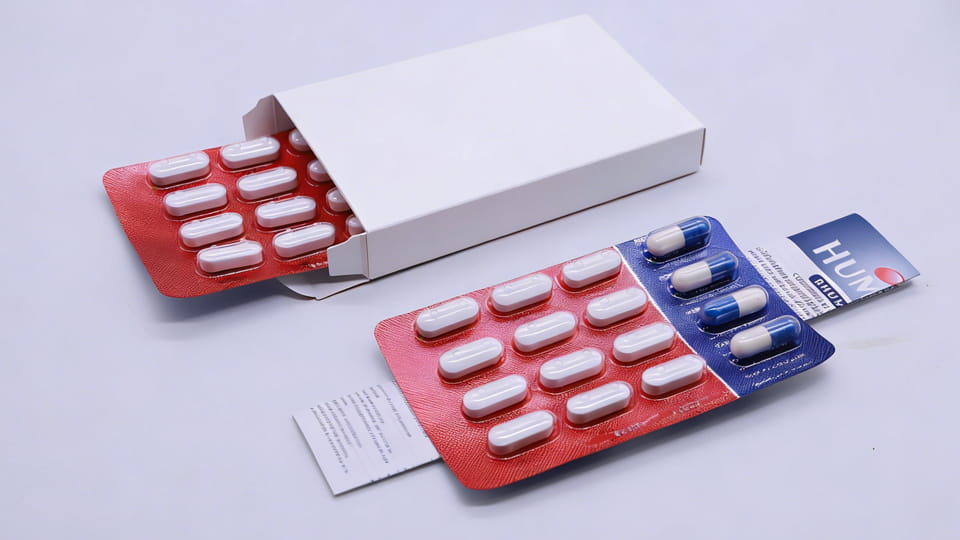

Máquinas de embalagem (also called carton packaging machines or cartoners) automate the process of erecting cartons, loading products, inserting leaflets, and sealing the boxes. Em embalagens farmacêuticas, these machines ensure high-speed, preciso, and compliant packaging of pills, garrafas, vials or Blister pacotes with patient information inserts. They reduce manual labor and errors, improve throughput, and enforce quality control (E.G.. sensor checks for missing items or seal integrity). Modern cartoning equipment often features stainless-steel sanitary construction and tamper-evident sealing to meet strict GMP/FDA standards. Por exemplo, industry experts note that pharmaceutical cartoners are “tailored to requirements of the pharmaceutical industry” – combining productivity, precisão, GMP compliance and flexibility for safe, traceable packaging.

Cartoning machinery comes in various styles suited to different products and workflows:


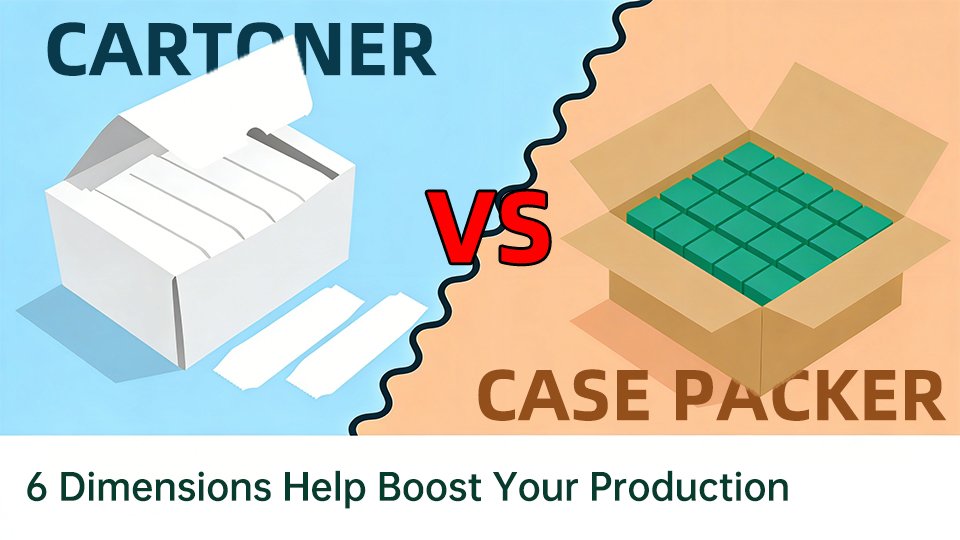
Below is a comparison of horizontal vs. cartonadoras verticais:
| Recurso | Horizontal Cartoner | Vertical Cartoner |
|---|---|---|
| Loading Method | Side-loading (carton opened sideways or top-front) | Top-loading (carton opened at top) |
| Melhor para | Groups/sets of products (E.G.. garrafas, Blister pacotes, tubos) | Free-flowing or loose products (E.G.. pós, grânulos) |
| Velocidade & Footprint | Typically higher speeds, smaller footprint; more flexible for mixed SKUs | Simpler design, generally lower speed; niche applications |
| Uso típico | Medicine bottles, frascos, cosmetics sets, assembled packs | Loose tablets, powdered dosage, irregular pieces |
Cartoning equipment often includes support machines like carton erectors (to form blanks) and insert feeders. Many pharmaceutical lines use integrated blisters-to-carton systems: um máquina de bolhas feeds blister packs into the cartoner, which adds instructions and closes cartons. Resumidamente, cartoners replace manual packing steps with precision automation, which is critical for efficiency in pharma, biotech and related industries.
Choosing the right cartoning machine involves matching your packaging needs with machine capabilities. As principais considerações incluem:
A cartoning machine rarely works alone. Plan how it will fit with upstream and downstream equipment: por exemplo, carton feeders, conveyor buffers, rotuladores, checkweighers, or case packers. Ensure your facility has sufficient space and utilities (ar, poder) for the machine plus clearance for operators and maintenance. Many cartoners have compact footprints, but configuration (E.G.. top-load vs. carga final) changes layout. Also check how carton blanks will be handled (sheet-fed vs. pre-erected cartons).
Monitoramento em tempo real (using a carton machine display) and integration with factory control systems can improve efficiency. Modern lines often use digital interfaces to track production counts and fault alerts. Finalmente, consider dust/control needs in pharma: if your product is potent or sterile, you may need a contained or cleanroom-compatible line. Em tais casos, some cartoners can be equipped with negative-pressure enclosures or washdown capabilities.
[jl_youtube src=”https://www.youtube.com/embed/1Bb_J6rluac”]
Selecting the right cartoning machine for pharmaceutical packaging means balancing product requirements, conformidade regulatória, rendimento, e custo. By understanding your products (loose vs. conjuntos, tamanhos), estimating true production speeds, and insisting on GMP features, you can narrow the choices. Evaluate machines for flexibility (easy changeover), hygiene design (aço inoxidável, easy clean), and vendor support (spares, treinamento). Automatic cartoning machines with integrated leaflet feeders and quality sensors are often the best choice for high-volume drug packaging, ensuring speed and accuracy. Remember to involve cross-functional teams (engineering, QA, produção) early, so the chosen cartoning machinery aligns with your plant’s capabilities and future goals.
Em última análise, a well-chosen cartoner – whether a horizontal top-load machine, a vertical unit, or a hybrid – will become a critical asset for any pharmaceutical packaging line. It will boost efficiency and ensure that pills, vials and blisters are packed reliably, meeting both production targets and strict industry regulations.
Uma máquina de encartuchamento (sometimes called a cartoner or carton packaging machine) in the pharmaceutical industry is automated equipment that erects cartons, loads pharmaceutical products (such as vials, garrafas, Blister pacotes, folhetos), and seals the boxes. It replaces manual packing steps, improves throughput and ensures consistent package integrity.
The main types are horizontal (side-load or end-load) cartoners and vertical (top-load) cartonadores. Horizontal machines are best for pre-packaged items like blister packs, bottles and sets; they typically offer higher speed and compact layouts. Vertical machines are more suited to free-flowing or loose items (such as powders or tablets) that are dropped from above. Choose based on the form of your product, your speed/footprint requirements and format flexibility.
As principais considerações incluem: product type and compatibility (forma, fragility, formatar), rendimento (how many cartons per minute or hour you need), regulatory and hygiene compliance (GMP design, Materiais, facilidade de limpeza), flexibility and changeover capability (handling multiple SKUs or carton sizes), cost of ownership (purchase, manutenção, spares) and manufacturer support (global service, spares availability, treinamento).
A semi-automatic cartoning machine requires manual intervention for one or more steps (por exemplo, manual loading of cartons or products), whereas a fully automatic machine handles all steps – carton forming, loading products, inserting leaflets, sealing and rejecting faulty cartons – with minimal human input. For high-volume pharmaceutical packaging, fully automatic cartoners are typically recommended.
Muito importante. Pharmaceutical packaging equipment must adhere to Good Manufacturing Practice (BPF) and other related regulatory standards (Por exemplo, FDA, Ema). That means using pharmaceutical-grade stainless steel, smooth surfaces for cleaning, enclosed systems to avoid contamination, and traceability features (such as integrated printers or barcode readers). Ensuring your cartoning equipment meets pharma-industry requirements is critical for safety and quality.
Taxa de transferência (how many cartons you can process per minute/hour) is a key metric—choose a machine that meets current needs and allows for future growth. Changeover flexibility (how quickly you can switch formats between SKUs) impacts production downtime and overall line efficiency. Machines offering quick format changes and adjustable settings are valuable, especially when you run multiple product types.
Carton blank size, material thickness, projeto (Por exemplo, tuck-flap, cola quente, side-seam) and how products are inserted all need to match the machine’s tooling and drive system. If the carton board is too thin or too thick, or the product loading method doesn’t align, you may face jamming or quality issues. Early in the selection process, it’s essential to share carton dimensions and material specs so the manufacturer can ensure proper moulds and mechanisms.
Because a cartoning machine is a long-term investment, you want a cartoning machine manufacturer with global presence, strong experience in the pharmaceutical sector, disponibilidade de peças de reposição, field support teams, training and validation documentation (QI/QO). Excellent after-sales service reduces downtime, supports regulatory audits and ensures maximum ROI.
Integration means aligning the cartoning machine with upstream and downstream equipment (por exemplo, máquinas de bolha, leaflet feeders, check-weighers, case packers). You must ensure adequate layout space, utilities (poder, compressed air), and interface control systems. Buffer conveyors, data-tracking (counts, rejects), and cleanroom compatibility (se necessário) should all be considered. Choosing a machine that fits your line architecture and control infrastructure is vital.
Beyond the machine’s purchase price, total cost of ownership includes tooling/moulds, peças de reposição, manutenção, tempo de inatividade, labour savings, utilities and format change costs. To manage it: choose the right capacity (avoid oversizing), favour reliable components, consider preventative maintenance contracts, verify spare parts availability and ensure vendor support. A well-chosen cartoning machine will pay back via increased throughput, fewer errors and lower labour cost.
Referências:
1.“Cartoning Machines for Pharmaceutical Industry Market Analysis – Industry Size, Compartilhar, … Forecast 2025-2034”. MarkWide Research, Poderia 2025.
2.“Horizontal Cartoning Machine Increases Flexibility”. PharmTech (Equipamento & Processing Report), Oct 15 2014.
3.”Recent trends and future of pharmaceutical packaging technology”.PMC
4.”Secondary Packaging of Medicines: Design Processes for the Pharmaceutical Industry”.ResearchGate