
Ever wonder how some extended release pills keep working for hours and why making them depends as much on the tablet press as the formula?
الإصدار الموسع (ER) أقراص are a common form of extended release medication, designed to deliver medicine steadily over many hours, every day, batch after batch. While formulation science defines how an ER tablet should work, real-world manufacturing determines whether it actually can.
As ER products move from lab scale to high-speed production, many challenges emerge around compression stability, التحكم في الوزن, and process repeatability. هذا هو السبب, in practice, ال آلة ضغط الأقراص often becomes the deciding factor in whether a good ER formula can be manufactured successfully.
في هذه المقالة, we look at how extended release tablets work, where production commonly breaks down, and why tablet press capability plays a central role, with practical insights from commercial manufacturing experience.
الوجبات السريعة الرئيسية:
Not all oral tablets are created equal, and one of the key differences lies in how and when they release the active drug into the body. Some act quickly, releasing the full dose soon after swallowing, while others are designed to release the drug gradually over time. This difference between immediate release and extended release directly affects dosing frequency and therapeutic control. A familiar example is extended release caffeine, which delivers a steady stimulant effect over several hours instead of a short energy spike.
At high level, oral tablets can be broadly divided into two categories:
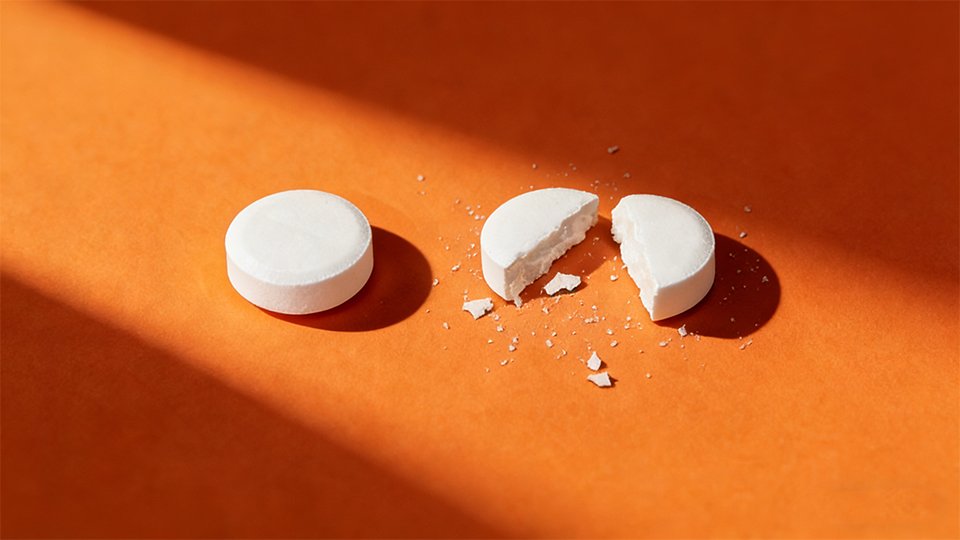
If you are wondering whether extended release tablets can be crushed, cut in half, or split, the safe rule is to avoid doing so. Breaking the tablet destroys the slow-release structure and can cause the drug to be released too fast, increasing the risk of side effects. If swallowing is difficult, a doctor or pharmacist should be consulted for safer alternatives such as liquids or non-extended release forms.
Disadvantages of extended release tablets include:
Here’s a quick snapshot of the most common MR subtypes:
طاولة 1: Common MR Types
| يكتب | What it does | Goal | الاستخدامات الشائعة |
| الإصدار الموسع (ER) | Releases the drug over a longer time | Fewer doses, longer effect | High-adherence chronic therapy (cardio, diabetes, chronic pain) |
| الإصدار المتحكم فيه (سي آر) | Delivers the drug at a steady, constant rate | Keep drug level stable | Oral/non-oral routes; tight PK control needed |
| الإصدار المستدام (ريال) | أبطأ, steady drug release | Reduce frequency, avoid side effects | Mostly oral; gentle on side effects |
| Delayed Release (دكتور, المفوضية الأوروبية) | Release at a specific time or a body part | Protect stomach or acid-sensitive drugs | PPIs, enteric ASA, acid-sensitive APIs |
Think of extended release (ER) as the marathon runner, pacing the drug over hours. CR is the metronome, precise and steady. SR takes the scenic route, gently releasing the drug over time. And DR is like a secret agent, hiding until reaching the right spot in the GI tract before springing into action.
As Dr. Susan Smith, a pharmaceutical scientist, explains: “Choosing the right release profile isn’t just about efficacy, it’s about matching the drug’s personality to the patient’s lifestyle and biology.”
Tablets extended release offer more than convenience, they provide key advantages for both patients and pharmaceutical companies. These benefits can be broken down into patient benefits and commercial value.
The slow and controlled release of extended release ensures that the drug stays effective over a long period, avoiding the peaks and valleys typically seen with immediate-release formulations. For patients managing chronic conditions, extended release medication helps maintain stable drug levels while reducing dosing frequency. By maintaining stable drug levels, an extended drug minimizes the need for frequent dosing, improving both adherence and overall treatment success.
While ensuring patients get the full benefits without the drug level fluctuations of conventional medications, the real value of ER tablets lies in their ability to provide consistent therapeutic effects, reduce dosing frequency, and enhance patient adherence.
Before we dive into production, it’s worth briefly revisiting how ER drug medication work, because the release mechanism directly impacts how they must be manufactured and what equipment is required.
ER tablets achieve extended drug delivery through several well defined mechanisms:
طاولة 2:ER Tablet Mechanisms
| Mechanism Type | Principle | الميزات الرئيسية | التطبيقات النموذجية |
| Diffusion-Controlled Systems | Drug molecules slowly diffuse through a polymer matrix or coating | Matrix or coated systems | Most oral ER tablets |
| Dissolution-Controlled Systems | Release rate determined by polymer or coating dissolution | Adjustable coating thickness and solubility | Small-molecule drugs needing precise release |
| Osmotic Pump Systems | Water enters semipermeable membrane, generating pressure to push drug out | Almost independent of GI pH or motility | High-PK requirement candidates |
| Erosion / Biodegradation Systems | Drug released as polymer matrix degrades | Surface or bulk erosion | High-molecular-weight polymers, multiparticulates |
| Swelling-Controlled Systems | Hydrophilic polymers swell, forming diffusion channels | Release rate governed by swelling kinetics | Water-soluble drugs, أقراص الإصدار المستدام |
| Ion-Exchange Systems | Drug complexed with resin, released via ion exchange | pH and ionic strength influence release | Oral, nasal, ophthalmic applications |
Understanding these mechanisms is not academic: the choice dictates formulation design, raw material handling, production equipment selection, and process control strategy , and that directly affects manufacturing complexity and cost.
An extended-release pill is not something you get by simply pressing powder and hoping for the best. A successful extended release formulation depends on how each production step is executed at scale. When one step is off, the release profile often tells the story later.
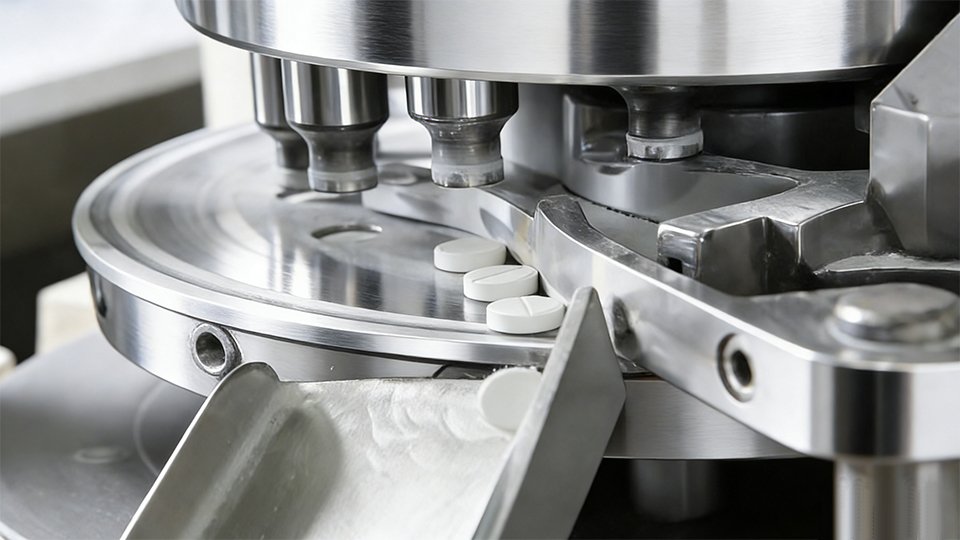
Among all production steps, compression is where formulation design is finally locked into a physical tablet. في الممارسة العملية, even a well-designed extended release formulation can fail if compression parameters are unstable during scale-up. That is why the ماكينة صنع التابلت plays such a central role in whether an ER product succeeds in real manufacturing.
Concretely, the tablet press affects production outcomes in four practical ways:
Because of these realities, formulation teams and equipment engineers need to work together early. Using instrumented R&D presses and building equipment capability into the development plan reduces the risk of late surprises during scale-up.
If immediate-release tablets are a sprint, ER pills are a long-distance race. للمصنعين, the challenge is not just making tablets, but making them release the drug the same way, batch after batch, at commercial scale.
In extended release tablet production, the most decisive stage must be compression. On paper, the release profile may look perfect, but in real manufacturing, it is the tablet pill making machine that decides whether that design can be produced stably, quietly, وعلى نطاق واسع.
للمصنعين, the tablet press is not just shaping tablets, it controls output consistency, كفاءة الإنتاج, and long-term operating cost. This is also where most ER drug production problems begin.
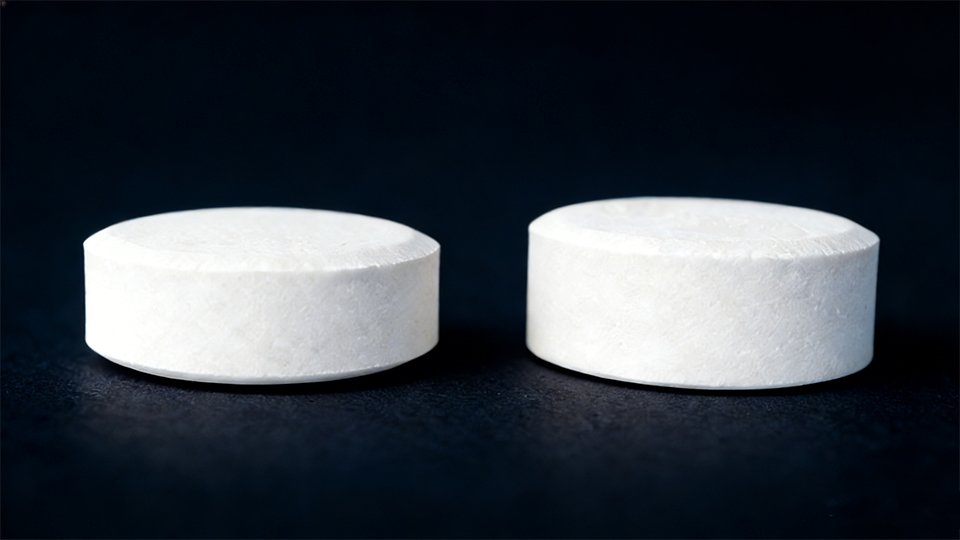 In ER tablets, weight variation is more than a cosmetic issue. Inconsistent tablet weight often means inconsistent drug content and release behavior, leading to higher rejection rates and tighter in-process controls.
باختصار, ER tablet manufacturing is a precision game. Formulation defines the plan, but the rotary tablet press determines whether that plan survives daily production. That is why compression becomes the focal point for manufacturers seeking stable, scalable ER tablet output.
In ER tablet production, success ultimately depends on whether the formulation can run stably on a commercial tablet press. With this in mind, Jinlu Packing focuses its tablet maker machine design on the real constraints of ER manufacturing, supporting reliable scale-up and production.
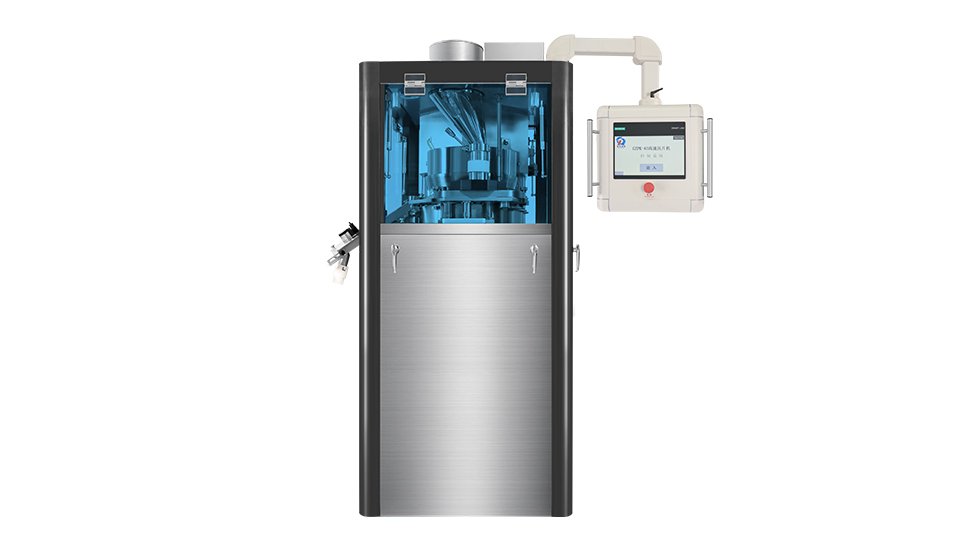
التعبئة جينلو designs tablet presses around the real needs of extended release formulation manufacturing, where consistency and repeatability are critical. Providing advanced machinery is only part of the equation. Jinlu Packing’s services help manufacturers start up, optimize, and maintain ER production lines with minimal risk:
With these services, manufacturers can focus on product innovation and market growth, knowing their production backbone is reliable and supported.
The future of tablets extended release production is shifting toward personalized and patient-centered solutions. As the demand for more tailored therapies grows, manufacturers are focusing on drug delivery systems that offer both precision and better patient experiences, aiming to improve outcomes and simplify adherence.
Key trends shaping the future of ER formulations include:
The future of ER tablets will focus on precision, personalization, والالتزام, creating therapies that are more tailored to individual needs. As technology evolves, we can expect ER tablet formulations to not only improve health outcomes but also make swallowing pills feel like a thing of the past. Who knows, one day we might have a pill that delivers itself!
Extended release tablets play a crucial role in modern medicine, offering consistent drug levels and better patient adherence. لكن, the real challenge lies in producing them reliably at scale. Jinlu Packing’s intelligent tablet pressing machines ensure stable weight, faster changeovers, and smooth production, making large-scale manufacturing both efficient and high-quality.
نتطلع إلى الأمام, ER formulations are moving towards more personalized, patient-friendly options. و Jeinlu اختيار, we’re ready for this future, supporting manufacturers every step of the way. As the famous quote goes, “The future is already here, yet it’s just not evenly distributed.”
An extended release (ER) tablet is a type of oral dosage form designed to release the active drug slowly over an extended period, maintaining therapeutic drug levels for longer durations compared to immediate-release tablets.
Immediate release tablets dissolve and release the full dose quickly after ingestion, requiring more frequent dosing. Extended release tablets deliver the drug gradually over time, reducing dosing frequency and improving plasma level stability.
Crushing or splitting ER tablets destroys their controlled-release structure, leading to rapid release of the full dose, which can increase the risk of side effects and loss of intended therapeutic control.
Key production steps include pre-formulation and design, granulation to improve powder flow, compression on a tablet press, coating for controlled release, and dissolution/IVIVC testing to verify performance.
The tablet press fixes formulation design into a physical tablet. It controls weight, كثافة, porosity, والاتساق, which directly impact disintegration and drug release behavior at commercial scale.
Challenges include maintaining release profile consistency, managing complex excipient behavior, handling difficult APIs, ensuring weight uniformity, minimizing noise and wear on equipment, and efficient die changeovers.
Uneven tablet weight leads to variable drug content and inconsistent release profiles, increasing rejection rates and reducing overall production quality and regulatory compliance.
Features like stable forced feeding, pre-compression capability, modular design for easy changeovers, high-precision filling mechanisms, and reduced noise operation support reliable ER production.
Pre-compression releases air from granules before main compression, reducing defects such as capping and lamination, and improving tablet density uniformity, which supports consistent release behavior.
The industry is moving toward personalized drug delivery systems, gastroretentive and intestinal adhesive formulations, patient-friendly dosage forms, and multi-API therapies, emphasizing precision, adherence, and tailored therapies.
مراجع:
1.Extended-Release Tablets: A Modern Approach to Drug Delivery – International Journal of Health Advancement and Clinical Research
2.Continuous manufacturing of extended release tablets via powder mixing and direct compression – ساينس دايركت
3.Effects of manufacturing process variables on in vitro dissolution characteristics of extended-release tablets – المكتبة الوطنية للطب
4.Global Pharmaceutical Market Forecast, 2024 – IQVIA
5.“ER Tablet Manufacturing Challenges," 2023 – Pharmaceutical Technology
6.Guidance for Industry: Modified-Release Solid Oral Dosage Forms, 2022 – U.S. طعام & إدارة المخدرات (ادارة الاغذية والعقاقير)